

News
Igbajo Achievers Lions Club Screens Over 200 Osogbo Pupils, Raises Alarm Over Childhood Blindness

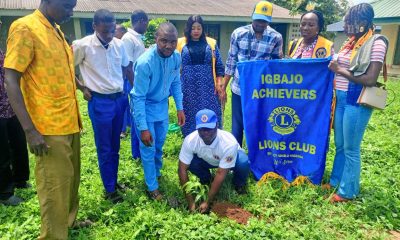
The Igbajo Achievers Lions Club has screened over 200 pupils of Daystar High School, Ogo Oluwa, Osogbo, as part of activities marking the 2026 World Sight Day, calling for increased awareness and early detection of childhood eye defects to prevent avoidable blindness.
The outreach featured free eye screening and an educational session aimed at sensitising pupils to the importance of proper eye care, personal hygiene and seeking medical attention whenever they experience vision-related challenges.
Speaking during the exercise, the Club President, Lion Dr Nicholas Utho, said the initiative was designed to educate young people on eye health, noting that many children were unaware of the symptoms of eye diseases until their conditions became severe.
He said the club considered it important to reach out to pupils because early detection and prompt intervention could prevent many cases of avoidable blindness.
“In commemoration of World Sight Day 2026, the club deemed it necessary to reach out to young individuals because early detection saves a lot. From surveys and statistics, these young people do not know how to identify some of the symptoms of eye diseases and eye-related issues,” he said.
Utho explained that some children often dismissed unusual eye symptoms as normal, thereby allowing potentially treatable conditions to worsen.
He urged pupils to speak out whenever they experienced eye discomfort or difficulty seeing rather than keeping such complaints to themselves.
“Early screening and early identification of symptoms prevent blindness. When you notice something unusual with your eyes, do not overlook it. Speak out, reach out to your parents or teachers and ensure you are taken for proper eye screening and evaluation,” he advised.
The club president disclosed that pupils identified with possible eye conditions would be referred for further medical evaluation, adding that the organisation planned to extend its interventions to comprehensive eye care, including free prescription glasses, medications and surgeries for beneficiaries who might require them.
He called on parents, teachers, government and other stakeholders to prioritise children’s eye health, stressing that many cases of blindness could be prevented through early detection and appropriate treatment.
Also speaking, the Lion Outreach Manager at Lion Eye Center, Lion Janet Olufunmike Odesanmi, identified long-sightedness, short-sightedness, eye infections, inflammation and cataracts among possible eye conditions affecting children.
She attributed some eye infections to poor hygiene practices, particularly pupils rubbing their eyes with unclean hands, while expressing concern over unhealthy dietary habits and excessive consumption of soft drinks among young people.
Odesanmi encouraged pupils to eat more fruits and vegetables, particularly locally available vegetables such as ewedu and efo, which contain vitamins and other nutrients that support good eyesight.
She also cautioned against prolonged exposure to mobile phones, computers and other digital devices, advising pupils to take regular breaks from screens and maintain healthy sleeping habits.
“Eye conditions that affect children can be corrected if detected early. Prompt treatment enhances eye health, but it is important to seek medical attention at the right places,” she said.
She further warned against patronising unqualified individuals for eye treatment and prescription glasses, urging members of the public to seek professional assistance from qualified eye care practitioners and recognised eye clinics.
In her remarks, the Principal of Daystar High School, Mrs Onabiyi Aminat, expressed delight over the school’s selection as a beneficiary of the outreach, describing the initiative as a privilege and a welcome development for the pupils.
She explained that poor vision could adversely affect pupils’ academic performance, particularly their ability to read from the board, take accurate notes and understand classroom lessons.
According to her, pupils with blurred vision often struggle to see what teachers write on the board, resulting in incorrect spellings, difficulty taking notes and poor understanding of lessons.
“Poor vision and blurry vision diminish the rate at which scholars assimilate. If they cannot see clearly what educators have written on the board, they become tired of straining their eyes. When they cannot write correctly in their notes, it also affects their ability to read and learn effectively,” she said.
Onabiyi disclosed that the school would communicate the screening results to parents of pupils identified with possible eye problems to ensure they received appropriate medical attention.
She also appealed to the government to organise similar programmes periodically across schools, noting that early detection would help address eye conditions before they developed into more serious complications.
Similarly, a mathematics teacher at the school, Mr Ayobami Kush, commended the Lions Club for the intervention and urged the government to emulate the organisation by introducing regular eye screening programmes in schools.
He advised pupils to take advantage of the opportunity and make regular eye examinations part of their healthcare routines.
“I would love the government to learn from what the Lions Club is doing because they are helping children identify whether they have sight problems. If the government can also introduce this kind of programme, it will help many lives,” he said.
Another teacher, Mrs Adegbola, said teachers frequently encountered pupils who complained of difficulty seeing what was written on the board, while some also experienced watery eyes and other vision-related challenges.
She disclosed that the school had documented the names of affected pupils and their identified eye problems, with plans to inform their parents and encourage them to seek further medical attention.
Adegbola said the intervention would improve pupils’ concentration, reading ability and academic performance, adding that similar initiatives by government and other organisations would help address preventable health challenges.
Some of the pupils who benefited from the exercise also expressed appreciation to the Lions Club, describing the programme as an opportunity to learn more about eye health and undergo professional screening.
A Junior Secondary School Two pupil, Fanimat, said the educational session had taught her the importance of maintaining proper eye hygiene and avoiding rubbing her eyes with dirty hands.
She thanked the club for selecting her school, adding that the pupils had learnt about different eye defects, the importance of eyesight and ways of protecting their vision.
Similarly, Areola Philip, a Junior Secondary School Three pupil, said the programme had increased his awareness of eye care, particularly the dangers of exposing the eyes to screens in dark environments and touching them with unclean hands.
He encouraged other pupils to undergo regular eye examinations, noting that some children might be unaware of existing eye problems or feel reluctant to inform their parents about their symptoms.
“As a student of this school, I feel lucky to undergo this test. Some people might not know they have eye problems, while others may be too scared to tell their parents. This programme will help bring out those problems so they can be addressed,” he said.


















Igbajo Achievers Lions Club Screens Over 200 Osogbo Pupils, Raises Alarm Over Childhood Blindness

Breaking: Court Nullifies Atiku’s Emergence As ADC Presidential Candidate, Sacks David Mark, Aregbesola

HIV: Lagos Moves To Reach Over 60,000 Residents Missing From Treatment

Obasanjo’s Son Backs Tinubu’s Second-Term Bid, Joins Campaign Movement

Oyo Defections Driven By Personal Interests, Not Public Welfare – APM Spokesperson

Oyo 2027: SSACO Fires Back at Adekanmbi Over Alli’s Manifesto
-

 News2 days ago
Golden Jubilee: Osun Deputy Governor Launches ₦50m School Project At ACGS Ikirun
-

 News4 days ago
‘NLC Must Not Become Political Tool’: WIP Faults Osun Labour Over LG Funds
-

 News3 days ago
Academic Integrity: University Don Raises Alarm Over Plagiarism, AI Misuse
-

 News3 days ago
Suspected Bandits Reportedly Kill Police Officers En Route To Zamfara