
News
Academic Integrity: University Don Raises Alarm Over Plagiarism, AI Misuse

By Tosin Olasunkanmi, Osogbo
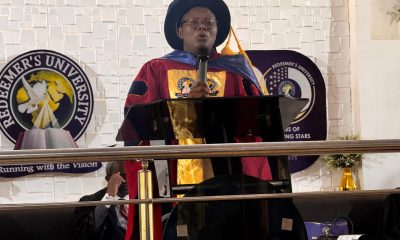
The Chairman of the Governing Council of Redeemer’s University, Ede, Osun State, Professor Oluwatoyin Ogundipe, has raised the alarm over the growing incidence of plagiarism, contract writing and the misuse of artificial intelligence (AI) in Nigerian universities, warning that the practices threaten the credibility of academic research and postgraduate education.
Ogundipe gave the warning while delivering the keynote address at the 68th Regular Meeting of the Committee of Provosts and Deans of Postgraduate Colleges and Schools in Nigerian Universities (CPDPGCS), held on Monday at the Sapetro Lecture Theatre, Redeemer’s University.
The meeting was themed, “Rebuilding the Foundation: Repositioning Postgraduate Education for Quality, Integrity and Global Competitiveness in Nigerian Universities.”
Ogundipe identified inadequate research funding, limited access to research facilities, insufficient ethics training, overstretched supervision and weak institutional governance as major challenges undermining academic standards.
He stressed that academic integrity should be treated as an institutional responsibility rather than an obligation imposed solely on individual researchers.
“Academic integrity, honest research, accurate attribution, responsible data management and fair assessment are part of what we need to move our research forward in this country,” he said.
Expressing concern over unethical research practices and the growing misuse of AI, Ogundipe urged academics to develop clearly defined research interests to enable them to provide effective guidance and mentorship to postgraduate students.
He advocated a shift from punishing academic misconduct to preventing it through transparent governance, responsible use of technology and effective supervision.
He also called for a culture of integrity in Nigerian universities, stressing that institutions must establish systems that promote ethical research practices and safeguard the quality of postgraduate education.
Earlier, the Vice-Chancellor of Redeemer’s University, Professor Shadrach Olufemi Akindele, described the meeting as an affirmation of the collective commitment of Nigerian universities to strengthening postgraduate education.
Akindele commended the committee, led by its chairman, Professor Victor Ukaegbu, for sustaining the professional platform, noting that postgraduate education remained central to knowledge generation, innovation and the development of highly skilled human capital.
He identified inadequate research funding, poor infrastructure, inconsistent supervision, prolonged completion periods, weak research-industry relationships and concerns over academic integrity as challenges requiring urgent attention.
The vice-chancellor warned that increased postgraduate enrolment did not necessarily translate into improved academic quality, stressing that the value of postgraduate education should be measured by the quality and impact of research outcomes.
“The real measure of success is the quality of the knowledge produced, the competence of the graduates, the originality of their research, and the impact of their contributions to society,” he said.
Akindele urged provosts and deans to strengthen academic standards, improve supervision and mentorship, address research funding gaps and pursue internationalisation.
He maintained that university leaders had a responsibility to protect academic standards, nurture future scholars and establish a solid foundation for globally competitive postgraduate education.
“We cannot attain global competitiveness on a weak foundation,” he added.
Also speaking, Professor Adeleke Osho of Redeemer’s University described academic integrity as the foundation of public confidence in university research, academic qualifications and professional judgment.
Osho noted that universities placed their institutional credibility behind every postgraduate degree awarded, warning that promotion targets, demanding workloads, inadequate funding and publication deadlines could pressure some academics into compromising research standards.
He also raised concerns over predatory journals and paper mills, which he said exploited researchers’ pressure to publish by offering questionable publication arrangements.
“Some publication offers now resemble express services: submit today, receive acceptance tomorrow, and wonder whether anyone had time to read the paper in between,” he said.
Osho called for a review of university promotion criteria to ensure that academic advancement was based on research quality, originality and relevance rather than publication volume alone.
He further cautioned that technological tools could not, on their own, guarantee genuine scholarship, noting that plagiarism detection results should not be treated as conclusive proof of originality.
“A low similarity score does not automatically establish originality, just as a clean laboratory result does not establish scientific competence,” he stressed.
He advocated clear institutional policies, consistent enforcement of regulations, effective supervision and proper guidance for postgraduate students.
Osho maintained that technology should complement rather than replace academic judgment, urging university leaders to uphold academic standards even when doing so might be uncomfortable.
The speakers collectively underscored the need for stronger institutional safeguards, ethical research practices and improved postgraduate supervision to restore confidence in Nigerian university education and enhance its global competitiveness.











2027: APC Igbimo-agba Osun Backs Adeleke’s Tinubu Re-election Role, Vows Massive Mobilisation

Release All Govt Transformers, TRACTORS In Your Custody To Ease Hardship For Our People, Olajengbesi Tells Wole Oke

CityMirrorNews CEO, Agboola Wins Osun NUJ Culture and Tourism Reporter of the Year Award

Late Babalaje Of Edeland: How A Businessman’s Wealth Became A Symbol Of Community Service
Late Babalaje’s 105-Year Legacy: Son Challenges Youth on Integrity, Philanthropy

Sanwo-Olu Takes To Runway At Lagos Fashion Week 2026
-

 News3 days ago
Osun NLC Threatens Three-Day Strike, Picketing Of UBA Over LG Funds
-
 News4 days ago
Agbonbiti Land Dispute: Ooni Aderemi Granted Land to Adewuyi Family, Chief Tells Court
-

 News3 days ago
Sowore, Others Hospitalised After Suspected Political Thugs’ Attack In Ekiti
-

 News4 days ago
Omirin Threatens N500m Defamation Suit Against Accord Candidate, Radio Station