
News
ICAN President: Nigeria Needs More Than Inflation Control To Ease Hardship

-As UNILESA Holds 2nd Distinguished Public Lecture
By Ayobami Agboola, Osogbo
The President of the Institute of Chartered Accountants of Nigeria (ICAN), Hajia Queensley Seghosime, has called for increased domestic production, improved agricultural productivity and sustainable fiscal policies to address Nigeria’s economic challenges and ease the burden of rising living costs on households and businesses.
Seghosime said economic reforms would only be meaningful when Nigerians began to experience tangible improvements in their purchasing power, living standards and business environment.
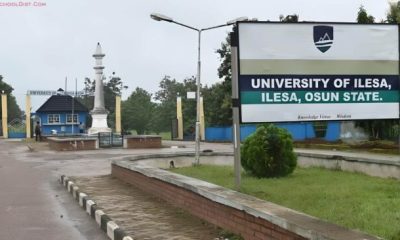
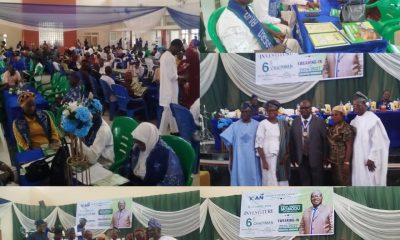
She made the call while delivering the second Distinguished Public Lecture of the University of Ilesa, Osun State, on Tuesday.
The lecture, titled “Accounting for Economic Resilience: Addressing Inflation, Fiscal Sustainability, Insecurity and Governance Challenges in Nigeria,” examined measures needed to strengthen the country’s economy amid persistent inflationary pressures and other structural challenges.
Represented by ICAN’s First Deputy Vice President, Dr Oye Akinsulire, the ICAN president said Nigeria had reached a critical stage in its economic reform process, noting that efforts to restore macroeconomic stability must translate into measurable benefits for citizens.
She observed that although some economic indicators might show signs of improvement, the ultimate test of reform was its impact on the daily lives of Nigerians.
According to her, economic stability becomes meaningful when citizens enjoy greater purchasing power, businesses can plan with confidence and households are able to rebuild their standard of living.
“Economic stability becomes meaningful when citizens experience greater purchasing power, businesses can plan with greater confidence, and households can begin to rebuild their standard of living,” she said.
Seghosime stressed the need for Nigeria to address the structural factors contributing to inflation, including low agricultural productivity, energy challenges, transportation costs and inadequate storage facilities.
She also called for stronger domestic production, consistent monetary and fiscal policies, and an enabling environment that would allow businesses to produce goods and services competitively.
The ICAN president warned that increased government revenue, economic growth and large budgetary allocations would have limited value if public expenditure and borrowing failed to deliver tangible benefits to citizens.
She said: “A country may have a budget running into millions of naira. Its revenues may increase. Its GDP may grow. Its institutions may publish impressive financial statements. But citizens will eventually ask the same question: What has it produced? What has the expenditure achieved? What has the borrowing built?”
Seghosime further noted that Nigeria’s recurring experiences with inflation, fiscal pressure and exchange-rate volatility underscored the need to build economic resilience during favourable periods to withstand future shocks.
She maintained that sustainable economic recovery required more than temporary stabilisation measures, urging policymakers to implement strategies capable of strengthening productivity, protecting livelihoods and improving the competitiveness of local businesses.
Earlier, Osun State Governor, Ademola Adeleke, called on governments at all levels to prioritise production, enterprise development and job creation as part of efforts to address the rising cost of living.
Represented by the Commissioner for Finance, Olusola Ogungbile, the governor said public funds must be managed responsibly, while borrowing should be directed towards projects that deliver meaningful development and improve citizens’ welfare.
Adeleke also emphasised the relationship between security and economic growth, noting that insecurity on farms, roads and in markets could undermine production, discourage investment and weaken economic recovery.
He urged public institutions to embrace transparency, accountability and responsiveness to the needs of citizens, describing good governance as essential to addressing the country’s economic difficulties.
In his welcome address, the Vice-Chancellor of the University of Ilesa, Professor Taiwo Asaolu, said the institution established the distinguished public lecture series to commemorate its Founders’ Day.
He explained that the initiative provides a platform for intellectual engagement between the university and the wider society on pressing national issues, combining academic perspectives with practical solutions.











Delta Man Kills Wife, Dies By Suicide Over Alleged Land Sale

Apartheid: Hashim Recounts Dramatic Showdown With Thatcher At Lagos Airport

24 Hours After Cabinet Dissolution, Oyebanji Relieves DGs, Advisers Of Duties

Alleged N69.15m Fraud: Court Hears Fresh Testimony Against Blessing CEO

2027: I’ll Attract Federal Projects To Ido/Ibarapa Federal Constituency — APC Candidate, Yusuff

Osun Police Intensify Crackdown On Cultism, Arrest Six Suspects In Osogbo
-
 News4 days ago
Osun Waste Crackdown: Civil Society Groups Fault Arrests, Question ₦50,000 Fine
-

 Economy1 day ago
Hashim’s Aide Insists ₦605 Petrol Price Is Achievable, Challenges Finance Minister
-
 Opinion4 days ago
Akinleye: Celebrating a Visionary Leader Of Honour At His Birthday By Sunday Oguntuyi
-
 Foreign News2 days ago
UN, EU Leaders Condemn Houthi Attack On Riyadh Airport