
News
Apartheid: Hashim Recounts Dramatic Showdown With Thatcher At Lagos Airport
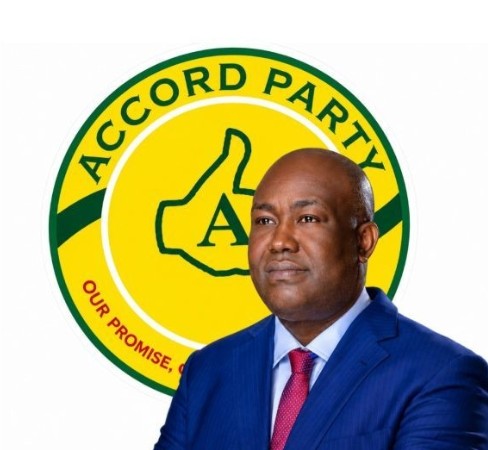
Accord Party presidential candidate, Dr Gbenga Olawepo-Hashim, has recounted how he and four fellow student activists breached a police cordon at Lagos Airport in January 1988 to protest against former British Prime Minister Margaret Thatcher’s position on economic sanctions against South Africa’s apartheid regime.
The incident, which occurred during Thatcher’s visit to Nigeria on January 7, 1988, is revisited in an extract from Hashim’s forthcoming autobiography, Sunrise At Midnight.
Hashim, who was a student activist at the University of Lagos at the time, recalled that the protest was part of a broader campaign by Nigerian students, labour unions and anti-apartheid groups demanding stronger international action against the white-minority government in South Africa.
Thatcher’s opposition to comprehensive economic sanctions against the apartheid regime had drawn criticism from anti-apartheid campaigners, who argued that Britain should exert greater economic pressure to dismantle the system of racial segregation and political exclusion.
The former British Prime Minister maintained that punitive economic measures could worsen the suffering of black South Africans and harm the economies of neighbouring African countries. Speaking at an official dinner in Lagos on the evening of her visit, she argued that destroying South Africa’s economy would not be the most effective way to end apartheid.
However, Nigerian activists viewed her position as inadequate in the face of the racial oppression and denial of political rights suffered by the black majority in South Africa.
According to Hashim’s account, the protest began at the Nigeria Labour Congress secretariat on Olajuwon Street, Tejuosho, before demonstrators marched through Yaba and along Ikorodu Road towards Ikeja Airport.
The protesters carried placards and African National Congress flags produced by the Nigeria-ANC Friendship and Cultural Association. Hashim estimated that about 2,500 people participated in the procession, which stretched across a considerable part of Lagos and disrupted traffic along the route.
The demonstrators headed for the airport’s Protocol Gate, hoping to use Thatcher’s arrival to draw attention to their opposition to her government’s apartheid policy.
Security authorities had anticipated the protest and deployed police officers along the route and around the airport. A mass rally at the airport had been prohibited, while security personnel cordoned off the perimeter ahead of the British leader’s arrival.
For Hashim and four other student activists, however, remaining behind the security barrier would have meant losing an opportunity to communicate their message directly to Thatcher and the Nigerian officials receiving her.
The situation became more dramatic when Thatcher’s aircraft landed at approximately 12:05 p.m.
Hashim recalled that five student activists decided to break through the police cordon and move onto the tarmac, hoping to bring their placards and anti-apartheid message closer to the visiting British Prime Minister and the Nigerian delegation.
The activists reportedly breached the security line and advanced towards the arriving delegation, which was led on the Nigerian side by Augustus Aikhomu, then Deputy Head of State and Chief of General Staff.
Their sudden appearance on the tarmac reportedly triggered alarm among government officials and security personnel.
According to Hashim’s recollection, Chief Press Secretary to the then military government, Duro Onabule, shouted, “See them!” An order to arrest the protesters followed.
The confrontation quickly ended in the arrest of the five activists, identified in Hashim’s account as Odion Akhaine, Olaitan Oyerinde, Rotimi Ewebiyi, Chris Ayaeze and Hashim himself.
They were subsequently taken to the Lagos Airport Police Station, where they were detained in a small cell.
The airport confrontation became part of Hashim’s early history of political activism, reflecting the determination of Nigerian students and labour activists to challenge policies they considered inconsistent with the struggle for racial equality and liberation across Africa.
Although the protest was directed at Thatcher’s position on South Africa, it also highlighted the wider debate over the role of foreign governments in confronting apartheid and the responsibility of African countries to support the campaign against racial oppression.
For the activists, the struggle transcended Nigeria’s borders. They believed that the fight against apartheid was a collective African responsibility and that international leaders should be held accountable for policies that could affect the liberation of millions of black South Africans.
The incident also demonstrated the risks associated with confronting political authority at a time when public demonstrations were subject to strict security restrictions. By attempting to reach the visiting British leader, the five students chose direct action despite the possibility of arrest.
In Sunrise At Midnight, Hashim revisits the episode as a defining moment in his formative years as an activist. His account provides a personal perspective on the involvement of Nigerian students and organised labour in the international anti-apartheid campaign during the late 1980s.
While contemporary accounts confirm that Thatcher faced protests over her position on apartheid during her January 1988 visit to Nigeria, some details of the reported encounter on the airport tarmac remain based on Hashim’s personal recollection.
Nearly four decades later, the episode remains a significant part of Hashim’s account of his political journey. It recalls a tense day at Lagos Airport when five young Nigerian activists challenged the position of a visiting British Prime Minister on apartheid and were temporarily deprived of their freedom for their action.





24 Hours After Cabinet Dissolution, Oyebanji Relieves DGs, Advisers Of Duties

Alleged N69.15m Fraud: Court Hears Fresh Testimony Against Blessing CEO

2027: I’ll Attract Federal Projects To Ido/Ibarapa Federal Constituency — APC Candidate, Yusuff

Osun Police Intensify Crackdown On Cultism, Arrest Six Suspects In Osogbo

Obasanjo, Diri Demand More Oil Revenue For Niger Delta

Okey Bakassi Denies Divorce Rumours, Says Family Is Intact
-
 News4 days ago
Osun Waste Crackdown: Civil Society Groups Fault Arrests, Question ₦50,000 Fine
-

 Economy1 day ago
Hashim’s Aide Insists ₦605 Petrol Price Is Achievable, Challenges Finance Minister
-
 Opinion4 days ago
Akinleye: Celebrating a Visionary Leader Of Honour At His Birthday By Sunday Oguntuyi
-
 Foreign News2 days ago
UN, EU Leaders Condemn Houthi Attack On Riyadh Airport