
Opinion
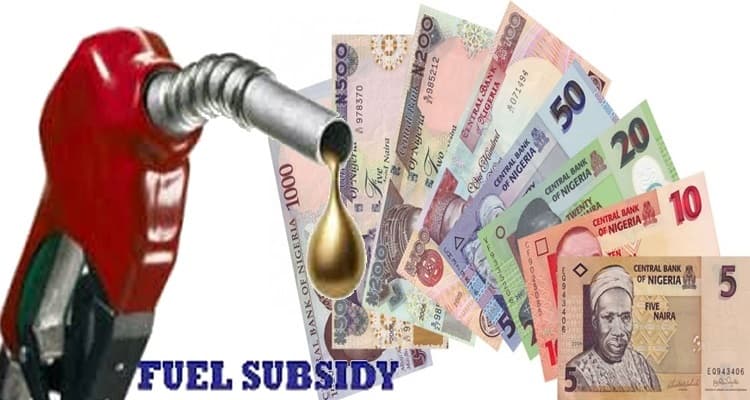
FLIP THE SUBSIDY: Why Nigeria Must Fund Raw Crude And Compel Banks To Build Refineries By Olugbemi Olufiade
By Olugbemi Olufiade, ACArb, LL.B
When President Bola Tinubu assumed office, his administration moved with remarkable speed to dismantle Nigeria’s decades long fiscal distortions. The distortionary fuel subsidy was removed, and the multiple exchange rate window was collapsed. While these measures were welcomed by global financial institutions as necessary steps to rescue the economy from the brink of collapse, the immediate aftermath has created a sharp divergence between institutional economic data and the lived experiences of ordinary Nigerians. On paper, the blueprint is beginning to show signs of institutional validation. Recent data indicates measurable macroeconomic stabilization, marked by an accelerating GDP growth rate of 4.43 per cent year on year in the second quarter of 2026, up from 4.23 per cent in Q2 2025. Through tighter monetary policy and efforts to address foreign exchange backlogs, the Central Bank of Nigeria (CBN) has introduced greater predictability into the fiscal framework. Proponents argue that these difficult reforms represent the necessary structural foundation for Nigeria’s long term economic independence.
However, this high level progress contrasts sharply with the realities faced by citizens, creating a paradox where macroeconomic gains appear disconnected from everyday economic hardship. For the average citizen and business owner, the benefits of these reforms remain trapped in policy documents, while the burden is experienced daily. The domestic economy continues to struggle with a severe cost of living crisis, driven by currency depreciation and rising energy costs that have pushed millions of Nigerians to their financial limits. Retail petrol prices frequently hover between N1,310 and N1,345 per litre in major urban centres, while diesel prices remain highly volatile, creating a damaging chain reaction that affects food transportation, manufacturing costs, and household expenses.
The major weakness in contemporary Nigerian economic discourse is the excessive reliance on textbook economic theories that fail to recognise the unique realities and structural challenges of the Nigerian market. During election cycles, several presidential candidates have presented attractive economic blueprints based on perfect market assumptions, complete deregulation, and structural adjustments, as though Nigeria operates within a flawless institutional environment. These theoretical models often fail in practice because complete deregulation without adequate structural safeguards does not automatically create competition; rather, it may encourage excessive pricing pressures and artificial scarcity.
Proposing conditional cash transfers or transport vouchers may provide temporary relief, but such measures do little to reduce the structural cost of production in manufacturing and agriculture. Furthermore, many policy models assume strong institutions, effective regulatory enforcement, and secure borders. Relying solely on border policing to prevent fuel smuggling while significant price differences exist between Nigeria and neighbouring countries remains an impractical solution. Nigeria can no longer afford the luxury of economic experimentation without considering its unique realities. True economic leadership requires moving beyond imported policy frameworks and adopting a practical model of strategic state intervention.
To permanently break the cycle of energy instability, the Federal Government must abandon the traditional approach of subsidising imported or finished petroleum products. Instead, policy implementation must shift towards strengthening domestic refining capacity through targeted crude oil support and strategic banking interventions. To achieve this structural transformation, the first step must be the complete inversion of the subsidy system by supporting crude oil supply rather than finished petroleum products. Subsidising finished Premium Motor Spirit (PMS) has historically benefited foreign suppliers, encouraged cross border smuggling, and placed a significant burden on national resources.
Even with the commencement of operations at major domestic refining facilities such as the 650,000 barrels per day Dangote Petroleum Refinery, market prices remain vulnerable. Local refiners continue to face challenges in accessing crude feedstock at competitive prices due to international market pressures and domestic supply constraints.
The practical solution requires the Nigerian government to completely discontinue subsidising finished petroleum products and redirect those fiscal resources towards subsidising raw crude oil inputs exclusively for domestic refineries. Through a transparent domestic crude allocation framework supervised by the Nigerian Upstream Petroleum Regulatory Commission (NUPRC), crude oil should be supplied to operational local refineries at a strategic discounted rate denominated in naira. This approach would reduce foreign exchange pressure, strengthen local refining capacity, and create a more stable pricing environment.
While significant volumes of crude and condensate have been supplied to domestic refineries, refinery operators continue to identify commercial pricing and reliable feedstock arrangements as major challenges. Providing strategic support for crude feedstock will enable the government to promote affordable domestic petroleum pricing without continuing the unsustainable practice of subsidising imported finished products. Alongside this subsidy transformation, Nigeria must implement a banking framework capable of replicating the successful industrial financing approach associated with the President Olusegun Obasanjo administration’s cement sector reforms.
Leaving the financing of multi billion dollar energy infrastructure entirely to commercial market forces is insufficient for a developing economy seeking rapid industrial transformation. Nigeria’s smaller modular refineries have remained under utilised because many operators face difficulties accessing affordable long term financing, reliable logistics, and the necessary technical support. To rapidly expand domestic refining capacity, the government must introduce a strategic financing framework that encourages Nigerian commercial banks to participate actively in refinery development.
The Federal Government, through appropriate regulatory mechanisms, should require commercial banks to establish syndicated financing arrangements dedicated to supporting private modular and conventional refinery projects. This approach draws lessons from the industrial financing strategy adopted during the President Olusegun Obasanjo administration in the early 2000s, when deliberate policies encouraged banks to mobilise capital and provide long term financing that supported the growth of domestic manufacturing industries, including cement production.
With the Central Bank of Nigeria’s Monetary Policy Rate remaining at a challenging level for investors, borrowing costs have become a major obstacle for industrial expansion. A structured financing mandate for strategic sectors such as refining would unlock the capital required to transform licensed refinery projects into fully operational industrial assets. Furthermore, Nigeria must re engineer the very foundation of its banking system by moving from excessive foreign exchange speculation towards productive investment financing. For many years, significant attention within the Nigerian banking sector has been directed towards foreign exchange activities, government securities, and transactional services, while long term industrial financing has remained insufficient. A modern banking system must not only process financial transactions; it must serve as a catalyst for national development by supporting manufacturing, energy infrastructure, agriculture, and other productive sectors.
The Central Bank of Nigeria must therefore strengthen regulatory frameworks that encourage commercial banks to become active partners in economic development, drawing lessons from successful industrial financing models in countries such as Germany, Japan, and South Korea. In these economies, financial institutions have historically played a central role in industrial expansion by providing long term capital to productive enterprises.
Nigeria requires a similar approach through the introduction of a Productive Sector Investment Mandate. Under this framework, access to certain government supported financial opportunities, foreign exchange interventions, and public sector business engagements should be linked to a bank’s demonstrated commitment to financing productive sectors, including manufacturing, agro processing, and petroleum refining.
Commercial banks that fail to dedicate an appropriate percentage of their balance sheets towards long term productive investments should face regulatory consequences through existing banking supervision mechanisms. Such measures should be designed carefully to ensure that they promote responsible lending, protect depositors’ funds, and encourage genuine industrial development.
By reducing excessive dependence on foreign exchange speculation and short term financial activities, Nigeria can redirect banking capital towards factories, infrastructure, and industries capable of creating employment and reducing inflationary pressures. However, the transformation of Nigeria’s refining sector must also address the challenge of petroleum product smuggling. Subsidising crude inputs for domestic refiners creates a potential risk: if locally refined petroleum products become significantly cheaper than those in neighbouring countries, the incentive for illegal cross border trade may increase. To prevent Nigeria’s economic sacrifices from benefiting external markets through smuggling, the government must move beyond traditional border enforcement and adopt a comprehensive regional petroleum trade management strategy. The Federal Government should establish a specialised State Directed Petroleum Export Regulatory Board with the responsibility of coordinating and regulating the legal exportation of locally refined petroleum products.
This institution should serve as a central clearing mechanism for cross border petroleum transactions. Private domestic refineries should not be allowed to undermine national pricing objectives by independently exporting subsidised petroleum products without proper regulatory oversight. Instead, any excess refined petroleum products beyond domestic requirements should be channelled through the Export Regulatory Board, which would coordinate lawful regional sales to neighbouring West African countries. Through this framework, Nigeria can capture regional market opportunities, earn foreign exchange from petroleum exports, and ensure that domestic consumers remain the primary beneficiaries of strategic crude support policies.
The Board would negotiate with neighbouring governments and legitimate regional buyers, selling refined petroleum products at internationally competitive market prices while maintaining domestic pricing stability. The fundamental question before the administration is no longer whether economic restructuring is necessary. The real challenge is whether policy implementation can successfully move beyond macroeconomic statistics and focus directly on restoring the purchasing power and economic wellbeing of ordinary Nigerians.
Flipping the subsidy from finished petroleum products to crude oil inputs, compelling strategic banking participation in refinery financing, and redirecting financial resources towards productive sectors represent a pathway towards bridging the gap between economic indicators and human welfare. Nigeria’s challenge has never been a lack of natural resources. The challenge has been the inability to consistently convert those resources into productive capacity, industrial growth, employment opportunities, and improved living standards.
The future of economic reform should therefore be measured not only by fiscal savings or macroeconomic figures, but by how effectively national resources are transformed into factories, affordable energy, and a stronger economy for citizens. Only by moving from theoretical economic prescriptions to practical economic patriotism can Nigeria achieve sustainable energy security and fulfil the promise of economic transformation.
Olugbemi Olufiade, ACArb (MCArb in view), LL.B, is a legal scholar, certified arbitrator, and public affairs analyst specialising in constitutional governance, legislative processes, economic policy, and political commentary.
Email: gbemiolufiade275@gmail.com






SSACO Challenges Adekanmbi to Substantiate Corruption Allegation Against Alli

Ede Muslim Grammar School at 52: Alumni, Govt, Stakeholders Urged To Revive Institution

Princess Omolaoye Adedoyin At 66: Family Celebrates Her Godly Virtues, Prays For Long Life

Osun: Physician Advocates Regular Checkups At Qualified Medical Laboratories

Hausa Zallah Leader Congratulates Hashim on Court Victory, INEC Listing

Osun Police Declare Alowonle, Sibi Wanted Over Emir’s Murder
-

 Crime5 days ago
Police Arraign Three Travel Agency Staff Over Alleged ₦5.6m Visa Fraud In Osun
-

 News5 days ago
Osun: FBOMF Raises Alarm Over Poor School Facilities, Teacher Shortage In Ayedaade
-

 News4 days ago
Toluwanisings: Family Announces October 27 Tribute Night In Ibadan
-

 News5 days ago
APC Will Win Massively In Oluyole — Mustapha