
News
Why Nigeria Must Not Reverse President Tinubu’s Petroleum Sector Reform, By Dr. Kazeem Alabaja

SUBSIDY IS NOT COMPASSION
Why Nigeria Must Not Reverse President Tinubu’s Petroleum Sector Reform
By Dr Kazeem Olayimika Salaam (ALABAJA), PhD, FCCA
APC Chieftain and Kwara South Senatorial Aspirant
Nigeria should answer hardship with targeted relief and transparent public spending – not by reopening an open-ended price subsidy that rewards consumption, invites arbitrage and converts every oil-price shock into a budget crisis.
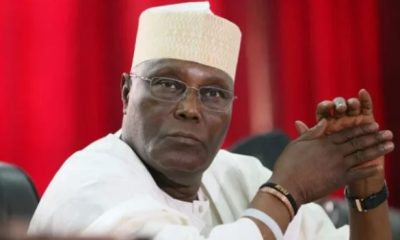
Alhaji Atiku Abubakar’s promise to restore petrol subsidy if elected, is not an economic rescue plan; it is a dangerous retreat into the very fiscal disorder that brought Nigeria dangerously close to insolvency. HE Atiku Abubakar cannot credibly promise Nigerians in 2022 that he would abolish the subsidy within his first 100 days in office, only to return in 2026 and present its restoration as economic salvation.
That contradiction is not statesmanship, but a reckless political opportunism that Nigerians must not ignore. Atiku’s proposal would reopen an opaque, corruption-prone and socially regressive expenditure regime that consumed trillions of naira, rewarded privileged consumers and subsidy intermediaries, encouraged smuggling, weakened the Federation Account and deprived states and local governments of resources for salaries, pensions, roads, schools and healthcare. No doubt, Nigerians are genuinely hurting, but their hardship must never be exploited as campaign currency or used to resurrect a ruinous policy.
I therefore reject this proposal unequivocally. Yes, compassion demands targeted support for vulnerable citizens, but not another blank cheque for an inequitable subsidy system that previously drained the national treasury.
Public policy must be judged by outcomes, incidence and opportunity cost. The central question is not whether government should protect citizens; it must. The question is whether every litre of petrol consumed – including by high-income motorists, large fleets, smugglers and commercial intermediaries – should attract the same public support as the transport needs of a low-income worker, farmer or student. The answer, in both economics and social justice, is no.
Compassion must pass a fiscal test
The arithmetic is simple. If the market or supply cost per litre is Pm, the controlled pump price is Pc and the subsidised volume is Q, then the fiscal cost is S = (Pm – Pc) x Q. Calling the intervention a crude-oil discount, a refinery support mechanism or a capped price arrangement does not erase the cost. If the Federation sells crude below market value, the difference is forgone public revenue – an implicit subsidy and a tax expenditure by another name. It must still be appropriated, measured, disclosed and audited.
This is especially dangerous in a country with volatile oil prices, exchange-rate exposure and weak revenue mobilisation. A universal price subsidy is an uncapped contingent liability: the bill rises when international prices or the exchange rate moves against us, even when the National Assembly has not voted for better schools, hospitals or security. Broad fuel subsidies weaken fiscal resilience by converting price shocks into budget shocks.
History has already rendered its verdict
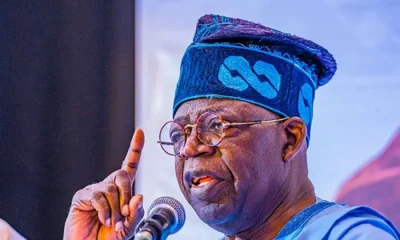
Nigeria introduced petrol subsidy in 1977 as a temporary response to an oil-price shock. Temporary relief gradually hardened into a permanent entitlement, surviving repeated reform attempts and reversals, including the politically traumatic episode of 2012. The Petroleum Industry Act 2021 eventually established a market-oriented downstream framework and contemplated the end of subsidy by June 2023. President Bola Ahmed Tinubu’s declaration on 29 May 2023 therefore did not invent the reform; it supplied the political will that successive administrations had postponed.
The historical bill is sobering. The Nigeria Extractive Industries Transparency Initiative reported that the country spent N13.7 trillion on fuel subsidies between 2005 and 2021. NNPC data then showed an additional N4.39 trillion spent in 2022 alone – about 32 per cent of the entire preceding 17-year nominal total in a single year. That 2022 charge was roughly one-quarter of the N17.126 trillion federal budget originally approved for the year. NNPC remitted no funds to the Federation Account in 2022, leaving federal, state and local governments with a deep revenue hole while deficits and borrowing expanded.
It would be analytically careless to blame every weakness of the Nigerian economy on fuel subsidy alone. Oil theft, low production, monetary financing, insecurity, weak productivity and poor expenditure quality also mattered. But the subsidy clearly amplified the fiscal deterioration: it diverted oil revenue before it reached the treasury, obscured the true cost of consumption, crowded out productive expenditure and rewarded cross-border arbitrage. A policy need not be the only cause of a crisis to be an important and avoidable cause.
A subsidy that favours the better-off
The distributional evidence is equally decisive. IMF analysis found that the richest income quintile typically captured about six times as much fuel-subsidy benefit as the poorest quintile. That is because wealthier households own more vehicles and consume more petrol directly. Poor households suffer indirectly through transport and food prices, but that is precisely why they should be protected directly rather than through a leaky nationwide discount on every litre.
In an IMF simulation based on Nigerian household data, targeted transfers of about N239 billion – 0.13 per cent of 2021 GDP – could offset the estimated increase in the poverty headcount from removing subsidy, at a fraction of the fiscal resources consumed by the subsidy. The policy lesson is scientific and humane: target the person, not the product. Support the vulnerable household, the commuter, the farmer and the small enterprise; do not subsidise litres without knowing who ultimately captures the benefit.
Atiku’s accountability question is valid; his prescription is not
Alhaji Atiku asks: where did the savings go? Every public-finance professional should welcome that demand for accountability. Citizens are entitled to a transparent reconciliation of the counterfactual subsidy bill, actual Federation revenue, NNPC deductions, debt-service pressures and the uses of additional federal, state and local resources. But a demand for better accounts cannot logically justify restoring the expenditure whose opacity created the problem. Where public expenditure controls are deficient, the appropriate response is not to reinstate a distortionary fiscal liability, but to strengthen the control environment, reconcile the accounts and enforce audit accountability.
Moreover, ‘savings’ are not always a cash balance sitting in one account. They may appear as higher distributable revenue, avoided borrowing, reduced arrears or fiscal space used to meet wages, debt service and capital commitments. The Federal Ministry of Finance estimates N15.827 trillion in subsidy savings for the Federation between June 2023 and December 2025. Its supporting schedule allocates N5.007 trillion to the Federal Government, N6.525 trillion to the states, N3.876 trillion to local governments and N419 billion to other statutory recipients. These estimates should remain subject to independent reconciliation, audit and regular publication. Transparency strengthens the reform; reversal destroys it.
Alhaji Atiku’s latest attempt to distinguish a new, capped support system tied to domestic refining from the old subsidy does not solve the core problem. A below-market crude allocation still transfers value from the Federation to selected oil refiners. Unless the discount, volume, beneficiaries, consumer pass-through, fiscal ceiling, audit trail and sunset date are disclosed in advance, the old risks of capture and opacity simply return in a new accounting wrapper.
The FAAC dividend is real – and it belongs at the grassroots
President Tinubu’s argument that subsidy removal helped finance the much larger allocations now reaching all 36 states and the 774 local governments is supported by the fiscal record. The technically correct term is Federation Account allocation, not a discretionary federal gift: these are constitutionally shared revenues belonging to the three tiers. Before reform, petrol subsidy was effectively a first-line drain on petroleum receipts before the remainder could reach that common pool. Removing the drain allowed more revenue to be shared, while tax administration, oil-sector receipts and foreign-exchange reforms also expanded the nominal naira value of the pool.
Official FAAC measure
2023
2025
Change
Net FAAC distributed
N10.846tn
N21.897tn
+102%
States’ receipts
N4.179tn
N8.934tn
+114%
Local-government receipts
N2.601tn
N5.351tn
+106%
Source: Federal Ministry of Finance underlying fiscal analysis. Nominal naira values; percentages calculated from published totals.
The annual data are striking. Net FAAC distribution rose from N10.846 trillion in 2023 to N21.897 trillion in 2025. Over the same period, the states’ aggregate receipts increased from N4.179 trillion to N8.934 trillion, while local-government receipts rose from N2.601 trillion to N5.351 trillion. The Ministry further calculates that, against the pre-removal monthly run-rate, states received about N9.17 trillion in additional allocations and local governments about N6.66 trillion between June 2023 and December 2025. Of the estimated subsidy savings alone, states and local governments together received N10.401 trillion – roughly 65.7 per cent. That is fiscal federalism in hard numbers.
Scientific honesty requires two qualifications. First, these are nominal figures: inflation reduces their real purchasing power. Second, the full rise cannot be attributed to subsidy removal alone because revenue mobilisation and exchange-rate changes also contributed. Even with those caveats, the direction and scale are undeniable. The World Bank independently recorded gross FAAC revenue rising from N17.078 trillion in 2023 to N37.443 trillion in 2025 and observed increased capital spending by subnational governments.
The economic justification is straightforward. States and councils are closer to the services that determine daily welfare: primary healthcare, basic education, rural roads, water, sanitation, agricultural extension, local security support and the payment of teachers, health workers and pensioners. When additional revenue clears salary and pension arrears, it stabilises household consumption. When it builds feeder roads, clinics, classrooms, markets and water systems, it lowers transaction costs, raises farm-gate income, strengthens human capital and creates a local multiplier through workers, suppliers and small contractors.
This is how an upstream fiscal reform should become a grassroots development dividend.
There are already practical illustrations. Nasarawa’s governor reported that the state’s monthly allocation increased from about N4.5 billion to roughly N16 billion, creating room for roads, water, education, healthcare, a vocational centre and a solar-powered state secretariat. Enugu’s governor likewise credited increased Federation resources with helping to finance smart schools, major roads and a specialist hospital.
These examples deserve recognition, but every claimed project must still be tested against procurement records, completion, service quality and citizen use. Allocation is an input; welfare is the outcome.
President Tinubu has rightly urged the media and citizens to scrutinise states and local governments, not Abuja alone. I make the same call. Where the grassroots impact is not as robust as the allocation increase, Nigerians should ask their governors, state assemblies, local-government chairmen and auditors-general for a quarterly subsidy-dividend scorecard: opening allocation, actual receipts, capital releases, contract awards, project locations, completion rates and measurable beneficiaries. With aggregate state receipts now more than double the 2023 level, governors should not offer the same excuses, unpaid obligations or abandoned projects. Accountability must follow the money all the way to the ward.
The evidence of recovery supports staying the course.
President Tinubu deserves commendation for taking a decision that was economically necessary but politically hazardous. The adjustment was painful, and government must never dismiss the real loss of purchasing power experienced by families. Yet responsible leadership is not the art of preserving every popular distortion; it is the courage to remove a ruinous one while building fairer protections.
The reform mix is beginning to show measurable macroeconomic gains, although these gains cannot all be attributed to subsidy removal alone. The National Bureau of Statistics reported real GDP growth of 3.89 per cent in the first quarter of 2026, up from 3.13 per cent a year earlier, with manufacturing growing by 3.29 per cent. The Central Bank reported gross external reserves above US$45 billion, the highest level since 2018. The World Bank’s April 2026 Nigeria Development Update recorded stronger revenue mobilisation and external balances, while candidly noting that better macroeconomic numbers had not yet translated sufficiently into living standards. This is a reason to deepen inclusion, not to reverse stabilisation.
The President’s action has also improved the investment logic of domestic refining. A market in which the public treasury absorbs losses while investors face administratively fixed prices discourage efficiency and perpetuates import dependence. A rule-based market, supported by competition, transparent regulation and domestic refining capacity, offers a more durable route to supply security than a return to fiscal price suppression.
A public-finance compact for the next phase
My total support for President Tinubu’s economic transformation is therefore support for both reform and accountability. The next phase should convert macroeconomic stabilisation into visible household welfare through five public-finance commitments:
Publish a monthly subsidy-reform fiscal statement showing the estimated counterfactual subsidy cost, actual petroleum-sector remittances and deductions, Federation Account distributions, and major uses of reform-related fiscal space.
State governors should channel a clearly disclosed share of fiscal gains into verified social registries, targeted cash transfers, school feeding, primary healthcare, agricultural logistics and support for the lowest-income commuters.
Provide robust inter-states and intra-state mass transit system, compressed natural gas across the 774 local government areas of the federation (currently, some states only have one or two outlet, Kwara state is an example), and other lower-cost mobility systems, with procurement data, unit costs and delivery milestones open to public scrutiny.
Require federal, state and local governments to report outcomes, not merely allocations: kilometres of roads completed, classrooms rehabilitated, health centres equipped, jobs supported and beneficiary households reached.
Use a rule-based, temporary and targeted stabilisation mechanism during exceptional price shocks, with a hard fiscal ceiling, legislative appropriation, named beneficiaries, independent audit and an automatic sunset clause – never an open-ended universal petrol subsidy.
This compact answers the legitimate public demand for transparency while preserving the integrity of the reform. It also places responsibility where our Constitution places revenue. In other words, responsibilities are measured across all three tiers of government such that increased Federation resources are appropriately matched by visible service delivery in every state and local government.
Nigeria must not finance yesterday’s illusion
President Tinubu has displayed uncommon statesmanship by confronting a fiscal illusion that outlived its usefulness and threatened the solvency of the Federation. He deserves the support of Nigerians who understand that reform is not measured only by the pain of transition, but by the crisis avoided, the institutions rebuilt and the opportunities created for the next generation. I salute his courage, resolve and determination to reposition Nigeria on the path of productive investment, stronger revenues and sustainable growth.
Alhaji Atiku Abubakar is entitled to criticise the execution of government policy. He is right to insist on a transparent account of public resources. But his pledge to restore petrol subsidy is economically inconsistent, fiscally retrogressive and socially mistargeted. Nigeria cannot borrow its way back into a policy that depleted public revenue, privileged heavier consumers and weakened investment incentives.
The humane alternative is clear: protect people directly, publish the accounts, audit every naira, expand affordable transport, strengthen domestic production and stay the course on market reform. On this defining question, I stand firmly with President Bola Ahmed Tinubu and offer my total support for the economic transformation he has courageously led. Nigeria must move forward with discipline and compassion – not return to yesterday’s expensive illusion.
ABOUT THE AUTHOR
Dr Kazeem Olayimika Salaam (Alabaja), PhD, FCCA, is an APC chieftain and Kwara South Senatorial Aspirant. He is a finance and public financial management professional with experience spanning fiscal governance, public debt management, risk, regulatory compliance across the globe including Africa, Europe, Middle East and Americas.













SSACO Challenges Adekanmbi to Substantiate Corruption Allegation Against Alli

Ede Muslim Grammar School at 52: Alumni, Govt, Stakeholders Urged To Revive Institution

Princess Omolaoye Adedoyin At 66: Family Celebrates Her Godly Virtues, Prays For Long Life

Osun: Physician Advocates Regular Checkups At Qualified Medical Laboratories

Hausa Zallah Leader Congratulates Hashim on Court Victory, INEC Listing

Osun Police Declare Alowonle, Sibi Wanted Over Emir’s Murder
-

 Crime5 days ago
Police Arraign Three Travel Agency Staff Over Alleged ₦5.6m Visa Fraud In Osun
-

 News5 days ago
Osun: FBOMF Raises Alarm Over Poor School Facilities, Teacher Shortage In Ayedaade
-

 News4 days ago
Toluwanisings: Family Announces October 27 Tribute Night In Ibadan
-

 News5 days ago
APC Will Win Massively In Oluyole — Mustapha