
News
Breaking: UK Court Clears Ex-petroleum Minister Diezani Alison-Madueke Of Bribery Charges
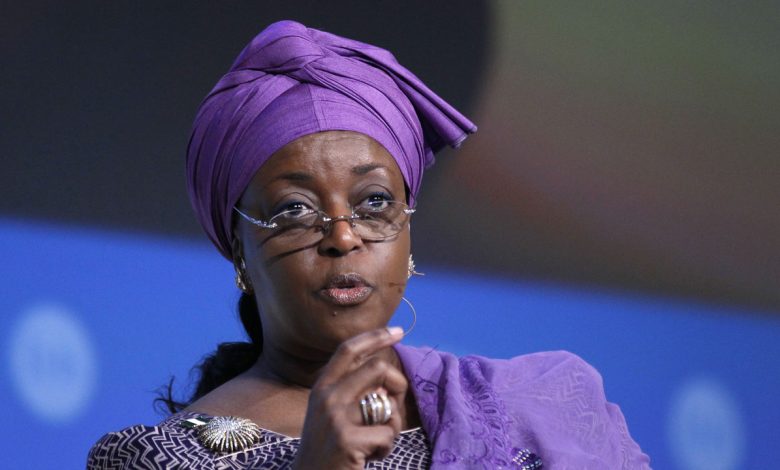
A jury at Southwark Crown Court in London has reportedly acquitted Nigeria’s former Minister of Petroleum Resources, Diezani Alison-Madueke, of six bribery-related charges after a lengthy trial that attracted significant attention in both the United Kingdom and Nigeria.
The verdict against Diezani marks a major development in a legal saga that has spanned more than a decade and has been closely followed by anti-corruption agencies, government officials and members of the international oil and gas community.
Diezani who served as Minister of Petroleum Resources between 2010 and 2015 during the administration of former President Goodluck Jonathan, had consistently denied all allegations brought against her. Blueprint reports
Jury returns not guilty verdict
According to reports from the proceedings, the former minister was cleared of six counts relating to bribery and conspiracy to commit bribery after jurors deliberated for more than 46 hours.
Prosecutors had alleged that Alison-Madueke received benefits from individuals within the oil and gas sector who were seeking access to lucrative energy contracts and business opportunities in Nigeria.
The prosecution argued that these benefits contributed to what was described as a luxurious lifestyle maintained by the former minister while residing in the United Kingdom.
Throughout the trial, however, Alison-Madueke maintained her innocence, insisting that she neither accepted bribes nor exercised improper influence in the award of government contracts.
The jury ultimately found insufficient grounds to convict her on any of the charges presented before the court.
Co-defendants also discharged
The case also involved oil industry executive Olatimbo Ayinde, who faced allegations relating to bribery and a separate charge involving a foreign public official.
Ayinde denied all accusations brought against him during the proceedings.
Also standing trial was Doye Agama, Alison-Madueke’s brother, who was accused of participating in a conspiracy connected to payments allegedly made to a church.
Both men pleaded not guilty and were similarly acquitted by the jury.
Their acquittals effectively brought an end to one of the most closely watched corruption trials involving Nigerian public officials in recent years.
Long-running investigations
The legal proceedings stemmed from investigations launched by British authorities more than a decade ago.
The allegations formed part of broader scrutiny surrounding the management of Nigeria’s petroleum sector during Alison-Madueke’s tenure as minister.
Over the years, her name has featured prominently in various investigations and court proceedings in multiple jurisdictions, including Nigeria, the United Kingdom and the United States.
Several anti-corruption agencies have examined transactions and contracts linked to the petroleum industry during the period she held office.
The former minister has repeatedly denied wrongdoing and argued that many of the allegations against her were politically motivated.
Controversial tenure in office
Alison-Madueke remains one of the most prominent figures to have served in Nigeria’s oil sector.
She was appointed Minister of Petroleum Resources in 2010 and became one of the most influential officials in the administration of former President Goodluck Jonathan.
Prior to that appointment, she served in other ministerial capacities, including as Minister of Transport and Minister of Mines and Steel Development.
Her tenure coincided with a period when Nigeria was among Africa’s leading crude oil producers and the petroleum sector remained the backbone of the country’s economy.
However, her years in office were also marked by persistent allegations relating to transparency, revenue management and contract administration within the oil industry.
Implications of the verdict
Legal analysts say the acquittal underscores the principle that criminal convictions must be based on evidence capable of meeting the threshold of proof beyond reasonable doubt.
The verdict does not necessarily end public debate surrounding issues that emerged during her tenure, but it represents a significant legal victory for the former minister after years of investigations and courtroom proceedings.
The outcome is also likely to generate reactions across Nigeria’s political and legal circles, where opinions regarding Alison-Madueke’s legacy have remained sharply divided.
Supporters may view the acquittal as vindication after years of legal scrutiny, while critics are expected to continue raising questions about governance and accountability within the petroleum sector.
Anti-corruption fight remains a national issue
The case has once again drawn attention to the broader conversation about corruption, transparency and accountability in Nigeria’s public institutions.
Successive administrations have pledged to strengthen anti-corruption measures and improve oversight of public resources, particularly within the oil and gas industry, which contributes a substantial portion of government revenue.
Analysts argue that regardless of the outcome of individual cases, reforms aimed at improving transparency, strengthening institutions and promoting accountability remain critical to public confidence in governance.
For Alison-Madueke, the acquittal represents a significant milestone in a legal battle that has lasted for years and attracted international attention. Whether the verdict finally closes one of the most controversial chapters in Nigeria’s petroleum sector history remains to be seen, but it undoubtedly marks a turning point in the long-running case.












Amotekun Hands Over Four Operatives To Police Over Ife Attacks

Helicopter Reportedly Crashes In Ondo, Casualties Yet To Be Confirmed

37 Deaths: Niger Govt Gives N5m Each To Families Of Illegal Mining Victims

Teachers’ Day: Foundation Calls For Improved Welfare, Dignity For Teachers

Court Affirms Gbenga Hashim As Accord Party Presidential Candidate

YPF Urges Tinubu To Intervene as Killings, Cult Violence Escalate In Osun
-

 News5 days ago
Osun’s Monthly Allocation Rose to ₦17bn After Subsidy Removal, Says AMBO Group
-

 News2 days ago
Why I’m Seeking Another Mandate For House Of Reps Seat, By Oluga
-

 News3 days ago
Osun: Olubosin Of Ifetedo Joins Ancestors
-

 News3 days ago
INEC Warns Nigerians Against Fake Online Voter Registration Website