
News
Hashim Unveils Energy Plan, Targets 4m Barrels Daily Crude Production Within 24 Months
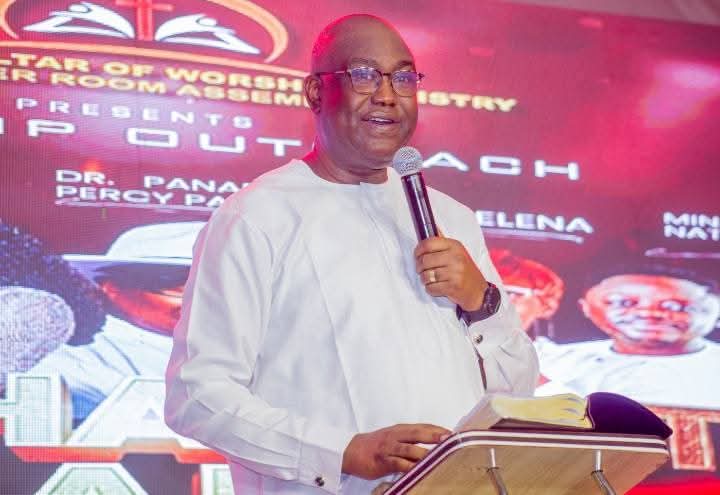
Presidential candidate of the Accord Party, Gbenga Olawepo-Hashim, has unveiled his administration’s proposed “Energy First” agenda, promising to increase Nigeria’s crude oil production to at least four million barrels per day within 24 months if elected.
Hashim disclosed this while appearing on Channels Television’s Politics Today programme over the weekend, where he outlined plans to revive dormant petroleum assets and use existing infrastructure to rapidly boost oil production.
Central to the proposal, he said, is a programme to return about 3,000 non-producing oil wells to active production through targeted investments and technical interventions.
“We have oil wells that have already been drilled, assets that have already been discovered and infrastructure that have already been built. Our first task is to put these assets back to work for Nigeria,” Hashim said.
The Accord candidate argued that government should prioritise the recovery of existing productive assets rather than committing scarce public resources to projects that may not generate immediate revenue.
He specifically cited the Lagos-Calabar Coastal Highway, questioning its capacity to generate revenue for government in the near term.
His proposal comes against the backdrop of Nigeria’s current crude oil production of about 1.5 million barrels per day.
Achieving four million barrels per day would therefore require an increase of roughly 2.5 million barrels daily, representing more than 160 per cent growth over the current production level.
Hashim said Nigeria’s major challenge was not a lack of petroleum resources, but the inability to turn its existing reserves and productive assets into reliable energy supply and economic value.
He said his administration would make production recovery one of its earliest priorities, with each viable inactive oil well assessed to determine the reasons for its inactivity and the interventions required to restore production.
According to him, such interventions could include well workovers and interventions, installation of artificial lift systems, repairs to gathering infrastructure, pipeline rehabilitation, improved evacuation systems and other field-specific solutions.
Hashim described the inactive wells as a major component of Nigeria’s “wasted productive capacity”.
“The question is not how much oil Nigeria has underground. The question is why we are not producing the oil that our existing assets are capable of producing,” he said.
He also proposed the establishment of a National Production Recovery Dashboard to monitor every intervention, investment and additional barrel generated under the programme.
Under the proposed arrangement, oil operators would be required to provide clear production timelines, while government agencies would be tasked with eliminating bureaucratic bottlenecks that delay investments and production.
Hashim linked the four-million-barrel target to his broader proposal on petrol pricing, which includes an initial petrol price of ₦605 per litre and a long-term target of between ₦200 and ₦300 per litre.
He said reducing the cost of energy production would ultimately make energy more affordable for Nigerians.
“That is why increased crude production, domestic refining, lower operating costs, transparent petroleum sector accounting, infrastructure rehabilitation and exchange rate stability are central to the Energy First plan,” he said.
“You make energy cheap by making the cost of producing energy cheap.”
Hashim stressed that his four-million-barrel production target was not aimed solely at increasing crude exports.
Rather, he said the objective was to expand crude production alongside domestic refining, enabling Nigeria to meet its own demand for petrol, diesel, aviation fuel and other petroleum products while exporting surplus refined products.
He said the expanded petroleum production base would also support a wider energy transformation, including gas-to-power projects, independent power generation, captive and embedded generation, mini-grids, petrochemicals and industrial energy infrastructure.
According to him, Nigeria must first address its energy deficit by providing sufficient, affordable and reliable power for industries, agriculture, transportation and households.
Hashim said his ultimate objective was to transform Nigeria into a major global energy hub capable of supplying both crude oil and refined petroleum products consistently to domestic and international markets.
“We want Nigeria to become an energy power, not merely a country that happens to have oil,” he said.




Atiku Faults Tinubu Over Rising Fuel, Fertiliser Prices

Gerard Evicted From BBNaija Season 11

‘I’m alive,’ Actress Ruth Kadiri Debunks Death Rumour

Governor Adeleke Embarks On Vacation in Europe

Nigerian-British Businessman Dies After Penis Filler Procedure In Thailand

Actress Biola Fowosere Opens Up on Seven Robbery Attacks In Two Years
-

 News5 days ago
Ondo: NDC Reps Candidate, Oparinde, Emerges Political Personality of the Year, Pledges Quality Representation
-

 News4 days ago
Police Dismiss Viral Video Of Officers Allegedly Fleeing From Drone
-

 News4 days ago
4.85m Electricity Customers Still Without Meters As DisCos Add 308,106 In Two Months
-

 News5 days ago
Nigerian Army Debunks Fake 92 Regular Recruitment Intake Application