
News
Low Participation, Social Division Threaten Alumni Associations, Says Ace Broadcaster, Yusuf
Urges MAOS Members To Embrace Accountability, Internal Democracy, Collective Contributions
A veteran journalist and ace broadcaster, Imam Oluwatoyin Yusuf, has called on members of the Mass Communication Alumni of Osun State Polytechnic, Iree (MAOS), to strengthen their commitment to the association through active participation, financial contributions, accountability and unity.
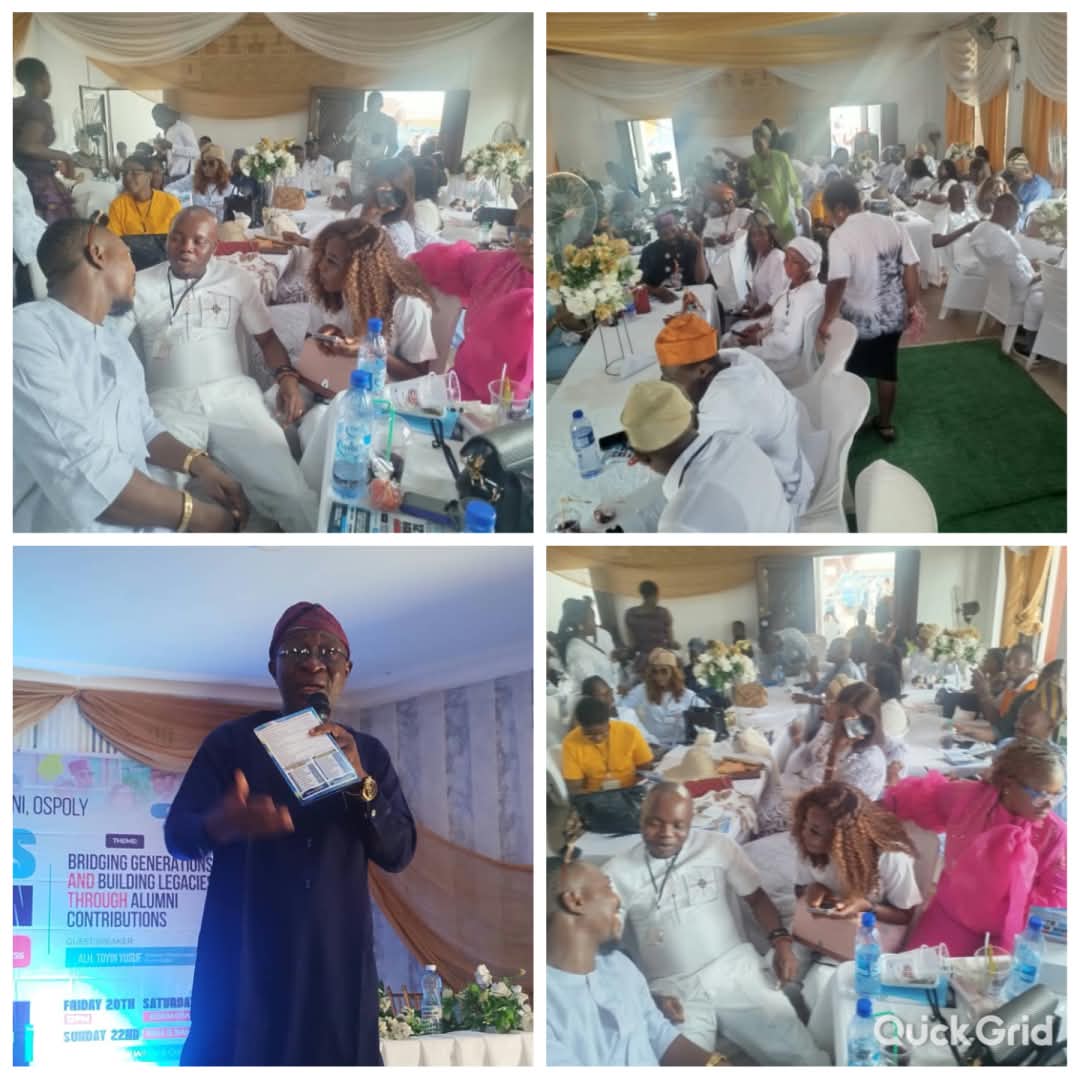
Yusuf made the call while delivering a lecture titled, “Bridging Generations and Building Legacies Through Alumni Contributions,” at the 12th Annual General Meeting (AGM) and 2026 MAOS Reunion and Awards Presentation held at the Nigeria Union of Journalists (NUJ) Press Centre, Osogbo, Osun State.
The guest lecturer expressed concern over what he described as the unimpressive level of participation by members in the activities of the association, despite its existence for several years and the opportunities it offers graduates of the institution.
He said, “The level of participation is not impressive. We must begin to ask ourselves why members are not showing enough interest in the activities of the association, despite the fact that MAOS was established to bring us together.”
Yusuf, who is the Deputy Director of News, OSBC TV, identified financial constraints, social segregation, lack of accountability and weak internal democracy as some of the factors affecting the growth and effective functioning of alumni associations.
On financial contributions, he urged members not to wait until they had sufficient money before supporting the association, stressing that little contributions from many members could make a significant difference.
“We should not wait until we have enough money before we contribute to the development of this association. Everybody has a responsibility to contribute his or her own quota. The development of MAOS should not be left in the hands of a few individuals,” he said.
The veteran broadcaster maintained that the responsibility of building a sustainable alumni association rested on all members and should not be left to a few individuals or successive executive committees.
He also identified social segregation as a major challenge capable of weakening the bond among alumni, urging members to shun divisions and embrace an inclusive approach that would accommodate people from different generations and backgrounds.
Yusuf further stressed the need for accountability and transparency in the management of the association’s resources, noting that members would be encouraged to participate more actively when they had confidence in the leadership.
He said, “Accountability is very important in any organisation. Members must have confidence that their contributions are properly managed and that decisions are taken in the collective interest of the association.”
On internal democracy, the guest lecturer urged the leadership and members to promote fairness, openness and respect for differing opinions in the association’s decision-making processes.
He maintained that bridging generational gaps required deliberate efforts to bring older and younger alumni together, encourage mentorship and create opportunities for the transfer of professional experience and institutional values.
He charged MAOS members to look beyond individual interests and work towards building a legacy that would benefit future graduates of the Department of Mass Communication and the institution at large.
The lecture formed part of activities marking the 12th MAOS AGM and 2026 Awards Presentation, which brought together alumni members from different parts of Nigeria and the diaspora to deliberate on the growth, challenges and future of the association.
In his welcome address, the National President of MAOS, Comrade Adekunle Sikiru, said the association had continued to provide a platform for networking, professional development, mentorship, mutual assistance and institutional engagement since its establishment in 2011.
Sikiru disclosed that MAOS currently had nine state chapters in Nigeria and members in five countries, including the United Kingdom, United States, Canada, Australia and the United Arab Emirates.
He listed some of the association’s achievements to include the annual Late Feranmi Scholarship Awards for outstanding graduating students, provision of a N1 million generating set for the Mass Communication studios, the launch of OSPOLY Online Radio in 2022 and welfare support for members.
Other achievements, according to him, included donations of two 1.5KVA inverter air conditioners to the departmental television studio, as well as furniture for the newly established Photography Department.
The MAOS president also identified the ongoing National Secretariat and Legacy Hub project as one of the association’s major initiatives, calling on members and other stakeholders to support its successful completion.
He said his administration was committed to strengthening accountability, transparency, internal democracy, members’ welfare, professional development and diaspora engagement.
Sikiru urged members to overcome personal differences and embrace collective responsibility, stressing that the association was bigger than any individual, administration or chapter.
He appealed to inactive and aggrieved members to reconnect with the association, noting that their experience, ideas and contributions remained important to its development.







UNIOSUN VC Congratulates Adeleke, Ilori, Feruke On Federal University Appointments

Customs Suspend Training For 3,852 Recruits Over Federal Character Commission Concerns

Second Term: Adeleke Promises Better Performance, Assures Osun Workers

Tinubu appoints ex-Lagos commissioner Dabiri to NASS service commission

FG Suspends Lagos-Ibadan Bridge Work After 20-Hour Gridlock

YPF Urges Makinde To Declare Support for Tinubu, Says Yoruba Unity Key To National Development
-

 News5 days ago
Ofatedo Stool Dispute: Court Strikes Out Egbedore LG As Fourth Respondent, Adjourns Suit
-
 News4 days ago
ActionAid, Ford Foundation Conclude GBV Project, Seek Stronger Enforcement Of VAPP Law In Osun
-
 News5 days ago
Osun Speaker Egbedun Allegedly Curses, Threatens Constituent In Leaked Audio
-
 News5 days ago
Tragedy At UNIBEN As 100-Level Engineering Student Dies During Football