
News
2027: Makinde Rejects Subsidy, Proposes Cheaper Domestic Crude Pricing
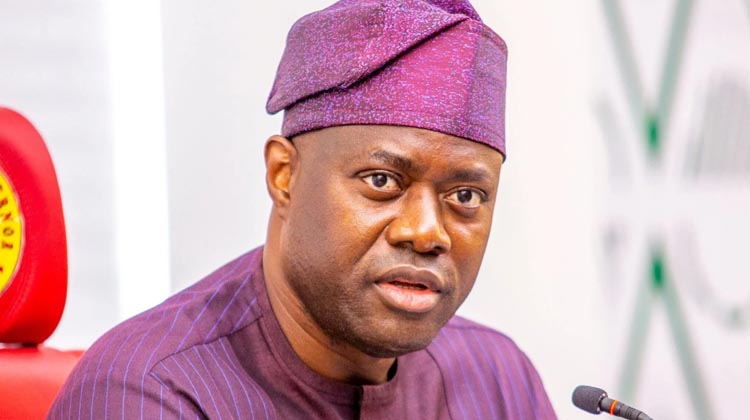
The presidential candidate of the Allied Peoples Movement and Oyo State Governor, Seyi Makinde, has rejected a return to fuel subsidy, advocating instead for domestic crude pricing as a way of reducing petrol costs for Nigerians.
Makinde, who stated this on Monday while speaking at the commissioning of the APM presidential campaign office in Abuja, explained that his proposal was not a call for the restoration of the old subsidy regime but for Nigerian crude supplied to domestic refineries to be priced in a manner that reflects the country’s status as an oil-producing nation.
On May 29, 2023, President Bola Tinubu announced the removal of fuel subsidy during his inauguration, fulfilling a key campaign promise.
The policy led to higher prices of goods and services, although the All Progressives Congress-led Federal Government has continued to argue that it has delivered substantial economic benefits.
Ahead of the 2027 election, former Vice-President Atiku Abubakar, who also pledged during the 2023 campaign to scrap the subsidy if elected, has now promised to restore it if elected president to ease the impact of its removal on Nigerians.
Atiku’s pledge has sparked mixed reactions among Nigerians.
Reacting, Makinde rejected Atiku’s proposal and offered an alternative to the way Tinubu is currently managing the post-subsidy era, questioning why crude supplied to Nigerian refineries should be priced as though the country does not produce crude oil.
He stressed that Nigeria’s oil must provide tangible and measurable benefits to Nigerians. He stated, “We are opening another door for Nigerians to join the conversation about the future of our country. A conversation about what must change. A conversation about how we can make Nigeria work for every Nigerian. That is what Reset Nigeria is about. In the past few days, I have spoken about the petrol pricing framework. Some people have asked whether I am suggesting that we bring back the old fuel subsidy.
“That is not my position. Let me explain my position very simply with this example. If a community grows food, the people of that community should not have to buy that food as though it travelled halfway around the world before reaching them. So why should crude oil supplied to Nigerian refineries be priced as though Nigeria does not produce crude oil? Nigeria’s oil must provide a real and measurable benefit to Nigerians.
“That benefit should be built into the system from the beginning, through the price at which crude oil is supplied for domestic refining, not through an opaque intervention at the petrol pump after all the costs, inefficiencies and distortions have been added.”
He said Nigerians deserve to know what they are paying for, who benefits from the payments and where inefficiencies are driving up the final price, stressing that this is what the Reset Nigeria agenda is all about.
The APM presidential candidate continued, “Nigerians must be able to see how the final price is reached. We need complete transparency across the petroleum value chain—from production and domestic crude allocation to refining, transportation, distribution, taxes and retail margins.
“Nigerians should know what they are paying for, who receives what and where inefficiencies are increasing the final price. That is what it means to Reset Nigeria. It means that we stop accepting systems that nobody can explain. It means that government must show its workings. It means that Nigerians must know how decisions are made, how public resources are used and who benefits from them. It means that when Nigeria’s wealth grows, the lives of Nigerians must also improve.”
The Oyo State Governor said he was aware that some people had already dismissed his presidential campaign as insignificant, but noted that he had faced similar doubts when he first sought to govern the state. He recalled that many had doubted his chances against established political forces, only for the people of Oyo State to prove them wrong.
He said those dismissing his campaign were, in effect, disregarding the aspirations of millions of Nigerians, including traders, youths, farmers, workers and small-business owners who believe the country can be better. He declared that Nigerians own the country’s resources and, together, they can reset the nation.
The APM presidential candidate added, “But we count. Our voices count. Our experiences count. Our ideas count. And, together, our votes will count. That is why Reset Nigeria cannot be a conversation among politicians alone. It must become a conversation in our homes, markets, schools, offices, farms, factories and communities. We want to hear from the trader who struggles whenever transport costs rise.
“We want to hear from the farmer who cannot afford to move produce to the market. We want to hear from the business owner whose costs rise every time the price of fuel changes. We want to hear from the young Nigerian who is working hard but can no longer see a clear path to a better life.
“This office belongs to that conversation. Its doors are open to Nigerians who believe that our country can work better than it does today. So, I invite you: join the Reset Nigeria conversation. Ask questions. Challenge our ideas. Share your own ideas. Organise within your communities. Become a Resetter.
“They may discount one candidate. But they cannot discount millions of Nigerians united behind a better future. Let us build a country in which government is transparent, leadership is accountable and Nigeria’s resources work for the Nigerian people.”








Police, NSCDC Beef Up Security Ahead Of Tinubu’s Wife Visit To Anambra

NSCDC Arrests Four Drug Dealers in Kano

BNXN, Runtown, Patoranking To Storm New York For Nigeria’s 66th Independence Day Parade

Breaking: Adeleke’s Re-election Battle Begins As APC, PDP Petitions Land At Osun Tribunal

Hashim Unveils Energy Plan, Targets 4m Barrels Daily Crude Production Within 24 Months
-

 News4 days ago
Police Dismiss Viral Video Of Officers Allegedly Fleeing From Drone
-
 News4 days ago
4.85m Electricity Customers Still Without Meters As DisCos Add 308,106 In Two Months
-
 News4 days ago
Dollar To Naira Exchange Rate Today, September 3, 2026
-
 News4 days ago
Osun Assembly Passes UNIOSUN Amendment Bill, Forwards To Adeleke For Assent