

News
Oluwo’s Freedom Of Expression: Ta’awunu Withdraws Suit Against Osun Govt

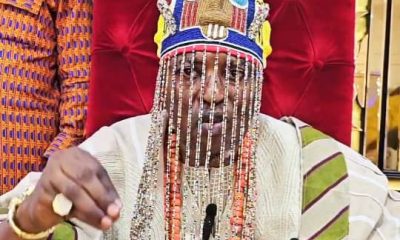
The Ta’awunu Human Rights Initiative has withdrawn its suit against the Osun State Government over an alleged attempt to interfere with the freedom of thought, conscience, religion and expression of the Oluwo of Iwoland, Oba Abdulrasheed Adewale Akanbi.
The organisation formally discontinued the suit through a notice of discontinuance filed before the Federal High Court, Osogbo Judicial Division.
The notice, dated November 10, 2026, and filed on November 16, 2026, relates to suit number FHC/OS/CS/205/2026.
The withdrawal was made pursuant to Order 50 Rule 2(1) of the Federal High Court (Civil Procedure) Rules, 2019, and under the inherent jurisdiction of the court.
The notice of discontinuance stated: “Take notice that the Applicant wholly discontinues this action against the Respondents herein mentioned and hereby withdraw the same.”
The human rights organisation had instituted the suit against the Osun State Government over a letter allegedly issued to the Oluwo concerning his comments on traditional religious practices and related matters.
The group, which said it was acting in the public interest and on behalf of persons whose fundamental rights were allegedly threatened, filed the action through its counsel, Professor Abdul Rasheed Musa Yusuf.
The respondents in the suit included the Osun State Commissioner for Local Government and Chieftaincy Affairs, the Attorney-General of Osun State and the Oluwo of Iwoland.
In its originating motion, Ta’awunu had asked the court to declare that the monarch was entitled to hold and express his personal religious, philosophical, cultural and conscientious opinions on traditional religious practices, idol worship, ritual observances and the administration of traditional palaces in Yorubaland.
It argued that such rights were guaranteed under Sections 38 and 39 of the 1999 Constitution of Nigeria, as amended.
The organisation also sought a declaration that the constitutional right to freedom of expression included the right to publicly communicate opinions, disseminate views, advocate reforms of cultural and traditional practices and express dissenting positions on issues of religion, culture, governance and public interest.
It further contended that issuing or procuring any administrative directive, warning, restraining letter, threat or intimidation aimed at preventing the monarch from expressing his personal opinions, without express statutory authority, would constitute an unlawful interference with his fundamental rights.
The group had also urged the court to declare that the Commissioner for Local Government and Chieftaincy Affairs lacked the constitutional or statutory authority to restrict the Oluwo’s freedom of expression simply because his religious or philosophical views were considered unpopular, controversial or offensive to sections of the traditional institution.
However, the withdrawal of the suit means the action has been discontinued, with no determination of the substantive constitutional issues raised in the case reported in the notice of discontinuance.






Terrorists Ambush Company Vehicle, Kill Chinese National, Police Inspector In Bauchi

Tinubu Grants Clemency To 78 Suspects Arrested Over Attack On Presidential Convoy

Ilesa College Of Health Management Warns Against Exploiting ASUP Strike To Cause Chaos

Tragedy At UNIBEN As 100-Level Engineering Student Dies During Football

Osun Speaker Egbedun Allegedly Curses, Threatens Constituent In Leaked Audio

Ofatedo Stool Dispute: Court Strikes Out Egbedore LG As Fourth Respondent, Adjourns Suit
-

 News4 days ago
Agunbelewo Gets New Traditional Ruler As Ataoja Installs Adejumobi
-

 News3 days ago
World Diabetes Day: Lions Club Takes Free Screening, Awareness Campaign To Osogbo
-

 News3 days ago
Ooni’s Media Director Commends NUJ Vice Chairman, Ayobami Agboola, At Birthday
-

 News1 day ago
State Police: Tinubu May Receive Bill Friday