
News
KAWAS BREAKS SILENCE ON TINUBU ENDORSEMENT: ‘I WASN’T CALLED FAKE WHEN I SUPPORTED OBI, JONATHAN
By Our Reporter
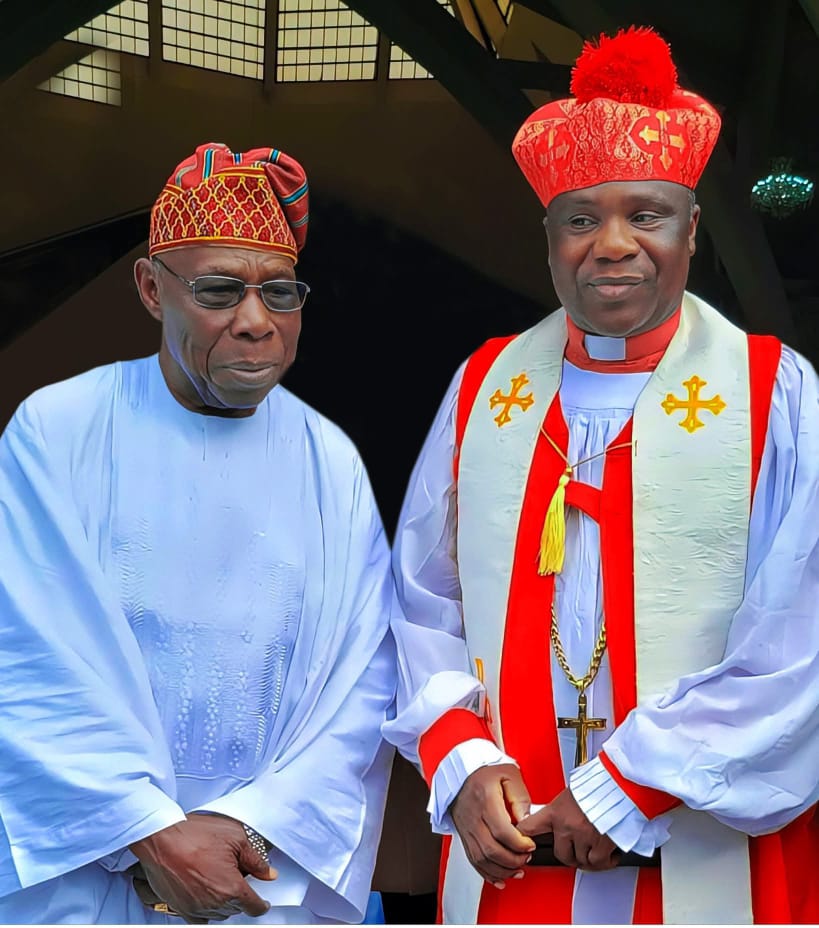
Archbishop Leonard Bature Kawas, President-General of the Charismatic Bishops Conference of Nigeria (CBCN), has offered a strong defence of his organisation’s decision to endorse President Bola Ahmed Tinubu for a second term, saying his political involvement did not begin with the current administration.
Speaking during an interview on Arise TV, Kawas addressed the wave of criticism that followed the CBCN’s endorsement of Tinubu, including claims by some Nigerians questioning his credibility as a bishop because of his political position.
Kawas said he was consecrated a Bishop about 25 years ago and has served as an Archbishop for approximately 14 years, stressing that his political engagements did not begin with the Tinubu administration.
Pointing to his long history of involvement in Nigeria’s political process, saying he has supported different political leaders at various points without allowing political affiliation to define his Christian ministry.
He recalled supporting political figures including Olusegun Obasanjo, Goodluck Jonathan, Atiku Abubakar and Peter Obi, stressing that his previous political choices did not make him less of a clergyman.
Stressing on his relationship with former President Goodluck Jonathan, saying he was involved in Jonathan’s presidential campaign and described himself as the only bishop on Jonathan’s presidential campaign council at the time.
Kawas also cited his support for former Taraba State Governor Jolly Nyame, whom he said he campaigned for before Nyame became governor.
His broader point was that his participation in politics has historically cut across different political personalities and periods, rather than being something that emerged suddenly because of Tinubu.
According to Kawas, he was actively involved in Peter Obi’s political journey during the 2023 election campaign activities and travelled across the country in support of him.
He specifically stated that Obi never gave him money for his support, arguing that his willingness to support a candidate in the past was not motivated by financial gain.
His central question was whether his decision to support Tinubu today should suddenly invalidate his identity or ministry.
“Is it now, because I have prayed and God has led me to support Bola Tinubu, that I suddenly become fake?” Kawas asked.
CBCN IS MUCH BIGGER THAN ONE ARCHBISHOP — KAWAS
Kawas also sought to correct the impression that the Tinubu endorsement was simply the personal decision of one cleric.
He explained that the Charismatic Bishops Conference of Nigeria is a broad Christian organisation, comprising hundreds of bishops and archbishops.
During the interview, he stated that the organisation has more than 900 bishops and archbishops in Nigeria, while the wider International Communion of Charismatic Archbishops, Bishops and Apostles (ICCABA) has an international reach.
Reports from the CBCN Synod independently put the number of “canonical” bishops in Nigeria at about 950, with CBCN members in 52 countries.
This means, Kawas’s defence suggests, that the endorsement should not simply be portrayed as one man’s unilateral political declaration, but as a position announced on behalf of a wider conference following its deliberations.
WHY THE BISHOPS CHANGED THEIR POSITION
Kawas’ explanation also sheds light on the thinking behind the CBCN’s Tinubu endorsement.
During the group’s 2026 Synod in Abuja, the bishops cited developments under the Tinubu administration, including appointments of Christians to key positions and what they described as efforts towards inclusion and national unity.
Kawas recalled that the Christian community had significant concerns during the 2023 election, particularly over the Muslim-Muslim presidential ticket.
However, he said the subsequent appointments made by Tinubu’s administration contributed to a change in the bishops’ assessment of the government.
He specifically mentioned the appointment of Senator George Akume as Secretary to the Government of the Federation, describing it as an important moment that helped change the perception of the administration among the bishops.
The CBCN subsequently declared its support for Tinubu’s 2027 bid, saying its position followed an assessment of the administration and its approach to national development and inclusivity.
FROM POLITICAL CRITICISM TO A QUESTION OF RELIGIOUS FREEDOM AND CONVICTION
Kawas’s latest response effectively reframes the controversy.
Rather than presenting the endorsement as evidence that the bishops have suddenly become partisan, his defence is that Christian leaders have the same right as other citizens and organisations to assess political leadership, form convictions and publicly express their preferred direction for the country.
His argument is also that a cleric’s political preference should not automatically determine whether that cleric is considered genuine or fake.
At the heart of Kawas’s defence is a simple question:
If a bishop was not considered “fake” when he supported one presidential candidate, why should he suddenly become “fake” after supporting another?
His response is that political disagreement should not automatically become a test of someone’s clerical identity.
A POLITICAL CHOICE — NOT A TEST OF CHRISTIAN CREDIBILITY
Kawas’ response effectively challenges the argument that a Christian leader loses his credibility simply because his political preference changes.
His account presents his political history as one in which he has supported different candidates at different times, suggesting that Christian leadership and political preference are not necessarily synonymous with permanent allegiance to one political party or candidate.
The position is particularly significant because the CBCN’s Tinubu endorsement generated intense reactions on social media, with some critics questioning the bishops’ motives and even their clerical identities.
Rather than retreating from the decision, Kawas used the Arise TV interview to explain the background to his political engagement and reaffirm the bishops’ position.
The CBCN has also maintained that its engagement with politics is connected to its wider concern for Nigeria’s governance, peace, unity and development.
CBCN STANDS BY ITS DECISION
The endorsement itself was formally announced by Kawas during the CBCN’s 2026 Synod in Abuja, where he said the position represented the decision of the gathering.
The development means the bishops are not presenting their position merely as an individual preference of Kawas, but as a position reached by the conference.
Kawas’ latest comments therefore offer a different perspective to the controversy: the Tinubu endorsement, in his account, should be viewed within the broader history of his political engagement and the bishops’ assessment of the administration — rather than automatically interpreted as evidence of political or financial inducement.
For the CBCN leadership, the message appears clear: supporting Tinubu in 2027 does not erase the organisation’s previous political positions, nor does it mean its leaders cannot reassess their choices based on changing circumstances.





2027: Court Gives Tinubu 7 Days To Respond To Atiku’s Eligibility Suit

FRSC Raises Alarm Over Fake Traffic Offence SMS, Website

2027: Oluwo Appeals To North To Back Tinubu, Says ‘South-West Supported Buhari For 8 Years’

OAU Grieves As Final-Year Student Allegedly Commits Suicide In Ile-Ife

Osun Must Not Burn, KRAD Urges Dialogue Over Confrontation

Tinubu Felicitates Gov AbdulRazaq On Turbaning As Sardauna Of Ilorin
-
 News4 days ago
LPDC Clears Lagos Lawyer, Olaide Adedapo, Of Misconduct, Awards ₦200,000 Against Petitioner
-

 Education4 days ago
Osun Poly Rolls Out Second Batch Of HND Admission Application Form
-
 News2 days ago
Tinubu Orders Release Of Funds To Regional Development Commissions
-

 News4 days ago
Kiriji Treaty Foundation Marks 140th Anniversary In Ibadan, Seeks UNESCO Recognition