

News
Abandoned Osun federal Road Project: Communities Count Losses, Farmers Groan
By Ayobami Agboola, Osogbo
For residents of several agrarian communities in Atakunmosa East Local Government Area of Osun State, a road that should connect them to Ilesa and open up economic opportunities has instead become a source of hardship, isolation and anxiety.
From Eti-Oni to Adido, Aladua, Ipaole, Odogbo-Ijesha, Aladodo, Alarere, Itapa, Ajido, Owode, Oko Ago and Ajumobi, residents say the poor condition of the road has turned routine journeys into hazardous undertakings, particularly during the rainy season.
The road, which links the communities with Ilesa, was expected to receive a major facelift following a Federal Government rehabilitation project awarded to Messrs Sailthrough Construction Limited by the Federal Ministry of Works.
When construction equipment reportedly arrived at the site in 2024, residents said they were filled with optimism.
After years of neglect, they believed the project would improve transportation, boost agricultural activities, facilitate access to healthcare and education, and reconnect the rural communities with major markets.
But their excitement was short-lived.
Residents said the contractor carried out preliminary work on some portions of the road and bridges, deposited granite and commenced drainage works before allegedly abandoning the project.
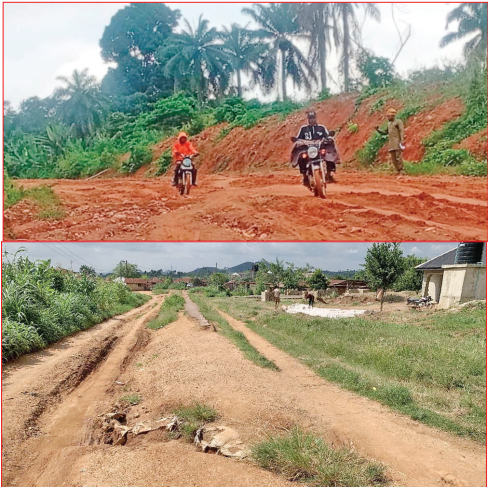
With the rains, the unfinished portions have deteriorated further, leaving deep gullies, muddy stretches and difficult passages.
For the residents, what was meant to be a road to development has become a source of economic losses and daily suffering.
A journey through hardship
A visit by CityMirrorNews to some of the affected communities revealed the extent of the challenge.
In several places, portions of the road were badly eroded, while some unfinished drainage structures remained visible. Piles of construction materials were also seen at some locations.
Motorcyclists appeared to be the major means of transportation on some sections, while commercial vehicles were either scarce or completely absent.
Residents said the situation becomes particularly difficult after heavy rainfall, when motorcycles struggle to navigate slippery portions and some communities become difficult to access.
For the Iyalode of Eti-Oni, Mrs Janet Abbey, the road condition has become a matter of serious concern, particularly because of its implications for emergency medical care.
She recalled the case of a pregnant woman from neighbouring Ido Aladodo who, according to her, died after efforts to transport her to a hospital were reportedly frustrated by the condition of the road.
“On Monday, we couldn’t even take our goods to the market because the road was bad. A pregnant woman in Ido Aladodo died because nobody could take her to the city on time,” she lamented.
New Telegraph could not independently verify the circumstances surrounding the reported death.
But across the communities visited, residents narrated similar experiences of medical emergencies, accidents and difficulties accessing urban centres.
They said the problem becomes more severe when rainfall persists for days, leaving some communities virtually cut off.
Farmers produce, but cannot sell
Ironically, the communities affected by the bad road are among the farming settlements contributing to food production in the state.
Residents cultivate cocoa, cassava, maize, plantain and vegetables, with much of the produce destined for markets in Ilesa and other locations.
But farmers say transporting their produce has become increasingly expensive and risky.
The Secretary of Ipaole community, Mr Adebiyi Adejuwon, said the arrival of construction workers in 2024 initially brought hope to the people.
“We were happy when they started the work in 2024. They filled parts of the road and spread granite, but they never completed it. They also started work on one of the bridges and abandoned it.
“Now, the road is even worse than before,” he said.
Adejuwon said farmers sometimes miss market days because of the difficulty of moving their produce.
According to him, perishable goods are particularly vulnerable because farmers have limited options for transporting them to buyers.
The situation, residents said, also affects the prices at which their produce is sold, as the high cost of transportation is transferred to farmers and traders.
‘Once it rains, people cannot pass’
The Baale of Adido-Ijesha, Salam Rasheed, said the abandonment of the project had compounded the hardship faced by residents.
“The road is affecting our farm produce. Since they stopped the work, everything has become more difficult.
“It would have been better if they had not started at all than to leave it like this. Once it rains, people cannot pass,” he lamented.
A cocoa farmer, Mr Sunday Abiodun, said prolonged rainfall could make some villages inaccessible.
“Sometimes rain falls for three days and no motorcycle can enter the village. We have witnessed countless accidents because the road becomes extremely slippery,” he said.
For the Odofin of Odogbo-Ijesha, Chief Benjamin Arogundade, residents are not asking for a new project but for government to ensure that the existing one is completed.
“The work they started has made the road worse. During the rainy season, movement becomes almost impossible.
“We only want the contractor to return and complete what was started,” he said.
Transporters flee, fares rise
As the road deteriorates, transportation has become another major burden for residents.
The Baale of Aladua, Azeez Bello, said commercial buses had stopped operating on some sections of the route, forcing residents to depend largely on motorcycles.
“If buyers come, there are no buses. Motorcycles carry both passengers and farm produce, but the fares are very high.
“Because of that, buyers purchase fewer goods,” he said.
A commercial motorcyclist, Temitayo Ibikunle, said the condition of the road was also taking a toll on riders.
“I don’t like plying this road. It damages our motorcycles. If passengers cannot pay enough, I simply won’t go,” he said.
The Chairman of the Fruit Sellers Association in Eti-Oni, Dauda Oyebode, popularly known as Ya Lateef, said the consequences were being felt beyond the farming sector.
He pointed to the collapse of the bridge linking Alarere with neighbouring communities as another major obstacle to movement and economic activities.
“The roads have been bad for years, but the rainy season has made them worse because of erosion,” he said.
Communities resort to self-help
With little relief in sight, some communities have resorted to self-help to keep their roads passable.
The former Chairman of Atakunmosa East Local Government and APC State Treasurer, Femi Kujembola, said residents sometimes contribute money to carry out temporary repairs on portions of the road.
He also said some residents were compelled to use longer alternative routes to reach Ilesa.
Although Kujembola is a member of the opposition APC, residents across the communities and political divides expressed similar concerns about the state of the road and the need for the project to be completed.
The project signboard inspected by New Telegraph indicated that the rehabilitation contract was awarded by the Federal Ministry of Works, Mabushi, Abuja, to Messrs Sailthrough Construction Limited.
Residents said the contractor mobilised to the site, commenced preliminary work and later stopped operations.
The partially executed sections have since deteriorated, leaving residents to contend with the consequences.
More than a road
For the affected communities, the crisis goes beyond the condition of a single road.
Residents say the road determines whether farmers can take their produce to market, whether traders can move their goods, whether children can get to school and whether patients can reach hospitals in emergencies.
The poor condition of the road, they contend, is also contributing to the rising cost of transportation and reducing economic activities in the communities.
In an area where agriculture remains the mainstay of the local economy, residents believe good road infrastructure could significantly transform their livelihoods.
They therefore appealed to the Federal Government and the Federal Ministry of Works to compel the contractor to return to site and complete the rehabilitation project.
“We are not asking government to start a new project. The project has already been awarded. We only want it completed,” one of the residents said.
A plea to government
For the people of Atakunmosa East, completing the road would mean more than smoother journeys.
They believe it would reconnect isolated communities with Ilesa, reduce the cost of transporting agricultural produce, improve access to healthcare and education, create opportunities for traders and farmers, and stimulate economic activities across the area.
Repeated efforts by CityMirrorNews to obtain comments from the Federal Ministry of Works, Mabushi, Abuja, and Messrs Sailthrough Construction Limited were unsuccessful as of the time of filing this report.
For now, residents continue to navigate the difficult terrain, hoping that government attention will come before another rainy season further destroys what remains of the road.
Until the contractor returns to site, the communities fear they will continue to pay the price of an unfinished project—through lost farm produce, rising transport costs, restricted movement and the constant danger posed by a road that was supposed to improve their lives.














Today’s Opposition Gathering in Abuja: The Choice Before Presidential Candidates

Tinubu, Atiku, Obi, Others: Big Promises, Bigger Questions Ahead of 2027

Manufacturing Giants Grow Profit By 35% Despite Flat Revenue

Tinubu, Idris, And A Whole New 2027 Campaign, By Suleiman A. Suleiman

Dollar to Naira Exchange Rate Today, August 31, 2026

Steel Imports Bleed Nigeria’s Economy
-
 News5 days ago
₦605/Liter Is Our Starting Sustainable Price For Petrol — Gbenga Hashim
-
 News5 days ago
EAPEAN, GAaNF e.V. and 360° Labour Mobility Alliance Strengthen Partnership on Safe and Ethical International Recruitment
-

 News4 days ago
Owalare Congratulates Adeleke On Re-election, Commends Development Efforts
-

 News3 days ago
The Oyetola That I Know! By Hon. (Otunba) Olusegun Ayodele Fanibe