
News
Gbenga Hashim: Atiku Is ‘Father Of Subsidy Removal’ In Fourth Republic

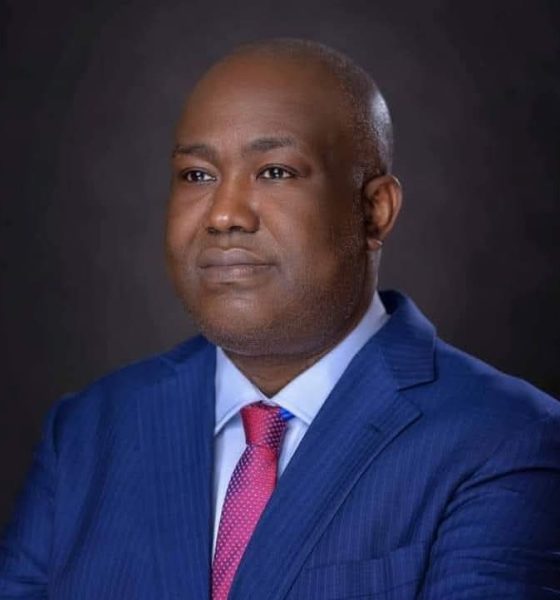
Presidential candidate of the Accord Party, Dr. Gbenga Olawepo-Hashim, has described former Vice President Atiku Abubakar as the “father of subsidy removal” in Nigeria’s Fourth Republic, demanding an explanation and apology from him over his recent change of position on fuel subsidy.
Hashim, who has consistently opposed the removal of subsidy on petroleum products, reiterated his position during an interview with Trust TV, where he advocated the restoration of subsidy on petroleum and other strategically important products to cushion citizens and productive sectors from excessive economic shocks.
He questioned the sincerity of politicians who, having previously campaigned for subsidy removal, had now changed their positions without explaining what informed the reversal.
“Some candidates who campaigned in the last election to remove subsidy are now reversing themselves without even regretting their earlier display of ignorance and lack of compassion for the people,” he said.
Hashim specifically challenged Atiku to explain his change of position, saying there was nothing wrong with changing one’s mind when circumstances or evidence warranted it.
“Atiku’s recant on subsidy removal without an apology is dishonesty. If you change your position because circumstances or evidence have changed, tell Nigerians why you changed. There is nothing wrong with changing your mind. What is wrong is pretending that you never held the position in the first place,” he said.
According to him, Atiku, President Bola Ahmed Tinubu and Labour Party presidential candidate Peter Obi all campaigned on subsidy removal during the 2023 presidential election, while he, Omoyele Sowore and Prince Adewole Adebayo opposed the policy.
The Accord presidential candidate argued that Atiku’s advocacy for subsidy removal predated the Tinubu administration, describing the former vice president as one of the earliest major proponents of subsidy removal and wholesale privatisation in the Fourth Republic.
“The truth of the matter is that Atiku, before Tinubu, on the national political scene, has been the father of the idea of subsidy removal and wholesale privatisation in this republic, he and his so-called economic team. We combated them vigorously during the early period of the Obasanjo government,” Hashim said.
‘We opposed subsidy removal when it was politically inconvenient’
Hashim recalled that in 1999, during the administration of former President Olusegun Obasanjo, when Atiku served as Vice President and headed the government’s economic team, the administration increased petroleum product prices and removed subsidy.
He said he and other members of the Peoples Democratic Party publicly opposed the decision at the time.
According to Hashim, Alhaji Iro Dan Musa, then PDP Deputy National Chairman; Harry Marshall, National Vice Chairman, South South; Abubakar Magaji, National Vice Chairman, North Central; Emmanuel Ibeshi, National Publicity Secretary; and himself, who was then Deputy National Publicity Secretary, jointly addressed a press conference condemning the increase in petroleum prices and subsidy removal.
He added that the National Assembly also passed resolutions against the policy, following which the executive reversed the decision.
“We opposed subsidy removal when it was politically inconvenient to do so. We did not suddenly discover the suffering of Nigerians because another election is approaching,” he said.
Hashim maintained that the historical record showed that his opposition to subsidy removal was not an electoral strategy.
Hashim proposes targeted subsidy
The Accord candidate said the subsidy debate should move beyond the blanket argument that every form of subsidy was wasteful, stressing the need for a transparent and sustainable system capable of protecting citizens and productive sectors of the economy.
He argued that subsidy could be deployed strategically to reduce production costs, protect purchasing power, support industrial activity and prevent sudden economic shocks.
“There is subsidy in America and Europe. Only ignorant and wicked people make a blanket argument against subsidy,” he said.
Hashim proposed a targeted subsidy regime based on transparency, measurable economic outcomes and strict accountability rather than open-ended payments to importers or politically connected intermediaries.
“Our position is simple: restore subsidy on petroleum products and other strategic products where necessary, but do it intelligently. Subsidy should be targeted at protecting the Nigerian economy and Nigerian people, not at enriching intermediaries,” he said.
He said a government under his leadership would identify strategic products and sectors where price shocks had economy-wide consequences, establish clear eligibility criteria, publish the fiscal cost and beneficiaries, and periodically assess whether such interventions were delivering measurable economic benefits.
“Our own government would identify strategic products and sectors where price shocks have economy-wide consequences, establish clear eligibility criteria, publish the fiscal cost and beneficiaries, and periodically assess whether the intervention is delivering measurable economic benefits,” he said.
According to him, stronger domestic production would also be a key component of any sustainable subsidy policy.
“The objective would be to use subsidy as a bridge to greater domestic productive capacity, not as a permanent excuse for dependence on imports,” Hashim said.
‘Politicians are appropriating ideas’
Hashim also criticised sections of the media for allegedly failing to scrutinise changing political positions, accusing politicians with greater access to media platforms of appropriating ideas previously advanced by less powerful political actors.
“They lack originality and their fans in the media never take them to task. Instead, they promote these corrupt and dishonest politicians as major candidates,” he alleged.
He added: “Only God knows how many of our ideas they would pirate before the election and use their big megaphone to amplify.”
Hashim said the 2027 presidential election should be defined by competing ideas and credible economic programmes rather than political imitation.
“Nigeria needs originality, courage and compassion in leadership. We cannot continue recycling people because they have the biggest megaphone. We must begin to ask who said what first, who stood by the people when it was difficult, and who has a credible plan to rebuild the economy,” he said.
He reaffirmed his commitment to an economic programme focused on affordable energy, strategic repositioning of Nigeria as a reliable supplier of energy to the world, protection of domestic productive capacity, industrialisation, job creation, stronger purchasing power and strategic government intervention in critical sectors.
“The Nigerian people are not laboratory animals for politicians to experiment on and then return to them during election season with a new script. We must learn from our mistakes, tell the truth about them and build a better economic future,” Hashim said.



Why Nigeria Must Not Reverse President Tinubu’s Petroleum Sector Reform, By Dr. Kazeem Alabaja

Ifelodun Muslim Community Congratulates Adeleke, Appeals for Completion of Central Mosque
Return our IDPs To Their Homes Before Ranching, Benue Leaders Tell FG Caleb Muftwang

Gunmen Went From House To House, Killing People Who Were Sleeping’ – Survivors of Plateau Night Of Horror

Six Months Of Tunji Disu: Will He Write His name with Gold?

How Federal Might Came to Osun And Met The People, by Stephanie Shaakaa
-
 News4 days ago
Osun Declares Thursday Public Holiday For Isese Festival
-
 News5 days ago
Osun Election: Bamidele Urges Oyebamiji To Congratulate Adeleke, Offer Policy IDEAS
-
 News5 days ago
Crisis Rocking OK Movement Takes Dramatic Twist As DG Resigns
-
 News3 days ago
Ile-Ife Delivers 75,758 Votes for Adeleke, Omisore Hails ‘Strong Vote of Confidence’