
News
Oyetola And The Politics Of Resilience: When Character Outlives Elections By Hon Kolawole Salami
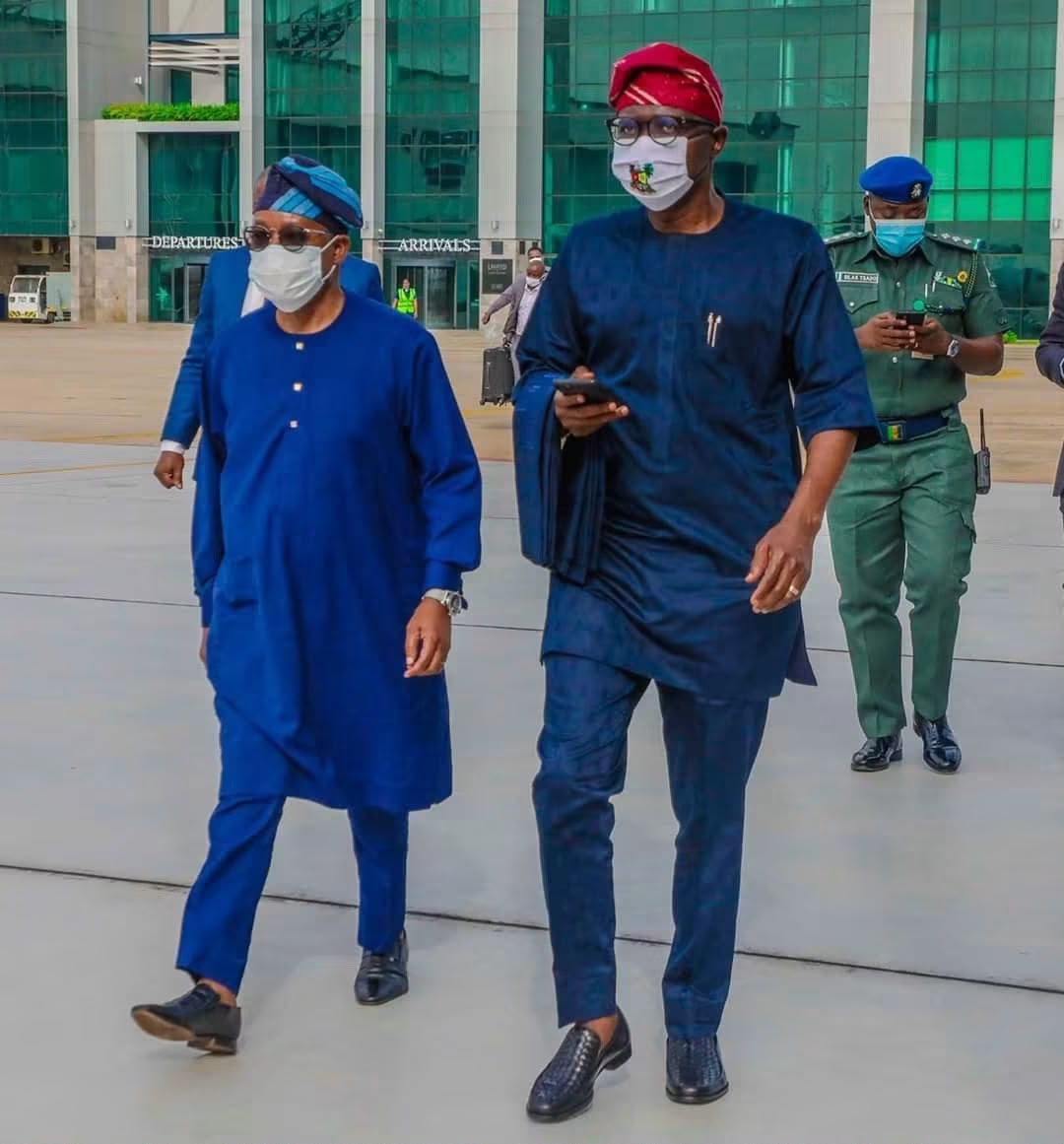
On 22 June 2020, the battle to reclaim the APC in Nigeria from what many of us considered the grip of internal usurpation began in earnest. The political manoeuvring of those who appeared determined to prevent an Asiwaju presidency was comprehensively challenged from that period.
Alhaji Isiaka Adegboyega Oyetola led the charge to protect the interest of our Leader, the Jagaban Borgu, at the APC Emergency National Executive Council meeting following Adams Oshiomhole’s removal from office. Recall that Oshiomhole had been removed from the leadership of the party at a particularly critical moment, amid deepening divisions within the APC and growing attempts by different political interests to shape the future direction of the party.
What followed was perhaps one of the most consequential periods in the evolution of the APC.
The much-needed task of rebuilding bridges with stakeholders—including the late former Governor Rotimi Akeredolu, Senator Ibikunle Amosun, Governor Dapo Abiodun and several other leaders across the Niger, North and South, whose relationships with Asiwaju had become strained—began in earnest.
One of the bridges built during that period, and one that has remained remarkable to observe, is the relationship between Alhaji Isiaka Adegboyega Oyetola and Governor Mai Mala Buni. Whatever one’s interpretation of the political circumstances that brought different actors into the APC’s internal struggle, Oyetola’s approach was unmistakable: dialogue rather than confrontation, persuasion rather than provocation, and institution-building rather than personal grandstanding.
Some of us watched these developments closely.
The soul of the APC was, in many respects, preserved through those difficult months. But political reconciliation comes at a cost. Those who choose to build bridges do not necessarily escape the hostility of those who benefit from division. Oyetola’s growing closeness to the emerging centre of political authority around Asiwaju inevitably placed him in the path of those who opposed that trajectory.
By the time of the 2022 Osun governorship election, the political environment surrounding Oyetola had become extraordinarily complex. The contest was no longer simply about who would govern Osun State. It had become entangled with the wider struggle for influence within the APC and the emerging contest over the direction of Nigerian politics.
I remember vividly the security concerns surrounding Oyetola’s tenure, including the attack on his convoy during the endsars protest. Whatever the competing interpretations of those events, the atmosphere was sufficiently tense to demonstrate that Osun politics had become more than an ordinary electoral contest.
Yet Oyetola remained remarkably restrained. That, perhaps, is the first lesson in understanding the man.
The Politics of Restraint
Politics often rewards noise. It celebrates the man who speaks the loudest, the politician who attacks first, and the candidate who can mobilise anger more effectively. But there is another form of political strength—one that is quieter, less dramatic and sometimes misunderstood. It is the strength of restraint.
Oyetola’s political temperament has consistently been defined by composure. He has rarely been the politician who believes that every provocation requires a response. He has demonstrated, repeatedly, that one can disagree without becoming disagreeable; that political competition does not have to become personal warfare; and that public office should not be used as an instrument of revenge.
That is not a weakness. It is discipline.
The 2022 election demonstrated the limits of assuming that electoral politics is always a straightforward contest between policy records. Campaigns are shaped by alliances, personalities, narratives, emotions, resources, structures and, ultimately, the arithmetic of the ballot.
Oyetola lost that election. But losing an election is not the same thing as losing relevance. And that distinction has become increasingly important.
When Elections End, Character Remains
There is a temptation in Nigerian politics to measure a politician’s worth entirely by electoral victory. If you win, everything you did was right. If you lose, everything you represent is suddenly dismissed. That is a dangerous way to understand leadership.
Elections determine who occupies office at a particular moment. They do not, by themselves, determine who has demonstrated character, who has built institutions, who has served with integrity or who has contributed to the evolution of a political movement.
History is far more patient than election-night celebrations. This is where Oyetola’s story becomes particularly instructive.
He has occupied the highest political office in Osun State. He has experienced the exhilaration of victory and the disappointment of defeat. He has served at the federal level. He has remained active within the political family to which he belongs. And through all these transitions, he has largely maintained the same temperament. That consistency matters.
The Osun Political Contest
The political tradition from which the APC emerged – tracing its roots through the Alliance for Democracy (AD), Action Congress (AC), Action Congress of Nigeria (ACN) and ultimately the APC – has itself carried the weight of difficult chapters in Osun’s political history.
Policies implemented under successive administrations, including workforce retrenchment during the tenure of Chief Bisi Akande and the contentious issue of half salaries under Ogbeni Rauf Aregbesola, left deep impressions on many families across the State.
For a generation of young people who watched their parents experience the consequences of these policies, those memories inevitably became part of their political consciousness. Unfortunately, Oyetola, despite not being responsible for many of these historical decisions, became the principal political figures upon whom the accumulated resentment towards the political establishment was projected. In many respects, he was made to bear the weight of grievances that predated his own administration.
Yet, the politics of Osun has always been fiercely competitive. The state has produced politicians of enormous ambition, remarkable organisational capacity and deep political followership. Political alliances, movements and personalities have competed intensely for influence over the direction of the state.
There is nothing inherently wrong with ambition. Indeed, democracy requires ambitious citizens who are prepared to compete for public office. The concern arises only when political ambition becomes so absolute that political opponents are treated as enemies rather than fellow citizens.
This is why Oyetola’s approach stands out. His politics has largely been about institutional legitimacy, party structures and political relationships. He has not always succeeded. No serious politician does. But his willingness to absorb political setbacks without abandoning the larger project is precisely what resilience looks like.
Entrusting the APC’s project to Asiwaju Munirudeen Bola Oyebamiji was a choice that reflected confidence in competence, character and proven public service. A seasoned banker and technocrat, AMBO served as Commissioner for Finance under both Ogbeni Rauf Aregbesola and Alhaji Gboyega Oyetola, headed OSICOL, and later served as Managing Director/CEO of the National Inland Waterways Authority (NIWA).
His background in finance, administration and institutional management made him a candidate with substantial experience of both state and federal governance. Oyetola’s choice therefore represented more than political succession; it was an attempt to place Osun’s future in the hands of a measured, experienced and capable administrator whose profile reflected the values of competence, integrity and responsible leadership.
The Tinubu-Oyetola Connection
To understand Oyetola’s political journey, one must also understand his relationship with President Bola Ahmed Tinubu. The relationship has never been merely transactional. Oyetola emerged from the political tradition associated with Asiwaju, and his subsequent political journey demonstrates a level of loyalty that has survived periods of political uncertainty.
That loyalty was tested. It was tested during the internal struggles of the APC. It was tested during the 2022 Osun election. It is being tested by the inevitable political disagreements that accompany democratic competition. Today, with Asiwaju Bola Ahmed Tinubu occupying the presidency of the Federal Republic of Nigeria, the significance of those earlier political battles is easier to appreciate.
Political history is often clearer in retrospect. What appeared at one point to be a series of disconnected political struggles can, with hindsight, be seen as part of a much larger contest over the future direction of the APC and Nigeria.
The Politics of Resilience
Resilience in politics is not merely the ability to survive defeat. It is the ability to remain principled after defeat. It is the ability to resist bitterness when circumstances do not go one’s way. And perhaps most importantly, it is the ability to remain relevant without desperately seeking relevance.
That is the Oyetola story.
His political journey reminds us that public service is bigger than a single election cycle. Leadership is bigger than an office. And political history is rarely written on the night of an election.
The ballot determines who wins today. Character determines how history remembers you tomorrow.
There will always be another election. There will always be another candidate. There will always be another political battle.
But character is harder to replace.
For those of us who have watched Alhaji Isiaka Adegboyega Oyetola closely, the most compelling part of his political story is not simply that he once occupied the Osun State Government House.
It is that he has experienced power without becoming consumed by it, experienced defeat without being defined by it, and experienced political uncertainty without abandoning his convictions.













SSACO Raises Alarm Over Alleged Forced Sale Of Political Stickers To Oyo Drivers

Akande Hails Adeleke For Uniting Osun Political Leaders Behind Tinubu

Ebola: FG Quarantines High-Risk Contacts, Tightens Airport Screening

Alia Explains Opposition To Automatic Tickets For Benue APC Lawmakers

Osogbo: Two Remanded Over Alleged Assault On IBEDC Staff

Osun Mobilises Security Agencies for New Traffic, Park Management Law
-

 Crime4 days ago
Police Arraign Three Travel Agency Staff Over Alleged ₦5.6m Visa Fraud In Osun
-

 News4 days ago
Osun: FBOMF Raises Alarm Over Poor School Facilities, Teacher Shortage In Ayedaade
-

 Crime4 days ago
Ondo Police Arrest Two Suspects, Recover Locally Made Guns In Akure
-

 News3 days ago
Toluwanisings: Family Announces October 27 Tribute Night In Ibadan