
News
NLC, Opposition Pressure Tinubu For Relief As Fuel Prices Hit Record Highs
. Adebayo warns pump price may hit N5,000 under second term
• Atiku demands account of oil revenues, subsidy savings, FAAC deductions
• NLC seeks wage awards, emergency relief, crude supply in naira to refineries
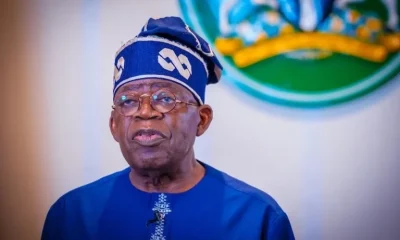
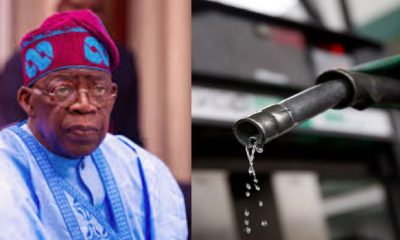
The Federal Government is facing mounting pressure over petrol pricing as opposition politicians warn of further increases under current policies, while labour demands intervention to shield households from the inflationary impact of deregulation.
The presidential candidate of the Social Democratic Party SDP, Adewole Adebayo yesterday warned that petrol prices could rise to N5,000 per litre if President Bola Tinubu secures a second term.
Adebayo attributed the projection to what he described as the direction of the Federal Government’s economic policy, particularly the deregulation of the petroleum downstream sector and continued floating of the naira.
In a statement issued by his campaign’s Chief Communications Adviser, Mark Adebayo, the SDP candidate said the policies were putting the economy on a hyper-inflationary path.
He said without a major shift in economic policy, a second Tinubu administration could push petrol prices to unprecedented levels.
Adebayo identified continued naira depreciation as one of the major factors behind his projection, noting that imported petrol is priced in dollars.
“Petrol in Nigeria is imported and priced in United States dollars. As long as the Central Bank allows the naira to float without strong local production backing it, the currency will continue to weaken,” he said.
“If the exchange rate hits N3,500 to $1 in the coming years, the landing cost of fuel alone will exceed N4,000,” he added.
Adebayo also criticised the removal of fuel subsidies, saying the policy had left consumers exposed to fluctuations in international crude oil prices.
“The current policy completely removes the government’s ability to cushion international oil price shocks. If global crude prices spike due to geopolitical tensions, Nigerian consumers will bear 100 per cent of the burden at the pump, which would automatically trigger a compounded inflation spiral,” he said.
He said higher petrol prices would raise transport costs, which would in turn increase food prices and further reduce consumers’ purchasing power.
“High fuel costs drive up transport inflation. Transport inflation drives up food inflation. This vicious cycle reduces the purchasing power of the naira, forcing marketers to raise prices just to break even against operational costs,” he said.
The SDP candidate also cited high interest rates, port infrastructure and distribution costs as factors contributing to the cost of imported petrol.
“High interest rates from the Central Bank mean oil marketers are borrowing at exorbitant rates to fund imports. These financing fees, alongside decaying port and distribution infrastructure, add hundreds of naira in hidden costs to every litre of fuel,” he said.
Adebayo described the economic hardship as a consequence of adopting what he called “foreign IMF-style models” rather than policies focused on domestic production.
“We cannot run an economy purely on taxes, subsidy removal, and currency devaluation without producing anything internally,” he said.
He warned that the projected N5,000 petrol price could materialise if the current economic direction continued.
“A N5,000 fuel price is not a myth; it is basic mathematics based on the direction the Tinubu administration is walking. If Nigerians do not demand a change in economic philosophy, the pump price will catch up to this reality sooner than expected,” he said.
NLC demands wage awards, crude supply to local refineries
MEANWHILE, the Nigeria Labour Congress (NLC). has called on the Federal Government to immediately introduce wage awards for workers and ensure adequate crude oil supply to local refineries in naira, following a fresh increase in petrol prices in major cities.
NLC president Joe Ajaero also urged the government to expand national petroleum storage capacity and introduce emergency measures to cushion households from the impact of the latest fuel price surge.
Ajaero made the demands in a statement yesterday titled, “Save the Situation Now”, warning that rising petrol prices were putting severe pressure on workers’ incomes and worsening living conditions across the country.
He said petrol was selling for about N1,430 per litre in major urban centres where the product was readily available, while prices were significantly higher in less accessible areas.
According to him, the development would have wider inflationary consequences as higher transport costs feed into the prices of food, school fees, rents and other essential goods and services.
Ajaero said the latest increase came as pressure from the government on petroleum marketers to reduce pump prices in response to declining international crude prices was beginning to yield results.
He, however, said the resurgence of conflict in the Gulf had triggered fresh uncertainty in global energy markets, arguing that Nigeria, as an oil-producing country with significant local refining capacity, should have mechanisms to shield citizens from such external shocks.
He called for immediate wage awards for workers, adequate crude supply to local refineries in naira and an expansion of national petroleum storage capacity.
Ajaero said the measures would cushion the effect of the fuel price increase, create jobs, generate economic
value and help address emerging security challenges.
“There is nothing wrong with government subsidising the needs of citizens, especially in emergencies like this,” he said, urging the government to deploy temporary measures to protect households from the economic consequences of the crisis.
The NLC president also said the Federal Government had additional fiscal space to intervene, citing what he described as gains from international crude prices of between $35 and $40 per barrel above the budget benchmark.
He said the additional revenue amounted to trillions of naira monthly and should give the government the capacity to provide relief to citizens.
Ajaero also criticised the continued importation of crude by some local refineries, describing the practice as unreasonable and contrary to the rationale for developing domestic refining capacity.
He called for a long-term policy to guarantee reliable access to domestically produced crude for local refineries, arguing that dependence on imported crude undermined efforts to strengthen Nigeria’s refining capacity.
Ajaero warned that the government could not afford to ignore the hardship arising from the latest fuel price increases, particularly with the 2027 general elections approaching
He said labour would continue to speak out and, where necessary, act to protect workers and citizens from what he described as the worsening economic burden associated with deregulation.
Atiku demands account of oil revenues, queries N1,470 price despite crude at $102.52
FORMER Vice President Atiku Abubakar faulted the Tinubu administration over the rising price of petrol, demanding a full account of oil revenues, Federation Account deductions and savings from the removal of fuel subsidy.
Atiku, the presidential candidate of the African Democratic Congress (ADC), said Nigerians were now paying as much as N1,470 per litre despite crude oil trading at about $102.52 per barrel.
In a statement issued by his Senior Special Assistant on Public Communication, Phrank Shaibu, Atiku compared the current situation with 2008, when crude oil reached about $147 per barrel while petrol sold for N65 per litre under the late President Umaru Musa Yar’Adua.
“With crude oil around $102.52 per barrel, Nigerians are paying as much as N1,470 per litre. In 2008, when crude oil reached about $147 per barrel, petrol sold at N65 per litre under the Yar’Adua administration,” he said.
Atiku accused the Tinubu administration of presiding over what he described as an “organised system of grand larceny” involving opaque Federation Account Allocation Committee (FAAC) deductions, oil revenues, parallel funding arrangements and alleged off-book transactions.
He said it was unconscionable for a government that had asked Nigerians to make sacrifices following the removal of fuel subsidy to continue raising the cost of living without providing a clear and verifiable account of the revenues, savings and deductions accumulated under its watch.
Atiku recalled that Nigerians were told the removal of subsidy would free resources for education, healthcare, infrastructure and other essential services.
He said almost three and a half years after the policy was introduced, questions remained about how the savings had been applied.
“Petrol at N1,470 per litre is not merely a figure at the filling station. It enters the price of transportation, food, school runs, farming, manufacturing and virtually everything Nigerians buy. Every increase at the pump travels directly into the household budget.
“After all the pain imposed on Nigerians, they have a right to ask: where are the subsidy savings and where is the money?” he said.
The former Vice President also called for a comprehensive reconciliation of Federation Account revenues from 2023 to date, covering gross collections, deductions made before distribution, the legal basis for each deduction, receiving accounts and beneficiaries.
Atiku cited June 2025 FAAC figures which, according to him, showed gross Federation Account revenue of N4.232 trillion, while N1.818 trillion was eventually distributed. He said substantial sums were classified as cost of collection, transfers, interventions, refunds and savings.
“Nigerians deserve accounts they can interrogate, not accounting labels designed to discourage questions,” he said.
He also demanded disclosure of details relating to the Renewed Hope Infrastructure Development Fund, OML 143, oil production revenues, the Nigerian National Petroleum Company (NNPC) Limited’s international liquefied natural gas (LNG) trading operations, offshore corporate structures and allegations of unofficial crude lifting and other off-book revenue flows.
“These allegations are too serious to be answered with press statements and political insults. Every barrel can be measured, every cargo identified and every legitimate payment traced. If everything is in order, publish the records and allow independent forensic auditors to reconcile them. If the allegations are false, the records will clear the government,” he said.
Atiku also rejected the use of the international oil market situation as a blanket explanation for rising domestic petrol prices.
He said the widening gap between fuel prices and Nigerians’ earnings had placed additional pressure on households.
“At about $4.31 per gallon, U.S. petrol is roughly $1.14 per litre. Yet while the U.S. federal minimum wage is $7.25 per hour, Nigeria’s minimum wage is only N70,000 per month.
“Tinubu has brought Nigerians close to American fuel prices while leaving them with Nigerian poverty wages. That is the true cost of his subsidy-removal policy,” he said.
Atiku said the government could no longer demand further sacrifices from citizens without providing greater
accountability over oil revenues, FAAC deductions and subsidy savings.
“After all the oil, all the revenue, all the deductions and all the hardship, petrol is now N1,470 per litre. The question Tinubu must answer is simple: where are the savings, where are the revenues, and who is taking Nigeria’s money?” he said.
Source: The Guardian













OAU Don Calls For Affordable Cancer Treatment, Improved Healthcare Funding

Redeemer’s University Produces 52 PhDs, 213 First Class Graduates

Army Takes Over Old Oyo Park As Training Ground After Oriire School Abduction

Kwara NSCDC Arrests Two Over Alleged Transformer Cable Vandalism

NAF Helicopter Lands On Benue Farmland After Anti-Kidnap Mission

NUJ Congratulates Olowu of Kuta On Elevation As Osun Obas Council Vice Chairman
-
 News4 days ago
Another Man Reportedly Shot As Tension Grips Osogbo
-
 News4 days ago
Osun Govt Threatens Roadside Refuse Dumpers With ₦50,000 Fine, Public Parade
-
 News4 days ago
Aregbesola Sent Me To Hajj 10 Times To Pray For Tinubu’s Presidential Ambition— Cleric
-

 News4 days ago
Osun Challenges Court Order On State Accounts, Questions Validity Of Gamji Arbitration Award