

News
EPSON Seeks Compulsory Employment Of Educational Psychologists In Nigerian Schools
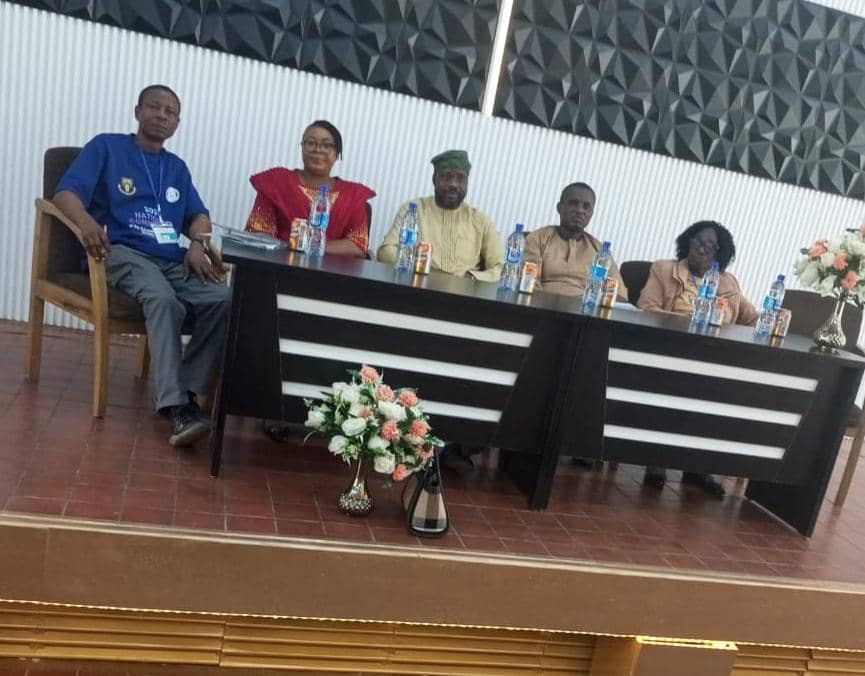
…Warns Of Rising Learning Challenges, Says 75% of Children Cannot Read At 10
The Educational Psychology Society of Nigeria (EPSON) has called on federal and state governments to make the employment of certified educational psychologists compulsory in schools across the country as part of efforts to address Nigeria’s growing learning challenges.
The society said every school should have access to a trained educational psychologist to provide professional support for learners facing emotional, psychological, behavioural and academic difficulties.
The call was contained in a communiqué issued at the end of the 2026 National Conference of EPSON, held at Obafemi Awolowo University (OAU), Ile-Ife, Osun State.
The conference, themed, “Educational Psychology for Sustainable National Development: Innovations, Equity, Challenges and Future Directions,” examined the role of psychological well-being in improving learning outcomes and advancing national development.
The society also called for the integration of Social-Emotional Learning (SEL) into primary and secondary school curricula, as well as the introduction of Educational Psychology as a subject at the undergraduate level in Nigerian universities.
It further urged educational psychologists to prioritise practical training as part of their professional development, recommending that future conferences should feature more practical skills workshops to strengthen professional competence.
The communiqué was signed by the EPSON President and Conference Convener, Professor Bonike Omoteso of OAU, Ile-Ife, and Professor W.O. Adeniyi of the Department of Educational Foundations, OAU.
Speaking at the conference, a Professor of Educational Psychology, Olubusayo Asikhia, warned that Nigeria’s education crisis required urgent attention, disclosing that an estimated 18.3 million children were out of school, while about 75 per cent of Nigerian children could not read and understand age-appropriate texts by the age of 10.
Asikhia, who delivered the lead paper, argued that conventional classroom teaching alone could not resolve the country’s learning challenges without adequate attention to the psychological and emotional well-being of children.
She identified poverty, insecurity, hunger, domestic violence, family instability and displacement as factors exposing children to traumatic experiences that could undermine their concentration, motivation and academic performance.
The professor advocated regular mental health screening, functional school counselling services and comprehensive psychosocial support programmes, particularly for children affected by insecurity and other traumatic experiences.
She also called for a departure from rote memorisation towards learner-centred teaching methods that promote critical thinking, creativity, problem-solving and practical skills.
Asikhia proposed a 10-point national framework, including a one-school-one-counsellor policy, annual mental health screening for learners, improved foundational literacy and numeracy, practical educational psychology training for teachers and stronger career guidance programmes.
Other recommendations included increased funding for educational research, improved digital learning infrastructure, psychosocial support for victims of insecurity, family education and a national values reorientation programme.
Earlier, the Vice-Chancellor of Obafemi Awolowo University, Professor Adebayo Simeon Bamire, described educational psychology as an indispensable instrument for sustainable national development.
Bamire said the discipline provided an important framework for understanding how individuals learn, develop and respond to different educational environments.
He urged teachers and policymakers to recognise the varying psychological, social and intellectual needs of learners, stressing that educational psychology should inform curriculum development, classroom management and policy formulation.
The Vice-Chancellor also called for stronger collaboration among educational institutions, policymakers, teachers and other stakeholders to improve learning outcomes across the country.
Other participants included the Dean, Faculty of Education, Professor Alaba Adediwura; Head of the Department of Educational Foundations, Professor Taiwo Ajeigbe; Dr G.A. Okunola; Dr T.S. Ogungbaigbe; Dr Adeolu Adeyemo; Dr (Mrs) Stella Bukola Adediwura; Mrs Zakariyah Fatimah; and Dr (Mrs) Lydia Funmilola Adeyemo, among others.






Birthday: OOPA Celebrates Pioneer Chairman, Ayobami Agboola, Applauds His Humility, Contributions to Digital Journalism

2027: Oluga Calls On Northern Women To Reciprocate Southern Support For Buhari, Mobilise For Tinubu’s Re-election
Tinubu: Oyebamiji, Osun APC Leaders Lead 50,000 Supporters On Victory Walk In Osogbo

Ooni’s Media Director Commends NUJ Vice Chairman, Ayobami Agboola, At Birthday

Salu of Edunabon Congratulates Prince Oyeleye On Promotion To Commissioner Of Police

INEC Chairman’s London Ordeal: Chatham House Member Urges UK Probe
-
 News5 days ago
Osun Records Over 4000 TB Cases In Q3, As TB Network ZPO Raise Alarm Over Staff Shortage
-

 News5 days ago
Osun Poly, College Of Technology, Health College Lecturers Give Adeleke 15-Day Ultimatum Over Unpaid Allowances
-

 Opinion5 days ago
Gov Abba: Four Hours Standing For The Talakawas By Abdulmalik Suleiman
-

 News5 days ago
Tinubu Govt Faces US Scrutiny As Congress Sets Hearing On Alleged Christian Persecution In Nigeria