
News
2027: How I’ll Transform Osun Central – K-Rad
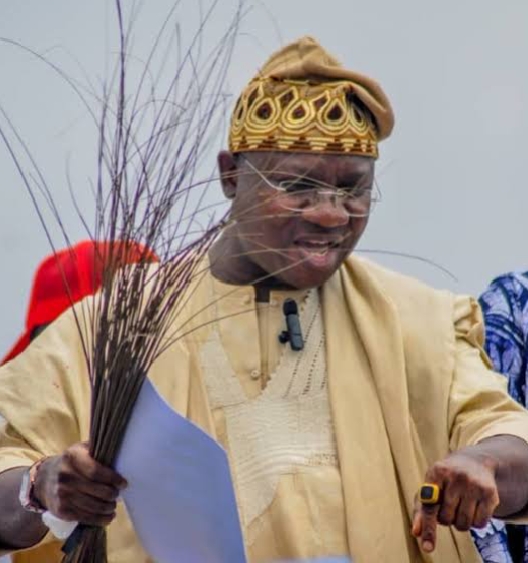
In this interview with Ayobami Agboola, a Senior Advocate of Nigeria (SAN) and All Progressives Congress (APC) senatorial candidate for Osun Central in the 2027 general elections, Mr Kunle Rasheed Adegoke, popularly known as K-Rad, speaks on his decision to contest for the Senate after previously aspiring to become governor of Osun State. He also speaks on the political intrigues surrounding the 2027 elections, his party’s chances, the APC’s relationship with the Accord Party, and his development agenda for Osun Central. He outlines plans for infrastructure, youth empowerment, education, healthcare, agriculture, electricity, tourism and economic development, among other issues.
Excerpts:
You initially aspired to become governor of Osun State, but you are now contesting for the Senate. What informed the change in your political ambition?
My ambition was to become governor because I have invested considerable time and resources in developing ideas that can transform Osun State economically, politically and socially. I believe that many of the things I want to achieve for the people, particularly in terms of economic development, resource allocation and social advancement, can be better implemented through executive authority.
For about 15 or 16 years, I have been working on how to restructure, reposition and recalibrate the Osun economy. We have undertaken extensive studies, visited different states and countries, and gathered valuable knowledge on how to make Osun one of the best-performing states in Nigeria and, indeed, Africa.
That informed my decision to contest the APC governorship primary in 2018 and again in 2025. On both occasions, the party decided that it was not yet my turn.
However, considering my contributions to the party over the years, particularly my legal services, party leaders and members felt that I could be more useful to the people at the National Assembly at this time.
I have served as legal counsel to the party from its days as the Action Congress (AC), Action Congress of Nigeria (ACN) and now the APC. I started providing those services in 2005 and have handled close to 100 cases for the party across the country, many of them pro bono. Some of these cases were not even publicised.
I have also provided legal and advisory services to governments and legislators at both the state and federal levels, including the National Assembly.
Against this background, my people felt that rather than wait indefinitely for another opportunity to pursue the governorship, I should accept the opportunity to represent them in the Senate.
I considered it a worthwhile responsibility because public service is not limited to occupying an executive position. Although there are certain things that can only be achieved as governor, a senator also has enormous opportunities to provide quality representation, facilitate federal projects, attract investment and bring government institutions closer to the people.
We need effective legislation, proper representation and people who understand how to facilitate opportunities from the Federal Government for our communities.
Having received this confidence from the party leadership and its members, I decided to accept the challenge. God willing, I will serve the people effectively, and whatever other opportunities may come in the future will be considered at the appropriate time.
You have never held an elective political office, unlike many serving senators who were former governors or political officeholders. Why did you choose the Senate as your first major elective political assignment?
I consider the Senate the best place for me to begin my elective political journey, particularly given my professional background and experience.
There are several examples of accomplished political leaders who started their public careers as legislators. Barack Obama began his political career as a senator. Chief Obafemi Awolowo started as a member of the Western Region House of Assembly, just as Chief Samuel Ladoke Akintola began his political journey through legislative engagement before becoming Premier of the Western Region.
President Bola Ahmed Tinubu also started his elective political career in the Senate before becoming governor of Lagos State and eventually president of Nigeria.
The important thing is not necessarily the political office one occupies first, but the capacity, experience and vision one brings to the position.
We have also had people like former Osun State Governor, Chief Bisi Akande, whose contributions to governance cannot be dismissed.
As a Senior Advocate of Nigeria, I have acquired considerable experience in lawmaking, legislative processes and governance. I have guided and worked with several senators, not only in litigation but also on legislative matters.
I understand how the National Assembly operates, the responsibilities of legislators and the opportunities available to them to influence national development.
I believe the Senate provides an excellent platform for me to deploy my experience, knowledge and professional networks in the service of my people.
I have always believed that he who stands as a sentinel to guide others in conquering difficult terrains can also become an effective warrior when given the opportunity.
Your party’s performance in the last governorship election was below expectations, and there were disagreements within the APC. What went wrong, and what lessons have you learnt ahead of 2027?
A: Several factors contributed to the outcome of the election. There are issues we can openly discuss, while others are strategic matters that we cannot disclose because doing so could expose our plans for the next election.
However, one major lesson is that we must strengthen internal cohesion and work together as a united political family.
We have a large political structure, experienced leaders, seasoned politicians and people with the intellectual capacity and organisational ability to deliver electoral success. What we need is to bring all these strengths together.
There were disagreements among different tendencies within the party before and during the last election. We must address those differences and ensure that everybody works towards a common objective.
I am encouraged by the level of integration taking place within the APC. People who previously disagreed are beginning to close ranks, and this is strengthening our political structure.
Our opponents understand the strength of the APC when its members work together. That is why I believe that with greater unity, strategic planning and effective mobilisation, we are well-positioned to win the forthcoming elections.
What exactly is your development agenda for Osun Central if elected into the Senate? What should the people expect from you?
We have developed a comprehensive programme that we call My Vision. It is essentially our manifesto and contains the areas we intend to address to improve the lives of our people.
We have studied Osun State extensively, particularly the 10 local government areas that make up Osun Central Senatorial District. From our studies, we identified critical areas requiring immediate attention.
One of our major priorities is to aggressively pursue more federal projects, institutions and establishments for the district. We want to attract federal institutions, educational facilities and other government agencies that can provide employment opportunities for our people.
We also want to facilitate the completion of abandoned federal projects and attract new infrastructure to communities that have suffered neglect.
For instance, I am already working on the road linking Ikirun, Ekoende, Igbajo and communities towards Ogbomoso in Oyo State.
There is an important historical connection involving the road passing through Ekoende, Eko Ajala, across the Erinle River to Ilie, Ore, Iresaadu, Iresaapa, Iragbiji and eventually Ogbomoso.
The road was constructed during the administration of Sir Ladoke Akintola, the second Premier of the Western Region, to link Ogbomoso with Igbajo, his wife’s hometown. Since then, it has not received the comprehensive reconstruction it requires.
I visited the area with the traditional ruler, the Elende, who took me through the route to the Erinle River. We were informed that the administration of former President Goodluck Jonathan had made efforts to construct a bridge across the river to connect the communities.
However, the project was abandoned. The pillars are still standing in the river, but the bridge deck required to facilitate transportation has not been completed.
This is an important road that can improve the movement of people and goods between Osun and Oyo states. It is approximately 35 kilometres long.
We have taken up the matter and are documenting abandoned federal projects across the district. The affected communities have also submitted their requests to me.
I intend to present the necessary representations to the President and the Minister of Works to ensure that the road and the bridge receive the attention they deserve.
Beyond infrastructure, youth empowerment is another major component of our agenda.
We do not want empowerment to be limited to the distribution of motorcycles or other conventional items. We want to equip our young people with skills that can make them economically independent and competitive.
We have identified areas such as information and communication technology, software development, renewable energy, solar installation, fashion and garment production, automotive technology and equipment maintenance.
For instance, I visited Fabomu Tailors in Ibadan about a year or two ago and was impressed by the quality of the garments being produced there. The establishment has existed since 1942, and the business has continued through successive generations.
That kind of enterprise provides a model for developing our own fashion and garment industry. We need to train our youths in such productive skills and expose them to opportunities in the sector.
We have also discovered that many of our young people have the capacity to acquire advanced automotive and equipment maintenance skills, but lack the necessary training facilities and opportunities.
We intend to bridge these gaps through vocational training, technical education and enterprise development.
Another important area is access to finance. There are several government agencies and development institutions offering grants, loans and other forms of assistance, but many of our people are unaware of these opportunities.
Information is knowledge, and information is power. We intend to connect our constituents with these institutions and facilitate access to available financial resources.
Agricultural development is equally important. We have observed that farmers in some parts of northern Nigeria benefit more from government agricultural interventions because they are better informed about available opportunities and know how to access them.
Unfortunately, many farmers in southern Nigeria are not benefiting sufficiently from similar programmes.
We have developed relationships with relevant institutions and agencies, and we intend to use those connections to ensure that our farmers in Osun Central have better access to agricultural grants, support schemes, modern farming techniques and other opportunities.
We have also organised our development agenda into 12 directorates, each focusing on specific areas of intervention. These directorates will work directly under my supervision.
I have brought together experienced professionals and experts who have the capacity to engage relevant institutions, government agencies and stakeholders to deliver results.
For about 12 years, we have maintained a think-tank structure working on ideas for repositioning Osun State. We are now using Osun Central as a practical model through which we can demonstrate the effectiveness of those ideas.
You mentioned education and human capital development as key areas of your agenda. What specific interventions are you proposing?
Education and human capital development are fundamental to our vision.
Over the years, I have supported thousands of people through scholarship opportunities, including those who have gone on to become lawyers, doctors, engineers and professionals in other fields.
We do not necessarily publicise these interventions through advertisements in the media, but the beneficiaries themselves can testify to what we have done.
We intend to expand access to scholarships and educational opportunities so that more young people from Osun Central can acquire quality education.
However, education must go beyond obtaining certificates. We must prepare our young people to compete effectively in the global economy.
That is why we are looking at different areas of human capital development, including technology, vocational skills, entrepreneurship and other professional disciplines.
We are also building relationships with educational institutions, both public and private, because every student from our communities deserves access to opportunities.
Our engagement is not limited to government-owned institutions. Private universities and other higher institutions also have students who come from our communities, and we must ensure that they benefit from our programmes.
We intend to visit institutions such as Owolabi University and explore areas of collaboration.
Another major concern is graduate unemployment. It is not enough for our young people to graduate from universities and other higher institutions without having access to employment opportunities.
We recently had a robust engagement with the leadership of the National Association of Nigerian Students (NANS), during which we discussed ways to bridge the gap between education and employment.
Our objective is to ensure that graduates are equipped with relevant skills, connected to opportunities and prepared for the demands of the labour market.
What are your plans for healthcare, social protection and other critical sectors such as electricity?
Healthcare and social protection are important components of our development agenda.
There are federal government institutions and agencies that we can engage to improve healthcare delivery in our communities. However, we also understand that effective service delivery requires collaboration with the state government.
We are not going to allow political differences to prevent us from working with the state government.
Whether the commissioner responsible for health or education belongs to the Accord Party, PDP or any other political party, our responsibility is to ensure that the people receive the services they deserve.
Whenever we identify areas requiring government intervention, we will engage the relevant authorities and work towards finding solutions.
We are also concerned about residents whose homes, properties and livelihoods were affected by the recent flooding incidents. We intend to support them in collaboration with the relevant state government agencies and federal institutions responsible for environmental and ecological matters.
On electricity, we recognise that no society can achieve meaningful economic advancement without a reliable power supply.
Although a senator does not directly control electricity generation and distribution, there are several ways to influence policy, facilitate projects and engage the relevant ministries and agencies.
We intend to work with the Federal Ministry responsible for electricity and provide useful suggestions on how power supply can be improved.
We also want to explore opportunities available under the electricity framework that allows state governments to develop and manage electricity markets within their jurisdictions.
There are different options, including embedded generation, captive power systems and solar energy solutions.
We must examine how these opportunities can be deployed to support communities, businesses and industries, particularly areas that are not adequately served by the national grid.
Our approach will be to work with both federal and state authorities to ensure that electricity becomes a major driver of economic growth in Osun Central.
Small business owners, traders and artisans are struggling with the economic situation. How do you intend to support them beyond the usual distribution of loans?
Supporting small businesses requires more than simply giving people loans. Access to finance is important, but people must also know how to manage their businesses and use available capital effectively.
For instance, if someone receives N100,000 to operate a small business, there must be proper training on how to manage the money, market products and attract customers.
This is why we are developing a digital marketing programme for traders and market women.
Many of our traders use social media platforms such as Facebook, Instagram and TikTok, but largely for entertainment. They have not fully realised that these platforms can provide access to much bigger markets.
Our plan is to train young men and women who will assist traders in promoting their products online.
They can take quality pictures of the goods, upload them on social media and help the traders reach customers beyond the immediate communities where their shops are located.
Imagine a trader whose customers previously came only from people passing in front of her shop. With effective online marketing, people from different towns and cities can see her products, contact her and place orders.
That is how we intend to expand the market opportunities available to our traders.
We also want to facilitate access to loans and grants through partnerships with microfinance institutions and other relevant organisations.
Our proposal is to establish a funding arrangement through which we can place resources with financial institutions and make them available to qualified traders, artisans and small business owners at very low interest rates, possibly around two per cent.
The idea is to reduce the financial burden on small businesses while ensuring that beneficiaries receive the training and support required to manage the funds.
We want to help our people grow their businesses, employ others and contribute to the economic development of the district2027:
Osun State has enormous tourism and cultural potential. How do you intend to harness these resources for economic development, particularly in Osun Central?
Tourism, culture and the creative economy are also important areas of our development plan.
As I mentioned earlier, we are using Osun Central as a model through which we intend to demonstrate what can be achieved with proper planning and effective representation.
There are several tourist attractions within the district, including the Osun-Osogbo Sacred Grove and Akunugba in Oke-Ila, among others.
Across Osun State, we have identified about 64 locations with significant tourism potential, but many of these sites have not been adequately developed or promoted.
Tourism development should go beyond organising festivals and cultural celebrations.
While festivals such as the Sango and Oya festivals are important, tourism requires the development of facilities, infrastructure, accommodation, hospitality services and other supporting structures that will make visitors want to come and stay.
We must create an environment where tourists can visit these locations, enjoy quality services and spend money within the local economy.
We also want to facilitate international exposure and promotion of our tourism assets so that Osun can attract more visitors from within and outside Nigeria.
Our objective is to turn the state’s cultural and tourism potential into sustainable economic opportunities for our people.
What are your plans for sports development and the creative talents of young people in the district?
A: Our youths have enormous talents, particularly in sports, but many of them lack the exposure and facilities required to reach their full potential.
We have already supported some sporting activities among young people, including the provision of jerseys and other necessary materials.
We are working with experienced sports administrators, including people who have spent decades developing football talents.
For over 35 years, I have maintained a relationship with the football administration structure in the state, and we have been exploring ways to expose young talents to bigger opportunities.
Some of these young people have already secured opportunities with football clubs where they can develop their skills and showcase their abilities.
We want to provide the equipment, facilities and exposure that will enable more of our youths to compete effectively with their counterparts internationally.
When a talented footballer secures an opportunity to play for an international club, the benefits extend beyond that individual. It can transform the lives of family members and create opportunities for others.
We therefore see sports development as an important instrument for youth empowerment, employment and economic advancement.
As a Senior Advocate of Nigeria with considerable legal experience, what should constituents expect from you in terms of legislative performance and accountability?
Legislative excellence and effective representation are areas in which I have considerable experience.
Over the years, I have drafted and reviewed numerous laws and assisted in legislative reforms at different levels.
I have also had the opportunity to review the laws of the Federation from beginning to end for a particular state government, which I will not name.
That exercise helped the government identify certain gaps and areas of conflict in the legal framework, which it has used in engaging the Federal Government on issues relating to the constitutional rights and interests of the state.
This is the kind of expertise and experience I intend to bring to the Senate.
Beyond making laws and representing my constituents, I believe accountability and regular engagement with the people are essential.
We intend to establish what we call Constituency Engagement and Accountability, through which we will maintain regular communication with the people and provide updates on our activities.
One of the major features will be quarterly constituency town hall meetings.
We intend to rotate these meetings among the three federal constituencies that make up Osun Central Senatorial District.
For instance, one meeting may hold in Osogbo, Olorunda, Irepodun and Orolu Federal Constituency; another in Ifelodun, Boripe and Odo-Otin Federal Constituency; while the third will cover Ila, Boluwaduro and Ifedayo Federal Constituency.
This arrangement will ensure that the meetings remain manageable while giving people across the district opportunities to interact with us.
We will also explore technology to make our activities accessible to people who may not be physically present.
The objective is to maintain constant engagement with our constituents, understand their needs, receive feedback and ensure that our representation reflects their expectations.
We want the people to have regular opportunities to ask questions, make suggestions and assess our performance.
We believe that through this approach, our constituents will experience a new standard of representation.
Your party lost some local governments in Osun Central during the last governorship election. What are you doing to reverse that situation? Also, could the emerging relationship between the APC and Accord Party create confusion among voters, considering that both parties have their own candidates?
There is no confusion about our position. The APC and Accord Party have aligned on the conviction that the best thing that can happen to Nigeria at this time is the re-election of President Bola Ahmed Tinubu.
The Accord Party had selected some of its candidates before this understanding emerged. Those decisions were taken around May, while the political alignment around the presidential election came much later.
Therefore, the fact that both parties have candidates does not invalidate their agreement on supporting the President.
The important thing is that the political situation has changed, and more people are beginning to appreciate the need for continuity at the federal level.
Many people in Osun have come to understand the importance of the financial support and allocations coming from the Federal Government to states.
They recognise that the President’s policies and the resources available to the states have implications for their ability to meet financial obligations and execute projects.
We believe that the President needs supportive legislators who understand his vision and can work with him to achieve the objective of repositioning the Nigerian economy.
As for our performance in Osun Central, we lost the last governorship election in the district by approximately 7,000 votes, which was the smallest margin of defeat among the three senatorial districts.
Interestingly, about 6,000 of those votes came from Osogbo, my hometown.
I have a long history of service to the people of Osogbo, and I believe that they understand my contributions to the community.
When other political parties realised that the APC had chosen me as its candidate from Osogbo, they also began making efforts to strengthen their presence in the town.
But elections are not necessarily about how many candidates a particular town produces. They are about the quality, credibility and capacity of the individuals seeking public office.
I believe the people of Osogbo understand what is at stake, and our engagements with them have been encouraging.
I am confident that we have made considerable progress in closing the gap that affected us in the last election.
Beyond Osogbo, I have also been involved in the service of the people across Osun for more than 21 years, dating back to the days of the AC, ACN and now APC.
I have supported successive administrations and rendered services to people across different communities. Many of them understand our capacity and what we have done over the years.
However, we are not taking anything for granted. We are continuing our engagements and mobilisation to ensure that the people understand our programmes and what we intend to offer.
We believe that our experience, grassroots connections and development agenda will give us an advantage.
By January 16, 2027, when the presidential election is scheduled to hold, I am confident that the APC will perform strongly. I also believe that we are well-positioned to win the senatorial election.
Nigerians are currently facing serious economic challenges, and many people are complaining about the rising cost of living. How do you intend to convince voters to support the APC despite the hardship?
Interestingly, many of the people expressing dissatisfaction with the economy are also the ones joining the APC. Some of them are equally expressing confidence in President Bola Ahmed Tinubu’s leadership.
I believe that a country cannot achieve meaningful economic transformation without sound leadership at the highest level.
There is a growing recognition among many Nigerians that President Tinubu has the experience and capacity to reposition the country.
The President’s political reach is also significant, with the APC controlling 33 of the 36 states, according to the political situation we are working with.
I do not believe that the outcome of the last Osun governorship election should be used as the sole determinant of the APC’s chances in the 2027 general elections.
The political configurations, circumstances and electoral calculations are different.
We are witnessing new political alignments, growing support and a changing political atmosphere.
I believe that as we move closer to the elections, the strength of the APC and the level of support for the President will become clearer.
Our responsibility is to continue engaging the people, explaining our programmes and demonstrating how effective representation can complement the Federal Government’s development agenda.
We are confident that the people will make their decisions based on the capacity, experience and ability of those seeking their votes.



Ooni’s Media Director Commends NUJ Vice Chairman, Ayobami Agboola, At Birthday

Salu of Edunabon Congratulates Prince Oyeleye On Promotion To Commissioner Of Police

INEC Chairman’s London Ordeal: Chatham House Member Urges UK Probe

2027: How I’ll Transform Osun Central – K-Rad

SSACO Tackles Makinde Over Economy, Says TV Interview Exposes Policy Gaps

2027: Defections Rock Makinde’s Camp As Governor Reportedly Opens Talks With Loyalists
-
 News4 days ago
Osun Records Over 4000 TB Cases In Q3, As TB Network ZPO Raise Alarm Over Staff Shortage
-
 News4 days ago
Osun Poly, College Of Technology, Health College Lecturers Give Adeleke 15-Day Ultimatum Over Unpaid Allowances
-
 News5 days ago
Osun Shari’ah Panel Honors OSMC President, Seeks Government Recognition
-
 News4 days ago
Tinubu Govt Faces US Scrutiny As Congress Sets Hearing On Alleged Christian Persecution In Nigeria