
News
Osun Poll: Religious Leaders Raise Alarm Over Rising Political Violence, As JDPMC Launches Election Monitoring Dashboard
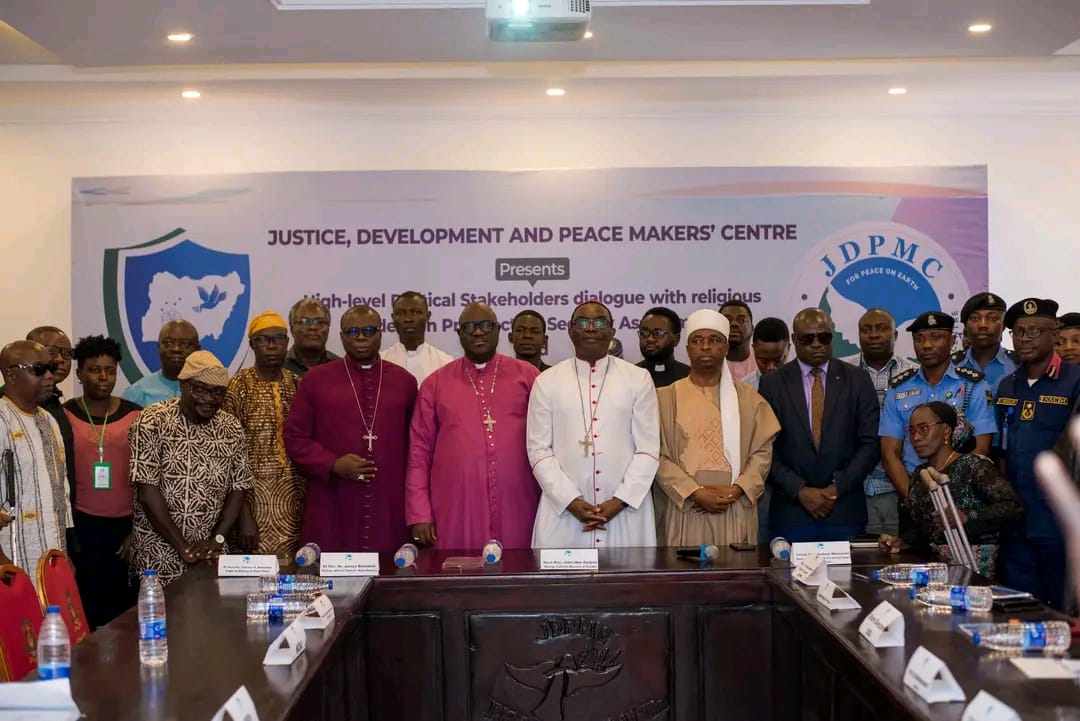
Religious leaders in Osun State have expressed concern over the rising wave of political violence ahead of the August 15 governorship election, warning that the state risks further erosion of its reputation as one of Nigeria’s most peaceful states if urgent steps are not taken to curb election-related killings and political thuggery.
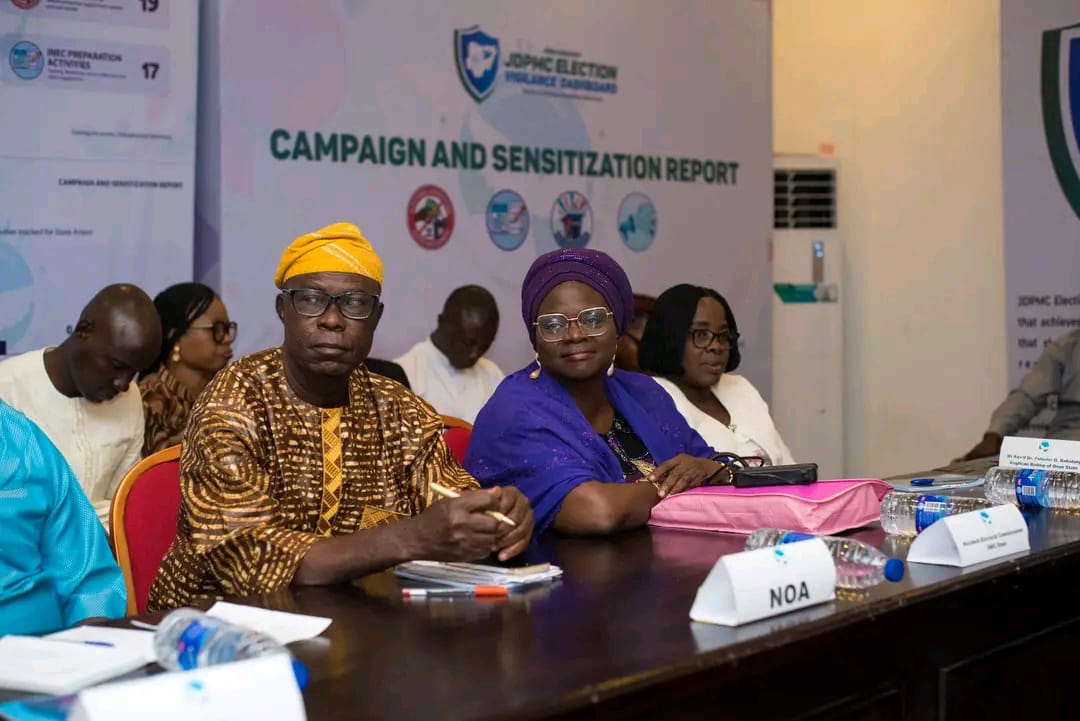
The warning came during a High-Level Religious Leaders’ Dialogue with Political Stakeholders on Pre-Election Security Assessment and the official unveiling of the Justice, Development and Peace Makers’ Centre (JDPMC) Election Vigilance Dashboard (JEVID 2026) in Osogbo.
The event brought together officials of the Independent National Electoral Commission (INEC), security agencies, political party leaders, civil society organisations, the National Orientation Agency (NOA), Christian and Muslim leaders, and other stakeholders to assess the state’s pre-election security environment.
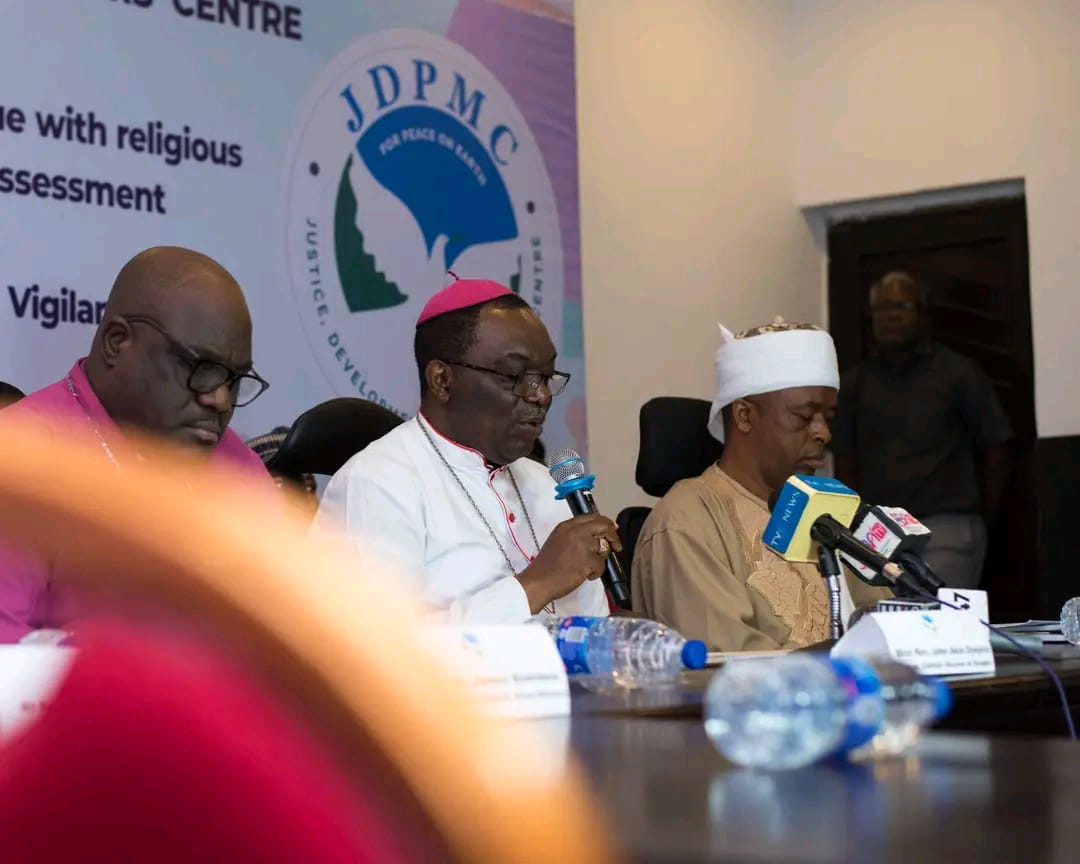
Speaking at the dialogue, the Catholic Bishop of Osogbo Diocese and Chairman of the Forum of Mainline Bishops in Osogbo, Most Rev. John Akin Oyejola, lamented what he described as the growing trend of politically motivated violence in the state.
While acknowledging that Osun has remained largely free from insurgency, banditry and other forms of violent crimes affecting several parts of the country, the cleric said the state was becoming increasingly associated with political violence.
“It is tragic that while Osun remains one of the most peaceful states in Nigeria in many respects, it is gradually being cast in the image of the most politically violent state. Political interest is degenerating into obsession, and human lives are being sacrificed for personal ambitions,” he said.
Oyejola blamed the situation on what he described as the growing influence of political thuggery, personality cults and weakened democratic institutions, urging political actors to embrace dialogue and place the collective interest of the state above partisan considerations.
He also expressed concern over the prolonged crisis surrounding local government administration in the state, arguing that the situation had weakened grassroots governance, reduced citizens’ access to public services and complicated security coordination ahead of the election.
The bishop further urged political leaders to find a lasting resolution to the local government impasse before the governorship election, describing functional local councils as critical to public welfare and effective grassroots security.
Earlier, General Coordinator of JDPMC, Rev. Fr. Peter Akinkunmi, said the organisation convened the dialogue after its election monitoring data indicated worrying patterns of pre-election violence across the state.
According to him, JDPMC’s Election Vigilance Dashboard was designed to monitor election-related developments, analyse emerging security trends and provide evidence-based information capable of supporting early interventions by relevant stakeholders.
Akinkunmi said data gathered by the organisation showed that Osun had recorded five cases of politically motivated killings during the current pre-election period.
He noted that although some previous off-cycle governorship elections recorded higher casualty figures, the spread of incidents across different parts of Osun presents a unique security concern that requires urgent attention.
“The violent destruction of human lives is the greatest evil in any society. No political ambition is worth the shedding of innocent blood,” he said.
The religious leaders also condemned the alleged activities of violent political groups and urged security agencies to ensure those responsible for election-related violence are investigated and prosecuted without bias.
They called on political parties to discourage violence among their supporters, while appealing to traditional rulers, community leaders, parents and faith-based organisations to work together in promoting peace before, during and after the election.
The leaders further urged the National Orientation Agency, civil society organisations and the media to intensify voter education, warning that allowing political parties alone to dominate political sensitisation could expose voters to partisan narratives rather than objective civic education.
They also appealed to journalists to promote responsible and conflict-sensitive reporting capable of reducing tensions and strengthening public confidence in the electoral process.
The dialogue also featured the official launch of the JDPMC Election Vigilance Dashboard (JEVID 2026), an election monitoring platform expected to track incidents of political violence, analyse electoral trends and provide regular updates to stakeholders as the state prepares for the August 15 governorship election.











Princess Omolaoye Adedoyin At 66: Family Celebrates Her Godly Virtues, Prays For Long Life

Osun: Physician Advocates Regular Checkups At Qualified Medical Laboratories

Hausa Zallah Leader Congratulates Hashim on Court Victory, INEC Listing

Osun Police Declare Alowonle, Sibi Wanted Over Emir’s Murder

SSACO Raises Alarm Over Alleged Forced Sale Of Political Stickers To Oyo Drivers

Akande Hails Adeleke For Uniting Osun Political Leaders Behind Tinubu
-
 Crime4 days ago
Police Arraign Three Travel Agency Staff Over Alleged ₦5.6m Visa Fraud In Osun
-

 News4 days ago
Osun: FBOMF Raises Alarm Over Poor School Facilities, Teacher Shortage In Ayedaade
-
 Crime5 days ago
Ondo Police Arrest Two Suspects, Recover Locally Made Guns In Akure
-
 News4 days ago
Toluwanisings: Family Announces October 27 Tribute Night In Ibadan