
News
FBC Jos’ 115-Year Legacy Helped Shape Emergence of Nigerian Baptist Convention, Says Saleh
By Our Reporter
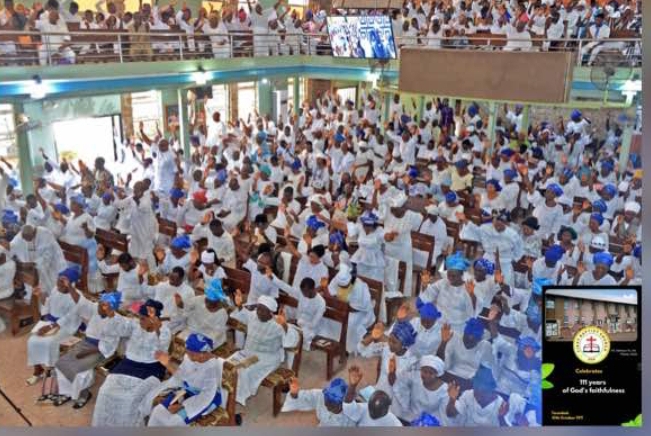
First Baptist Church (FBC), Adebayo Street, Jos, has been identified as one of the historic churches whose establishment helped facilitate the emergence of the Nigerian Baptist Convention as a national Baptist body, extending the denomination’s reach beyond Southwestern Nigeria.
Rev. Dr. Koeleh Kyenvel Saleh made this assertion while delivering a lecture titled “From Heritage to Destiny: The Yesterday, Today and Tomorrow of an Impactful Church in the 21st Century” during the 115th anniversary celebration of First Baptist Church, Adebayo Street, Jos, on October 7, 2026.
Saleh explained that the church, founded in 1911 by a group of itinerant Baptist traders who migrated from Ogbomoso to Jos, represented an important milestone in the geographical expansion of Baptist Christianity in Nigeria.
According to him, the establishment of the church was driven not by a foreign or indigenous missionary agency but by the determination of Baptist traders to preserve their denominational heritage and maintain their preferred pattern of worship and Christian fellowship while living away from their ancestral home.
He described the church’s 115-year journey as a testament to resilience, unwavering faith and the commitment of generations of believers whose devotion sustained the congregation through changing social, cultural and generational realities.
FBC Jos and the birth of the Nigerian Baptist Convention
A major highlight of the lecture was the historical connection Saleh established between First Baptist Church, Jos, and the evolution of the Nigerian Baptist Convention.
He explained that what is today known as the Nigerian Baptist Convention emerged from the Yoruba Baptist Association, established in 1914 to bring together Baptist churches in Southwestern Nigeria.
According to the lecturer, the body was renamed the Nigerian Baptist Convention in 1919 following the extension of the Baptist missionary presence beyond the Southwestern region.
Against this historical background, Saleh argued that the establishment of First Baptist Church, Jos, in 1911 was one of the factors that helped facilitate the transition from a predominantly Southwestern Baptist identity to a broader Nigerian denominational outlook.
“It becomes very obvious by this historical record therefore that First Baptist Church Adebayo Street Jos which was founded in 1911 is one of the determinant factors that facilitated the actualization of the denominational nomenclature called the Nigerian Baptist Convention that we have today,” he stated.
The lecturer’s argument places FBC Jos within the wider story of Baptist expansion in Nigeria, illustrating how the movement of people, the preservation of faith in new settlements and the establishment of local congregations contributed to the development of a national denominational identity.
The connection is particularly significant because the church’s founding preceded the establishment of the Yoruba Baptist Association in 1914 and its subsequent renaming in 1919.
Its history therefore provides an important perspective on the spread of Baptist Christianity beyond its original geographical strongholds and the emergence of a more geographically inclusive denominational structure.
From a small fellowship of traders to a century-old church
Reflecting on the origins of the congregation, Saleh said the founders were largely lay traders who had relocated from Ogbomoso in search of economic opportunities in Jos.
Some, he observed, arrived as teenagers without their parents, while others had no professional skills and had to begin their lives as apprentices. Some depended on foster families, and many faced difficult circumstances as they sought to establish themselves in an unfamiliar environment.
Despite these challenges, the traders maintained their faith and sought to establish a church where they could worship according to their Baptist convictions and sustain their spiritual heritage.
Drawing a parallel with Abraham’s migration from Haran to Canaan, Saleh noted that the biblical patriarch built altars to God wherever he settled. Similarly, the Baptist traders established a spiritual home in Jos, ensuring that distance from their ancestral community did not sever their connection with the faith they had inherited.
He also likened their commitment to the faith passed down through generations, as reflected in the biblical account of Timothy’s spiritual heritage.
What began as a modest expression of faith among a small community of migrants, he said, eventually developed into an instrument of evangelism and transformation, reaching people across ethnic groups on the Plateau and beyond.
The lecturer described the founders as pioneers whose determination laid a foundation that successive generations have continued to build upon.
He urged the congregation to remember these founding fathers and mothers with gratitude, acknowledging their courage, sacrifice and commitment to sustaining Christian fellowship in a new environment.
Preserving heritage while responding to changing realities
Saleh said the anniversary offered the church an opportunity not only to celebrate its longevity but also to examine how its historical achievements could guide its response to contemporary challenges.
He noted that many churches established more recently had either stagnated or ceased to exist, while FBC Jos had endured for 115 years by maintaining its spiritual foundation and navigating changing circumstances.
However, he warned that longevity alone does not guarantee continued relevance. A century-old church must learn to balance its traditions with the realities of contemporary society.
He particularly highlighted the potential danger of intergenerational gaps, warning that a failure to transmit faith, values and active participation to younger members could undermine the future of established congregations.
Saleh expressed concern that some contemporary church leaders regard certain traditional Baptist programmes as outdated because they appear to interrupt their preferred preaching or teaching schedules.
He specifically mentioned Sunbeam Sunday, Girls’ Auxiliary Lydia, Royal Ambassadors and Youth Sunday services as examples of programmes that should not be casually discarded.
According to him, such initiatives have historically provided opportunities for young people to learn Christian values, develop leadership skills and participate actively in the life of the church.
He maintained that preserving these structures, while adapting their delivery to present-day needs, would help strengthen continuity between older and younger generations.
The lecturer therefore challenged FBC Jos to see its heritage not merely as a record of past accomplishments but as a responsibility to prepare future generations for effective Christian service.
Seven marks of an impactful 21st-century church
Drawing from Psalm 145:4 and Acts 1:8, Saleh outlined the characteristics required for the church to remain relevant and impactful in the 21st century.
He organised these responsibilities around three dimensions of growth: upward growth, inward growth and outward growth.
Upward growth, he explained, involves loving God deeply through worship and prayer. Inward growth entails loving one another genuinely through fellowship, discipleship and mentorship, while outward growth requires the church to love the wider world sacrificially through evangelism and service.
Expanding on these dimensions, he identified seven biblical marks of an impactful church.
The first is sound, Word-centred preaching, which he said should transform lives through faithful and practical teaching of the Scriptures rather than mere entertainment.
The second is a vibrant worship and prayer life, extending beyond Sunday services to include personal devotion, family worship and corporate intercession.
Third, he called for genuine love and fellowship, stressing that the church should be a place where members experience a sense of family, free from cliques, tribalism and sectional divisions.
Fourth, he emphasised effective discipleship and leadership development, urging churches to prioritise the spiritual maturity and preparation of members for service rather than focusing solely on numerical growth.
The fifth mark is active evangelism and community impact. Saleh said the church’s influence must extend beyond its walls by responding to the spiritual and physical needs of the surrounding community.
He also identified godly and accountable leadership, characterised by integrity, humility and vision, as indispensable to the church’s effectiveness.
The seventh is Spirit-led service and generosity, through which members use their gifts and resources willingly and sacrificially for the advancement of God’s work.
Saleh maintained that these qualities should guide FBC Jos as it seeks to sustain its historic legacy while remaining responsive to the needs of contemporary society.
Passing the faith from one generation to another
Expounding on Psalm 145:4, which teaches that one generation should commend God’s works to another, the lecturer stressed the importance of preserving the church’s collective memory and sharing testimonies of God’s faithfulness.
He observed that older members have a responsibility to recount the experiences and sacrifices that shaped the congregation, while younger members can inspire the older generation through testimonies of fresh developments and new expressions of faith.
Such interaction, he said, allows each generation to contribute to a continuing history of worship, service and Christian witness.
He further explained that the church’s anniversary should encourage deeper reflection on God’s character and goodness, rather than focusing exclusively on institutional achievements, buildings, membership figures or the passage of time.
Recalling the difficult experiences of the early traders, Saleh highlighted the providence and compassion that sustained many of them through hardship.
He noted that some who arrived in Jos as young people eventually established themselves economically, married, raised families and became breadwinners who supported their parents and relatives back home.
These experiences, he said, demonstrated how faith, perseverance and divine provision could transform individual lives and shape the destiny of entire families.
The lecturer also linked the message of Psalm 145 to the Great Commission, as expressed in Acts 1:8, which calls believers to be witnesses of Christ from their immediate communities to the ends of the earth.
He argued that recipients of God’s grace must become messengers of that grace, making evangelism and service essential responsibilities for a church celebrating more than a century of existence.
A call to renewed mission and greater community relevance
As FBC Jos looks towards the future, Saleh challenged the congregation to ensure that its historic achievements translate into renewed missionary commitment and practical community impact.
He said a church’s relevance should be measured not merely by the length of its existence but also by the depth of its relationship with God, the quality of its fellowship, the effectiveness of its discipleship and the extent of its influence on the wider community.
For FBC Jos, this means continuing to nurture future leaders, strengthening intergenerational relationships, maintaining sound biblical teaching and ensuring that its evangelistic and service-oriented activities respond to the changing needs of the Plateau community.
The anniversary, he suggested, should therefore serve as a bridge between the sacrifices of the founders, the responsibilities of the present generation and the aspirations of those who will inherit the church in the years ahead.
A legacy extending beyond 115 years
The 115th anniversary of First Baptist Church, Adebayo Street, Jos, represents more than a celebration of institutional survival. It recalls the determination of ordinary believers whose commitment to preserving their faith helped establish a lasting Baptist presence in Northern Nigeria.
The historical account presented by Saleh also highlights the wider denominational significance of the church’s founding in 1911, three years before the formation of the Yoruba Baptist Association in 1914 and eight years before the body adopted the name Nigerian Baptist Convention in 1919.
By drawing attention to this connection, the lecture placed FBC Jos within the broader historical narrative of Baptist Christianity in Nigeria and underscored the contribution of congregations outside the denomination’s original Southwestern base to its national development.
Saleh concluded by praying for the continued growth and enduring relevance of the church, expressing the hope that its influence would never diminish with time.
As the congregation celebrates its past and considers its future, his message remains a call to preserve the faith of its founders, strengthen the bond between generations and pursue a mission that continues to transform lives for decades to come.






Adeleke, Akinleye, Faseru Named Patrons As Elegboro Inaugurates Olajengbesi’s Campaign Council

YFBI Faults Selective Petrol Price Reduction, Demands Equal Relief

Shun Quick Wealth, Uphold Christian Values, Adeboye Tells Graduands

Akinleye: Celebrating a Visionary Leader Of Honour At His Birthday By Sunday Oguntuyi

Osun Waste Crackdown: Civil Society Groups Fault Arrests, Question ₦50,000 Fine

All Hands Must Be On The Deck For The Reelection Of Tinubu By Rotimi Makinde
-

 Economy4 days ago
Naira Rises To N1,357/$ In Parallel Market
-

 Foreign News4 days ago
US Warns Foreign Financial Institutions Not To Do Business With Iran
-

 South West News2 days ago
K-Rad Hails Elende Of Eko-Ende’s Elevation, Says Osun Traditional Institution Gains
-

 Opinion2 days ago
2027: Gbenga Olawepo-hashim Emerges AS THE Only Main Opposition To Tinubu, A Refreshed Brain With Robust Policy Plan