
News
North, Biggest Beneficiary Of My Reforms —Tinubu
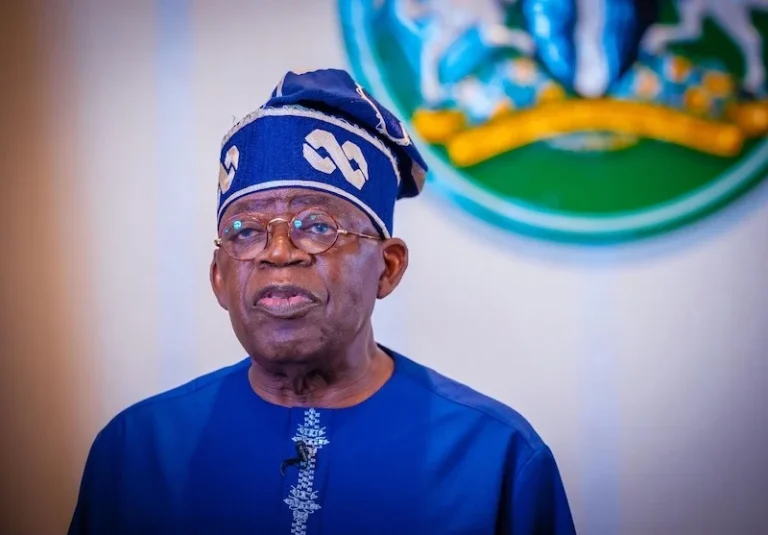
The Arewa Consultative Forum, ACF, Middle Belt Forum, MBF, and Northern Christians yesterday disagreed over President Bola Tinubu’s claim that Northern Nigeria remained the biggest beneficiary of his economic reforms.
While ACF and MBF described the President’s claim as surreal and cynical, having made the North the poverty capital of Nigeria, Northern Christians disagreed, saying Tinubu is doing better than the late Muhammadu Buhari did as president, insisting that the North is benefiting from reforms of the present government.
President Tinubu and All Progressives Congress, APC, had restated that removal of fuel subsidy by his administration was a difficult but necessary decision that redirected national resources into productive sectors, saying the North is the biggest beneficiary of the reforms.
This was as the APC pushed back against a proposal by former Vice President and African Democratic Congress, ADC, presidential candidate, Alhaji Atiku Abubakar, that he would restore the subsidy regime, if elected at the 2027 elections.
Indeed, the ADC concurred with Atiku yesterday, saying it remains committed to restoring fuel subsidy, describing the policy as a key part of its strategy to address the rising cost of living in the country.
Why North is biggest beneficiary of subsidy removal
This position was canvassed by the National Chairman of the APC, Prof. Nentawe Yilwatda, who represented President Tinubu at the second edition of the Policy Roundtable organised by the APC Professionals Forum, tagged the Asiwaju Scorecard Series, with the theme: “Dissecting the Renewed Hope Deliverables and Achievements,” yesterday.
Tinubu said his administration inherited “fuel subsidy distortions, multiple exchange-rate windows, weak revenue mobilisation, foreign-exchange shortages, rising debt-service pressures and years of inadequate investment in critical infrastructure” when Tinubu took office on May 29 2023.
He said gross external reserves had risen to about $52.7 billion by August 2026, while consolidated non-oil revenue grew from roughly ₦13.63 trillion in 2023 to ₦16.4 trillion in the first two quarters of 2026.
The President added that the merchandise trade position improved from a surplus of about ₦44.8 billion for all of 2023 to approximately ₦7.54 trillion in the first quarter of 2026 alone, with real Gross Domestic Product, GDP, growing by 4.43 per cent in the second quarter of 2026 and inflation easing to about 15.4 percent.
He linked the improved figures to his administration’s $1 trillion economy target by 2030, tying it to plans for an integrated five-port maritime and logistics corridor connecting Lagos, Ondo, Ibom, Port Harcourt and Calabar, complemented by rail and road links such as the Lagos-Abuja-Kaduna-Kano corridor, the Sokoto-Badagry Super Highway and the proposed Calabar-Maiduguri Trans-Sahara Super Highway.
He said: “The biggest beneficiaries of this economy will be the Northern part of Nigeria, because they will now be trading with countries, trading with Niger, trading with Chad, trading with Burkina Faso, trading with Southern Sudan, trading with Northern Cameroon, trading with Central African Republic… The North is the next business destination of Nigeria.”
The President also cited the Ajaokuta-Kaduna-Kano gas pipeline, AKK Project, the Nigerian Education Loan Fund, NELFUND, technical and vocational training schemes, and the CREDICORP credit initiative as investments meant to “translate macroeconomic stability into microeconomic prosperity.”
Tinubu asked Nigerians to weigh the choice ahead of 2027 between consolidating the reforms or reversing them.
He said: “For the All Progressives Congress, the answer is clear. We choose progress, productivity, investment, infrastructure, innovation, Nigerian enterprise, exports, human capital, and we choose President Bola Tinubu.”
Also speaking, the Chairman, Board of Trustees, BoT, of APC Professionals Forum, Dr Isa Yuguda, who chaired the Fuel Subsidy Task Force in 2009, said the committee he led at the time “examined the subsidy regime and uncovered serious irregularities, fraudulent practices, and financial leakages that placed a huge burden on the Nigerian economy.”
He said the subsidy system “had become inefficient and consumed enormous public resources that could have been invested in education, security, agriculture, healthcare, infrastructure, and other productive sectors, adding that its removal was “a difficult but necessary reform intended to redirect national resources towards long-term development.”
According to him, President Tinubu “demonstrated the political courage to implement a reform that previous administrations had acknowledged as necessary but could not fully execute,” with over ₦15 trillion reportedly saved from the exercise.
He also listed NELFUND as a beneficiary in the education sector, alongside increased funding, operational support and equipment investment for the armed forces and other security agencies.
The former Bauchi governor acknowledged that Nigeria “continues to confront serious security challenges arising partly from instability in some neighbouring countries, porous borders, and cross-border movement of armed groups and criminal networks into Nigerian territory,” and called for strengthened border security, intelligence gathering and regional cooperation to consolidate gains already recorded.
On the 2027 contest, Yuguda argued that Atiku’s proposal to bring back the subsidy “may appear attractive to citizens seeking immediate relief, but it must be examined against our national experience.”
He noted that the old regime “was associated with massive leakages, fraudulent claims, inefficiency, and a significant drain on public finances.”
He warned that reviving the system “without clearly addressing these problems risks misleading Nigerians for short-term political gains and could reverse the fiscal space now supporting critical national investments.”
Yuguda insisted that “the 2027 presidential election should, therefore, be about issues, achievements, and realistic solutions.”
Fuel subsidy restoration not negotiable – ADC
However, ADC National Publicity Secretary, Mallam Bolaji Abdullahi, said restoration of fuel subsidy is not negotiable, adding that it might be the basis of the proposed coalition of opposition against Tinubu.
Abdullahi identified the contentious issue of fuel subsidy as one of the major ideological differences that could complicate efforts to form a broad opposition alliance.
He said the ADC remains committed to restoring fuel subsidy, describing the policy as a key part of its strategy to address the rising cost of living.
“So, that’s a question that the promoters of this grand coalition will have to answer, because it will now be: does the other party—like you mentioned the candidate, His Excellency Peter Obi—if he doesn’t believe in the return of subsidy, and we believe in the return of subsidy, then what will be the basis for the merger?” he said.
Abdullahi insisted that the position is non-negotiable for the ADC, saying the party’s economists are examining the figures supporting its position.
He, however, said the issue could provide a basis for cooperation among opposition politicians who share the same position on subsidy.
“You’ve heard Olawepo-Hashim saying that he believes in subsidy, giving subsidy to Nigerians; you’ve heard Sowore saying that he believes in giving subsidy to Nigerians—so, if they all agree, it can be a basis for cooperation among those of us who agree on subsidy,” he said.
Tinubu’s claim surreal, cynical — ACF
The ACF, described as “surreal,” “cynical” and “in sour taste” President Tinubu’s claim that the North is the biggest beneficiary of his economic reforms.
The ACF, through its spokesman, Prof. Tukur Muhammad Baba, said the President’s claim is difficult to reconcile with the socio-economic realities confronting millions of people across Northern Nigeria.
Baba said: “The statement is so surreal and even cynical and in sour taste. Well, he may be excused because he neither gave concrete and verifiable details nor said how or in what ways. Perhaps he’s mistaking Lagos for the North.”
According to him, the state of agriculture, insecurity, infrastructure and education in the North raises serious questions about the claim.
He asked whether the North could be described as the biggest beneficiary in the face of what he described as the difficulties confronting agricultural production in the region.
“By the North’s agriculture that has been brought to its knees by deliberate food imports, by insecurity on which the Federal Government has been all but utter failure?” he queried.
The ACF spokesman also criticised what he described as skewed federal appointments in favour of Lagos and the South-West, as well as poor infrastructure and roads across the North.
He further cited the large number of out-of-school children in the region and alleged disparities in the allocation of federal funds between Lagos and Northern states.
Baba said the region’s poverty situation also contradicted the President’s claim, arguing that increasing numbers of Northerners are being confronted with economic hardship and other existential challenges.
“By the glaring evidence of rising poverty profile of people in the North, being actually Nigeria’s poverty capital where more and more people are impoverished and traumatised by economic and existential challenges by the day?” he queried.
He described the President’s statement as “most counter-intuitive,” saying it is unfortunate that such a claim was made at a time many Northerners are struggling with poverty, insecurity and economic difficulties.
“The statement, indeed, comes as most counter-intuitive and this is sad, very sad!” Baba said.
He, however, suggested that if the President made the statement based on information supplied to him by his officials, he should seek alternative sources of information to obtain a clearer picture of the situation in the North.
“If the President made the statement based on information supplied to him, he needs to resort to alternative sources. Perhaps it is the case that his sources hide the truth from him or that they are bent on ridiculing his government,” he said.
MBF faults Tinubu’s claim
The MBF also faulted claims that Northern Nigeria is the biggest beneficiary of Tinubu’s administration’s reforms, particularly removal of petrol subsidy.
National President of MBF, Dr. Bitrus Pogu, described the assertion as “funny,” arguing that policies such as subsidy removal and the introduction of Compressed Natural Gas, CNG, had affected Nigerians across the country.
Pogu said: “It is unfortunate that a policy that affects the whole of Nigeria would be applied to the benefit, specifically, of a section of the country. Whether it is the North or South, East or West, the policy affects everybody.
“For him to say that Northern Nigeria is the greatest beneficiary is a funny assertion. Politics should go along with some sincerity.
“Which of the policies is he talking about? Is it with regard to subsidy? Is it with regard to the introduction of CNG to alleviate the suffering of Nigerians? All these things are variables that you cannot apply to any specific section of the country.
“For him to use that for cheap political capital, I think it is unfair. All parts of the country are equally affected by his policies.”
He also criticised the subsidy removal, saying Nigerians had not been positively impacted.
“The policies he was talking about, the reforms and removal of fuel subsidy, have they impacted the people positively? Have they impacted the North positively, or the country as a whole? I don’t think so,” he said.
Pogu argued that since Nigeria produces crude oil, its price should not be determined by international forces.
“The crude is ours. As far as I am concerned, its price should not be determined by international market forces,” he said.
Tinubu doing better than Buhari, North benefiting from reforms — Northern Christians
However, Chairman, Northern Christian Association, NCA, Rev. John Hayab, said President Tinubu deserves credit for projects across Northern Nigeria, declaring that the region could not honestly claim it had not benefited from his administration.
Hayab, however, said insecurity, hunger and poverty remained major challenges, stressing that acknowledging government achievements should not stop Northerners from demanding more.
He cited major road projects, including Akwanga-Maiduguri, Jos-Jalingo and Kaduna-Birnin Gwari-Mokwa-Lagos corridors.
“Look at the roads from Akwanga that will go as far as Maiduguri. Look at the roads from Jos that will go to Jalingo. These are very serious roads,” he said.
Comparing Tinubu’s performance with that of former President Muhammadu Buhari, Hayab said: “Buhari didn’t perform and they are doing better than his. So, why don’t you acknowledge it? Because it’s not for free. Huge money has been invested in those projects. At least these ones are trying.”
Hayab also pointed to the North’s representation in Tinubu’s government, saying “The North is there. The North is the chairman of his party. The North is the Minister of Information. The North is the Defence Minister.”
On Southern Kaduna, he cited the Federal University and Federal Medical Centre as evidence of progress.
“For us in Southern Kaduna, we cannot lie that things have not improved. And today, we have it on a platter of gold. And so, we should be able to acknowledge that, at least, things have improved.
“When he is bad, we will tell him. But in this case, I think he is right… But the North cannot pretend to say that it has not benefited from this government,’’ Rev Hayab said.










Troops Foil Suspected Terrorist Attack in Zamfara, Recover Four Vehicles

Kenya Records Four New Ebola Cases, Total Rises To Seven

Two Saudi Pilots Die in Helicopter Crash Near Yemen Border

SERAP Sues INEC Over Alleged ₦126.46bn Electoral Funds Mismanagement

Five Killed, 10 Rescued As Fuel Tanker Crashes In Ibadan

UCH Breaks Silence On Alleged Rejection Of Late Gospel Singer Toluwanisings
-

 Education5 days ago
Nursing Council Inducts 98 UNIOSUN Graduates As VC Urges Competence, Compassion
-
 Opinion5 days ago
Gov Adeleke’s Headship Of President Tinubu’s Campaign Council in Osun: Matters Arising And The Way Forward- Shuaib Oyedokun
-
![[Breaking] Osogbo Food Investment Scandal: Alleged Global Food Initiative Owner Reportedly Arrested In Enugu](https://citymirrornews.com/wp-content/uploads/2026/10/IMG-20261016-WA0017-400x240.jpg)
![[Breaking] Osogbo Food Investment Scandal: Alleged Global Food Initiative Owner Reportedly Arrested In Enugu](https://citymirrornews.com/wp-content/uploads/2026/10/IMG-20261016-WA0017-80x80.jpg) News3 days ago
News3 days ago[Breaking] Osogbo Food Investment Scandal: Alleged Global Food Initiative Owner Reportedly Arrested In Enugu
-

 News4 days ago
2027: Asejere Inaugurates Campaign Council, Pledges Quality Representation