Foreign News
Again, Iran Closes Straight Of Hormuz
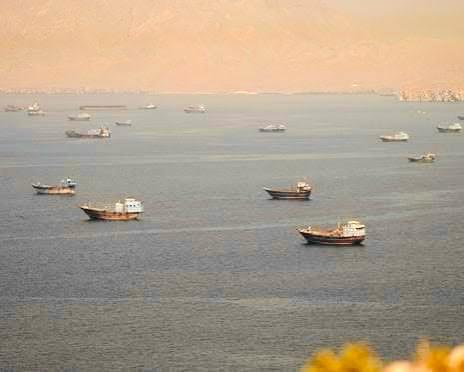
A fresh diplomatic and security crisis erupted on Saturday after Iran announced the closure of the strategic Strait of Hormuz, accusing the United States and Israel of violating a recently signed ceasefire agreement designed to end months of hostilities across the Middle East.
The development that led to the closure of Hormuz has raised fears of renewed instability in one of the world’s most sensitive geopolitical regions, with potential implications for global energy supplies and international shipping.
Iran’s military authorities said the decision to close Hormuz was prompted by continued Israeli military operations in Lebanon, which Tehran described as a clear breach of commitments contained in a recently negotiated 14-point memorandum of understanding signed between Iran and the United States earlier this week.

The Strait of Hormuz is regarded as one of the most important maritime chokepoints in the world. Approximately one-fifth of global oil and liquefied natural gas shipments pass through the narrow waterway connecting the Persian Gulf to the Gulf of Oman and the Arabian Sea. Any disruption to traffic in the channel has the potential to affect global energy markets and fuel prices. Blueprint reports
Revolutionary guards issue warning to vessels passing through the Strait of Hormuz
Iran’s Islamic Revolutionary Guard Corps (IRGC) Navy declared that the strait had been closed to all maritime traffic and warned commercial and military vessels against approaching the area.
According to Iranian military authorities, ships attempting to enter the waterway could face security risks as the country responds to what it described as repeated violations of the ceasefire framework by Israel and its allies.
The announcement followed reports of renewed Israeli air strikes in southern Lebanon despite ongoing efforts to maintain a ceasefire between Israel and Hezbollah.
Iranian officials argued that the attacks undermined confidence in the broader diplomatic process and threatened the survival of the agreement reached with Washington.
United states disputes closure claim
Despite Tehran’s announcement, the United States has challenged claims that the Strait of Hormuz is effectively closed.
US Vice President JD Vance stated that Washington had seen no evidence that shipping activities had been halted. https://www.americanembassy.com
Speaking during a television interview, Vance maintained that vessels continued to move through the strategic passage and noted that millions of barrels of oil had been transported through the strait within the previous 24 hours.
His remarks highlighted the uncertainty surrounding the situation, as conflicting statements from Tehran and Washington continue to emerge.
Industry observers are closely monitoring vessel movements and shipping data to determine whether the Iranian declaration will translate into a full operational shutdown or remain largely symbolic.
Switzerland talks back on track
Amid the escalating tensions, diplomatic efforts aimed at preserving the agreement are continuing.
Pakistan’s Foreign Ministry confirmed that technical-level discussions involving representatives of the United States and Iran are scheduled to take place in Bürgenstock, Switzerland.
Officials from Pakistan and Qatar are expected to participate as mediators in the talks, which seek to advance implementation of the 14-point memorandum signed earlier this month.
The negotiations had previously faced delays due to security concerns and disagreements over developments in Lebanon. However, both sides appear willing to continue diplomatic engagement despite growing mistrust.
Understanding the ceasefire agreement
The memorandum of understanding between the United States and Iran was designed to establish a 60-day ceasefire period while negotiations continue on broader issues, including Iran’s nuclear programme, sanctions relief and regional security arrangements.
Among the provisions publicly discussed by officials was the reopening of the Strait of Hormuz to unrestricted commercial shipping, a key demand of the international community given the waterway’s importance to global energy markets.
The agreement was hailed as a major diplomatic breakthrough after months of conflict that had destabilised the region and disrupted international trade routes. Nevertheless, analysts warned that many contentious issues remained unresolved and would require extensive negotiations during the ceasefire period.
Fears of economic consequences grow
The latest developments have renewed concerns among governments, shipping companies and energy traders around the world.
Any prolonged disruption in the Strait of Hormuz could have far-reaching consequences for global oil supplies, shipping costs and energy prices.
Financial markets and international observers are expected to closely watch the outcome of the Switzerland talks, which may determine whether the ceasefire survives or whether tensions in the Middle East escalate further.
For now, uncertainty remains as Iran insists the strategic waterway is closed, while the United States maintains that commercial traffic continues to flow through one of the world’s most critical maritime corridors.















INEC Register Hits 103.4m As Lagos, Kano, Kaduna Top States

Bail: Appeal Court Hears El-Rufai, ICPC Arguments, Reserves Judgement

Ondo Air Crash: NAF Confirms Death Of 25, Releases Victims’ Names

Human Rights Group Petitions IGP Over Alleged Sexual Abuse of 5-Year-Old In Oyo

Redeemer’s University Rewards 98 Staff, Students for Outstanding Performance