

News
ActionAid, Ford Foundation Conclude GBV Project, Seek Stronger Enforcement Of VAPP Law In Osun
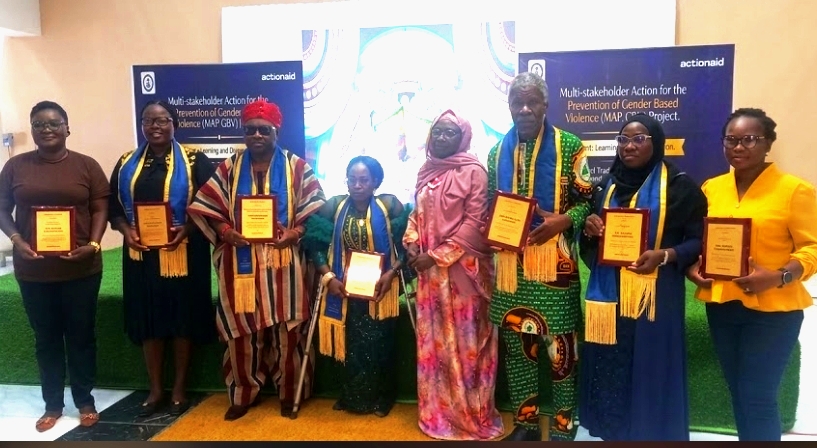
By Tosin Olasunkanmi, Osogbo
Stakeholders in Osun State have pledged to sustain efforts towards ending Gender-Based Violence (GBV), calling for stronger community engagement, effective enforcement of relevant laws and increased collaboration among government agencies, traditional institutions, religious leaders and civil society organisations.
The commitment was made at the closeout ceremony of the Multi-Stakeholder Action for the Prevention of Gender-Based Violence (MAPGBV) Project, funded by the Ford Foundation and implemented by ActionAid Nigeria in Osun State.
The event, held on Tuesday at Tee’s Continental Hotel, Ayekale, Osogbo, provided an opportunity for stakeholders to assess the project’s achievements and discuss strategies for sustaining the fight against gender-based violence beyond the intervention.
Speaking at the event, the Orangun of Oke-Ila Orangun and Chairman of the Multi-Stakeholders Committee Against Gender-Based Violence, Oba Adedokun Abolarin, described GBV as a societal challenge that should not be treated as a private or family affair.
The monarch said violence against women and girls had far-reaching consequences for the entire community, stressing that everyone had a responsibility to prevent abuse and protect vulnerable persons.
He recalled facilitating a training programme in Oke-Ila Orangun, which brought together men, women, elders, youths, teachers and parents to discuss the various forms of gender-based violence and ways of addressing them.
According to him, the engagement broadened participants’ understanding of GBV beyond physical assault to include emotional abuse, denial of education, early marriage and the protection of perpetrators through silence.
Oba Abolarin said the knowledge acquired during the training was subsequently extended to students, particularly those of Abolarin College, through lessons based on the United Nations Sustainable Development Goals (SDGs).
He explained that SDG 5 promotes gender equality and the empowerment of women and girls, SDG 4 advocates quality education, while SDG 16 focuses on peace, justice and strong institutions.
The traditional ruler maintained that educating children on respect, equality and personal dignity was essential to raising a generation that would reject violence and discrimination.
He pledged to sustain advocacy, community training and sensitisation programmes, declaring that Oke-Ila Orangun was committed to ensuring that violence had no place in homes, schools or streets.
In her remarks, ActionAid Nigeria representative, Hajia Suwaiba Mohammad-Dankabo, said the project had demonstrated the importance of collective action in addressing the social and cultural factors responsible for gender-based violence.
She identified unequal power relations, harmful social expectations, discriminatory practices and institutional failures as some of the factors sustaining GBV, noting that tackling the problem required coordinated interventions beyond individual efforts.
Mohammad-Dankabo explained that the project engaged traditional rulers, religious leaders, female cultural influencers, government institutions and community structures to challenge harmful social norms and strengthen the protection of women and girls.
She described traditional institutions, religious authorities, community associations and women’s networks as influential structures that could either reinforce harmful practices or drive positive social change.
The ActionAid representative expressed satisfaction with the commitment demonstrated by traditional institutions in challenging harmful practices and promoting community accountability.
She particularly acknowledged the zero-tolerance stance against GBV championed by the Oke-Ila traditional institution under Oba Abolarin, alongside community interventions against practices such as female genital mutilation and wife-beating.
She insisted that no cultural practice should be used to justify violence, undermine human dignity or deprive women and girls of their fundamental rights.
However, she called for greater attention to women and girls living with disabilities, noting that they often face additional discrimination and barriers to accessing information, protection and justice.
While describing the project’s closeout as an important milestone, Mohammad-Dankabo warned that the commitments and structures established during its implementation must not disappear with the conclusion of the intervention.
She urged government institutions to strengthen the implementation of the Violence Against Persons Prohibition (VAPP) Law, provide adequate resources for GBV prevention and support community-based accountability mechanisms.
Also speaking on behalf of the Osun State Ministry of Women Affairs, Children and Social Welfare, the Director of Social Welfare, Ayo Oluwayomi, who represented the Commissioner, Mrs Ayobola Awolowo, commended ActionAid Nigeria and the Ford Foundation for their contributions to promoting gender equality and combating gender-based violence.
Oluwayomi said the two-and-a-half-year project had demonstrated the importance of bringing stakeholders together to challenge harmful gender norms, increase public awareness and promote accountability within communities.
She noted that although laws and policies were necessary, meaningful progress could only be achieved when individuals, families, communities and institutions accepted collective responsibility for preventing violence and protecting the rights of women and girls.
According to her, the MAPGBV Project reinforced the understanding that preventing gender-based violence was not the responsibility of government alone but required the active participation of traditional institutions, religious bodies, development partners, civil society organisations and community members.
She assured that the ministry recognised the need to sustain the project’s achievements, adding that its conclusion should pave the way for stronger partnerships, improved coordination and renewed commitment to building safer communities for women, girls and other vulnerable groups.
Similarly, the Coordinator of the Media Advocacy and Communication (MAC) Group, Bisola Ariwodola, described gender-based violence as a criminal act and a violation of human rights, warning that perpetrators could face imprisonment under applicable laws.
She explained that penalties for GBV-related offences could include prison terms of three, seven or 15 years, depending on the nature of the offence and the relevant provisions of the law.
Ariwodola called on the Osun State Government to intensify efforts to reduce the prevalence of gender-based violence across the state.
She stressed that the responsibility for preventing violence against women and children should not be left to victims and advocacy organisations alone.
She urged households, community leaders, religious institutions, security agencies, health workers and residents to actively participate in the campaign against GBV.
Ariwodola maintained that achieving a violence-free Osun required collective commitment, insisting that every resident had a role to play in protecting women and children from abuse.
The closeout ceremony highlighted the need to sustain the partnerships, community structures and advocacy initiatives established under the MAPGBV Project to ensure that the fight against gender-based violence remains a priority across Osun State.






Oluwo’s Freedom Of Expression: Ta’awunu Withdraws Suit Against Osun Govt

Oyebamiji At 61: Igbimo-Agba Osun Hails His Political Maturity, Urges APC Members To Mobilise For Tinubu

Ayonic Bags Islamic Title, ‘Ameerul Muhsineen’

Terrorists Ambush Company Vehicle, Kill Chinese National, Police Inspector In Bauchi

Tinubu Grants Clemency To 78 Suspects Arrested Over Attack On Presidential Convoy

Ilesa College Of Health Management Warns Against Exploiting ASUP Strike To Cause Chaos
-
 News4 days ago
Agunbelewo Gets New Traditional Ruler As Ataoja Installs Adejumobi
-

 News3 days ago
Ooni’s Media Director Commends NUJ Vice Chairman, Ayobami Agboola, At Birthday
-
 News3 days ago
World Diabetes Day: Lions Club Takes Free Screening, Awareness Campaign To Osogbo
-

 News4 days ago
Your Sweat Built Osogbo, Your Resilience Will Move It Forward – AYONIC