
News
A Second Chance To Deliver: Appraising Adeleke’s Victory And The Reform Agenda Osun Cannot Afford To Miss
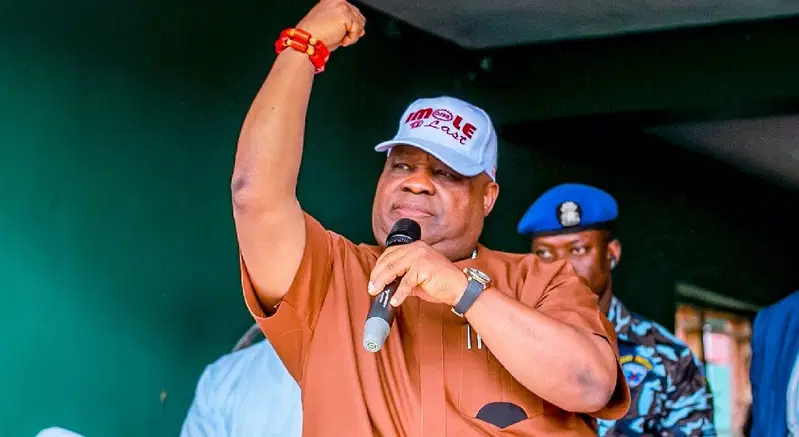
When the Independent National Electoral Commission declared Governor Ademola Adeleke winner of the August 15 Osun governorship poll, the numbers told a story of consolidation rather than landslide.
Adeleke’s 511,067 votes against Bola Oyebamiji’s 444,815 — a margin of roughly 66,000 votes out of just over one million cast — represent a governor who has held his coalition together, but not one who can afford to read the result as a blank cheque.
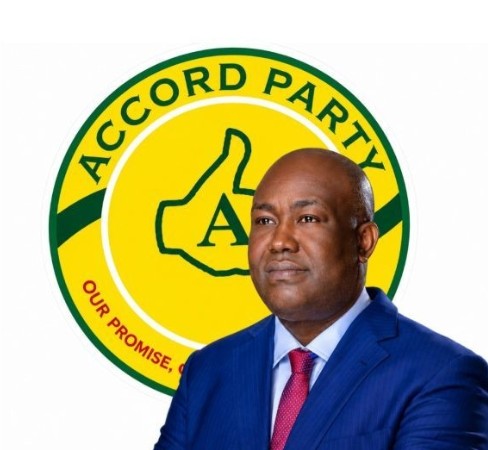
The Accord Party’s first-ever governorship win in Osun is historic, yet a race this close, contested by fifteen candidates across all thirty local government areas, is also a warning: Osun’s electorate is not settled, and a second term will be judged on delivery, not sentiment.
The Opposition’s Playbook — and Its Limits
Credit is due where a contest is genuinely fought, and the APC ran an aggressive campaign built on several recognisable gimmicks. The party leaned heavily on the EFCC’s freezing of the state government’s account ten days before the election, using it to paint the administration as under federal scrutiny even as Adeleke’s camp characterised the
timing as politically motivated pressure. Simultaneously, APC petitioned the EFCC and ICPC alleging that the state was running a disguised vote-buying scheme through a ₦20,000 palliative payment to workers — a charge the governor’s spokesman dismissed as fake news, while the same accusation was mirrored back at the APC over funds distributed through the First Lady’s Renewed Hope Initiative, channelled through the APC candidate’s wife. Add to this the mobilisation of traditional and religious blocs — hunters pledging six-figure vote counts, clerics and disability-community endorsements — alongside reports of thuggery, intimidation, and a controversial election-eve statement from a senator that drew police action, and the picture is of a contest fought as much on narrative warfare and grassroots inducement as on manifestos. The African Democratic Congress’s Najeem Salaam, backed by figures including a former vice president and a former Osun governor, appears to have functioned partly as a vote-splitting vehicle rather than a serious independent threat, finishing a distant third. None of this is unique to Osun, but it is a reminder that Nigerian gubernatorial contests remain vulnerable to money politics and institutional pressure dressed up as anti-corruption enforcement — a pattern civil society and INEC’s own observers have flagged for scrutiny.
What a Second Term Must Prioritise
Adeleke’s first term leaned on infrastructure, education and grassroots welfare. His second term needs a sharper economic spine, and two priorities stand out.
Industrialisation. Osun has long punched below its weight industrially, despite a strategic South-West location, a large youth population, and proximity to Lagos-Ibadan trade corridors. A credible industrialisation push should mean: fast-tracking agro-processing clusters around the state’s cocoa, cassava and cashew belts rather than exporting raw produce; converting existing but underused industrial layouts in Osogbo, Ede and Ikirun into functioning industrial parks with reliable power and access roads; and building a genuine ease-of-doing-business framework — one-stop investment facilitation, transparent land allocation, and tax incentives targeted at manufacturers rather than traders. Industrialisation without power is a slogan, not a strategy — which is precisely why the second priority matters.
Operationalising the Osun Electricity Law.
The passage of the Osun State Electricity Market Regulatory Law in 2025 was a genuine structural achievement, giving the state, under the Electricity Act 2023’s devolution framework, the legal basis to establish its own regulatory agency, license generation, and open the market to independent power producers and renewable investors. But a law on paper is not a market.
The urgent second-term task is operationalisation: appointing and properly funding the State Electricity Regulatory Commission with competent, insulated leadership; issuing the implementing regulations and licensing framework the law promises; and using the commission’s mandate to genuinely hold the Ibadan Electricity Distribution Company accountable on metering, billing and service delivery — the “exploitation” the governor himself has repeatedly denounced on the campaign trail.
Equally important is signalling to embedded generation and mini-grid investors that Osun is open for business, with clear tariff and licensing certainty, so that industrial clusters are not left waiting on a national grid that has failed the state for years.
Adeleke fought off a determined, well-funded opposition to win a second mandate. The 66,000-vote margin is not a mandate for complacency — it is a mandate to convert legislative wins into industrial jobs and electrons actually reaching homes and factories. Osun’s voters gave him four more years to prove that governance can outlast gimmicks.
Adetayo Adegbemle is the Executive Director and Convener of PowerUp Nigeria, a consumer rights and power sector policy advocacy organisation.





Akande Hails Adeleke For Uniting Osun Political Leaders Behind Tinubu

Ebola: FG Quarantines High-Risk Contacts, Tightens Airport Screening

Alia Explains Opposition To Automatic Tickets For Benue APC Lawmakers

Osogbo: Two Remanded Over Alleged Assault On IBEDC Staff

Osun Mobilises Security Agencies for New Traffic, Park Management Law

Adeleke Pledges Support As Osun Benefits From Remi Tinubu’s Food Programme
-

 Crime3 days ago
Police Arraign Three Travel Agency Staff Over Alleged ₦5.6m Visa Fraud In Osun
-
 News5 days ago
Why should Tinubu Campaign? He Has Won By Lasisi Olagunju
-
 News5 days ago
Emir’s Murder: Osun Police Declare Alowonle, Sibi Wanted, Arrest Six Suspects
-

 News3 days ago
Osun: FBOMF Raises Alarm Over Poor School Facilities, Teacher Shortage In Ayedaade