
News
Herbert Wigwe, Late Access Bank CEO Linked To 106 London Houses
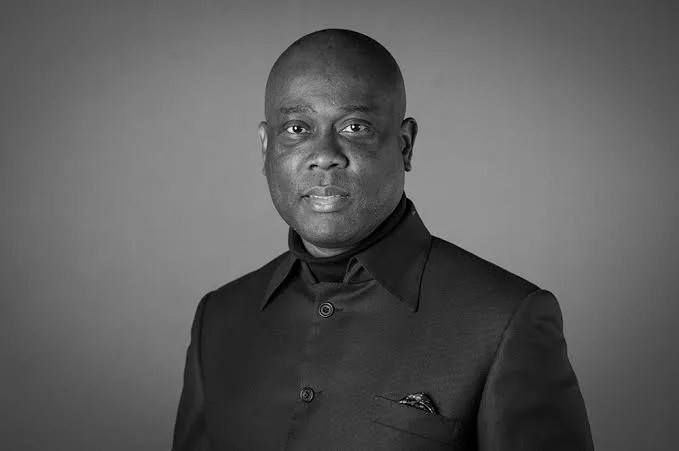
Late Access Bank CEO Herbert Wigwe has been linked to 106 London properties in a sweeping new investigation into offshore ownership in the British capital.
A sweeping investigation into offshore ownership of London property has linked the late Nigerian banking executive Herbert Wigwe to 106 properties in the British capital, casting fresh light on the scale of his footprint in one of the world’s most expensive real estate markets.
The report, published by The Londoner, found that 32,611 properties across London are owned by overseas entities. Using raw ownership data compiled by Tax Policy Associates, the publication traced thousands of foreign-owned properties through shell companies and offshore vehicles, made possible by a UK legal reform requiring overseas entities to declare their beneficial owners.
Wigwe’s inclusion stands out. The late banker was one of the most prominent executives in African finance, having helped transform Access Bank into one of Nigeria’s largest financial institutions. A link to 106 London properties places him inside a much bigger story about how global wealth has flowed into British real estate through structures long shielded from public view.
The Londoner did not allege wrongdoing. What the investigation did was establish the scale of his London footprint, a detail that adds a new dimension to the public record of his life and finances.
UK company records had already connected Wigwe to a London address on The Bishops Avenue in north London, one of the capital’s most recognisable ultra-prime residential roads. Companies House filings show he was listed in 2012 as a director of Carmel Gate Ltd, with a correspondence address at Flat 7, Allingham Court, 44 The Bishops Avenue. That filing alone did not indicate the breadth of his property connections. The new investigation suggests those ties were considerably wider.
Wigwe was far more than a high-profile banker with a London address. He served for years as the public face of Access Bank’s expansion drive across Africa and beyond. UK company records show he was a director of The Access Bank UK Ltd from 2008 until his death in a helicopter crash in California in February 2024. Access Holdings documents published in 2024 showed that when the holding company was incorporated in 2021, Wigwe and current Access Bank chief Roosevelt Ogbonna were the only shareholders, each holding 4,000,000 ordinary shares. That detail reinforced his standing not just as a manager but as a central owner inside one of Africa’s most systemically important financial groups.
Britain has faced years of criticism over the ease with which foreign wealth parks itself in real estate with limited public transparency. The Londoner found that overseas ownership stretches from Oxford Street and Camden Market to luxury residential towers and landmark commercial sites, with many of those properties held through companies registered in Jersey, Guernsey and the British Virgin Islands. Oxford Street was one of the sharpest examples. The report said a substantial share of the famous shopping strip is controlled through shell companies, with ultimate owners including Gulf institutions, foreign governments and private individuals located far from the city.
The UK’s beneficial ownership disclosure requirement, the reform that made this investigation possible, was introduced precisely to expose structures of this kind. Before the change, the chain of ownership running from a prime London postcode to an offshore entity in a low-disclosure jurisdiction was effectively invisible to the public.
Wigwe’s presence in the data ensures his name will now feature in any serious conversation about African business wealth and its relationship with British property. He was widely regarded as one of the defining corporate figures of his generation in Nigeria, respected as a banking strategist, a philanthropist and a builder of institutions. He was 56 when he died.
In Nigeria, where his legacy sits at the intersection of finance, ambition and high-end living, the London property findings are likely to land differently than they might in a purely financial context. His name still commands attention across African business circles more than a year after his death. The detail that 106 properties have been linked to him in London means his footprint in that city is no longer a matter of inference. It is now part of the documented record.
Credit: Billionaires Africa





Democracy Day: Osun APC Renews Commitment To Democracy, Good Governance

June 12: EAPEAN Felicitate Nigerians, Calls for Improved Governance

OBYC Honours 33 Individuals, 9 Churches with Commendation and Merit Award During Joint Youth Week Evening Service

AMBO Has No Track Record of Violence,’ Omolaoye Says as Osun APC Leaders Seek Unity Ahead of Poll

Osun 2026: Labour Party Dissociates Self From Adeleke’s Re-election Endorsement

Police Reportedly Arrest Islamic Cleric Over Alleged Defamatory Publications Against ACADIP President
-
 Opinion5 days ago
Modulated Salary: Why Osun APC Past Administration Cannot Be Crucified For Necessity, By Adeboye Adebayo
-

 Education2 days ago
Osun: Charleans In Diaspora Awards Students, Teachers With Cash For Academic Excellence
-
 News3 days ago
Osun 2026: Adeoti’s Loyalists Dismiss Defection Rumours, Reaffirm Support For Adeleke’s Re-election
-
 Opinion3 days ago
Banditry And The Deluge Of False Alarm In Southwest Nigeria By Elder Yinka Salaam