
Opinion
Retired, Forgotten, Struggling: Nigeria’s Teachers After Service
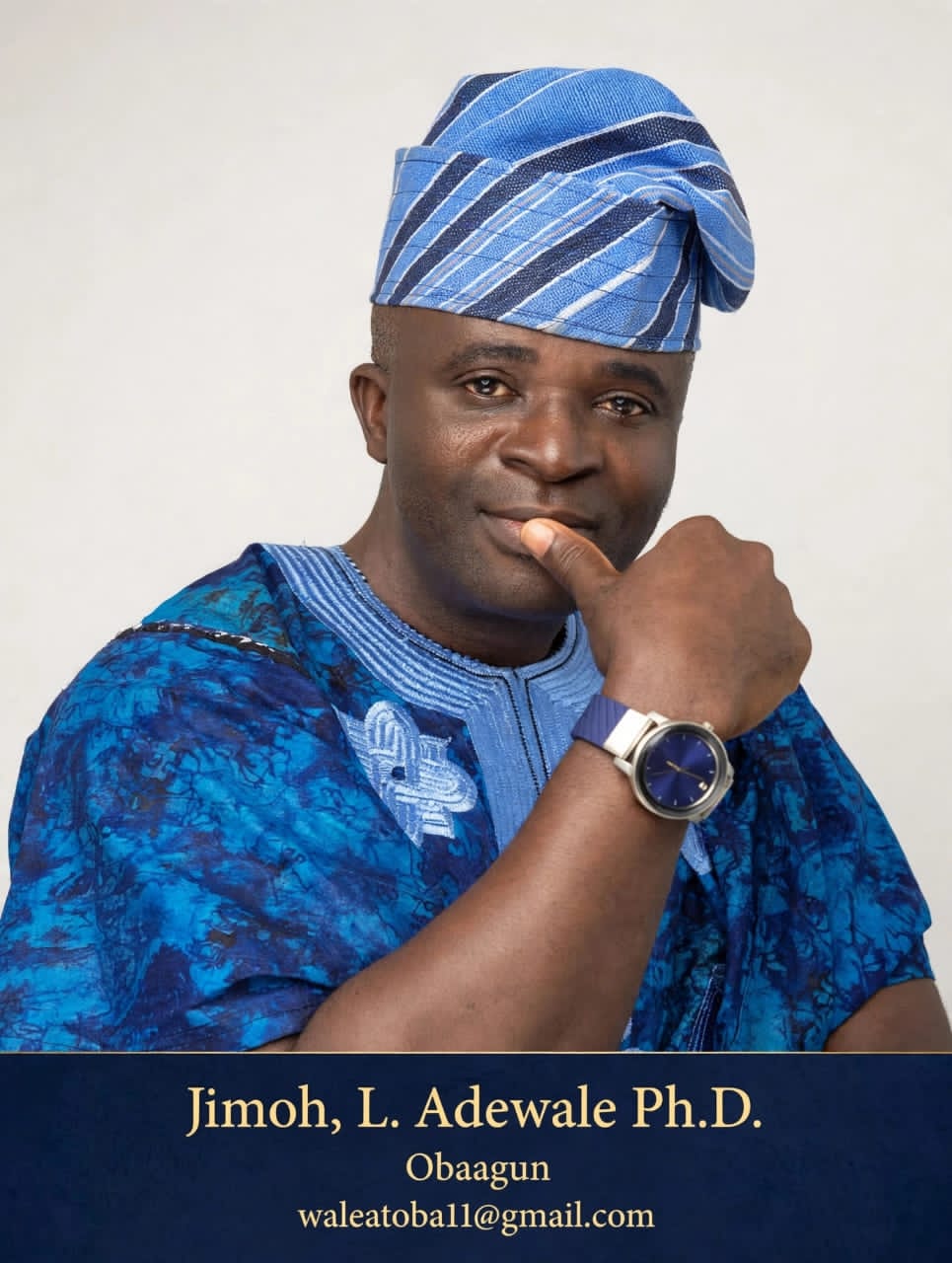
BY L. A. JIMOH Ph.D
Obaagun, Osun State
waleatoba11@gmail.com
The plight of teachers in Nigeria after meritorious years of service is a story of stark contradiction. These were the educators who produced the medical doctors, accountants, engineers, lawyers, presidents, governors, legislators, and judicial officers who now steer the affairs of the nation. Yet, the story of the producers is not the same after retirement. Mr. Usman, for instance, after forty years in service or sixty-five years (in some states) before a blackboard or whiteboard, burning candles while writing lesson notes, shaping the minds that now occupy the highest offices in our wonderful country. But today, as a retired teacher, he spends his mornings counting the grains in his bean jar, waiting for unrealistic or unsustainable monthly pensions. This is the pathetic and unique history of many Nigerian teachers after retirement.
It is an annual event worldwide to celebrate and honour teachers every 5th of October, yet the government abandons them the moment they lay down the chalk and pens. For many retired teachers in Nigeria, retirement should be a time to relax and enjoy the benefits of their years of service. However, the reverse is the case from the North to the East and down to the West. Retired teachers are battling financial purgatory, a daily struggle for survival, as a result of a nation that conveniently forgets its obligation to its educators. What a shameful life!
To understand this bitter harvest, I will dissect the grueling era Nigerian teachers endured from the very first day they received their appointment letters and stepped into the classroom.
Becoming a teacher in Nigeria is rarely a seamless transition. The appointment process is a fractured, multi-layered maze that varies geographically. While Federal Unity Schools are controlled by the Federal Civil Service Commission, the vast majority of primary education institutions are under the control of the State Universal Basic Education Board (SUBEB), and secondary schools are managed by the Teaching Service Commission (TESCOM) in collaboration with District Offices in some areas of the country.
For example, in Lagos State, Oyo State, and Kaduna State, prospective teachers go through due diligence and rigorous computer-based tests and oral interviews before employment—a welcome and healthy development. However, in many states, the process is steeped in political patronage, where tribal balancing and godfatherism often influence who receives the nod, rather than pedagogical competence.
To exacerbate the situation, successful candidates often find themselves on waiting lists for nearly two years before receiving their appointment letters, a delay that can sometimes diminish their enthusiasm for teaching. This is because they see themselves as applicants rather than prized professionals. The message is clear from the onset: you are expendable. This is a frustrating starting point!
If the appointment is a hurdle, the monthly salary is a battlefield. The government, at its best, pays teachers according to the Teachers’ Salary Scale (TSS), which is supposed to be superior to the general civil service scale. However, the narrative is one of poor implementation, which has turned into a national scandal.
In addition, the minimum wage debacle persists. Despite the Federal Government signing the seventy thousand naira (N70,000) new minimum wage into law, many state governments have delayed its implementation for teachers, creating unthinkable fiscal constraints. Even where implementation has occurred, the consequential adjustments for senior teachers are frequently implemented below expectations.
Some state governors’ treatment of teachers is perhaps the most demeaning aspect of the profession, despite their role in national development. Treating teachers as scapegoats when students perform poorly in external examinations is highly condemned. When the economy is tight, teachers are asked to exercise patience, yet governors do not ask their political appointees to do the same with their luxury lifestyles. In states ravaged by insurgency, teachers are expected to resume duties in schools located in dangerous zones without adequate security or psychological support. In such situations, many teachers have lost their lives due to their professional conduct.
Teachers have encountered many dangerous challenges in their day-to-day work in recent years. News reports have documented occasions where students conspired to flog their teachers in the classroom because those teachers corrected the perceived misconduct of such students in the school environment.
Now, the teacher retires, and the foundational promise of retirement—a steady pension and a lump sum gratuity—has become a castle in the air for many retired teachers in Nigeria. While the Federal Government has largely transitioned to the Contributory Pension Scheme (CPS), information available indicates that a vast number of state-level retired teachers remain trapped in the archaic Defined Benefits Scheme, where monthly payments are erratic at best. In fact, some states have failed to implement the extant Pension Act, 2014 as amended, leading to accumulated unpaid counterpart government deductions to the Pension Fund Administrators (PFAs). Hence, backlogs of unpaid benefits leave retired teachers living in penury.
Additionally, across the thirty-six states and the FCT, the backlog of unpaid gratuities runs into hundreds of billions of naira. Teachers who retired in 2015 in some states are still waiting for their terminal entitlements. Inflation has eroded the value of the payment by the time it finally arrives.
In some states, retired teachers are forced to hop between the Local Government Pension Board, the State Universal Basic Education Board, and the Accountant General’s Office for one verification exercise or another, spending their savings on transport fares for verifications that could be done online, only to be told that funds are not available to pay their entitlements.
Teachers often spend their time in dusty classrooms, lacking proper ventilation, which severely impacts their lungs and eyesight. This hazardous task sometimes ushers in the onset of age-related ailments such as hypertension, diabetes, and arthritis, which require frequent medical treatment and attention. However, health insurance ceases upon retirement, and without a robust government-assisted health plan, retired teachers are forced to choose between buying expensive medication and feeding their families. Few retired teachers have the opportunity to rely on the goodwill of their children to survive; the majority are left to beg for survival. We have heard or read in the news of many retired teachers dying quietly in their homes, unnoticed and unassisted, simply because they could not afford the one thousand naira needed to buy medicine.
In Nigeria, the moment teachers retire, daily greetings cease and demands for counselling disappear. Many teachers retire into isolation, feeling like burdens to their families. The government has largely been silent on the psychological well-being of retired teachers.
I was distressed and could not believe a narration from a level seventeen retired teacher who said his monthly pension from the Contributory Pension Scheme (CPS) is just sixty thousand naira. This pension often falls short of covering monthly basic feeding, forcing retirees into undignified daily activities for survival, such as taking up employment opportunities in private schools. Across the country, I have seen sixty-five-year-old teachers hawking sachet water around private school environments just to supplement their unsustainable monthly stipends.
The same fingers that painstakingly taught presidents, governors, and chief executive officers of multinational companies how to write the alphabet now sell sachet water around offices and school environments. What a betrayal of lives dedicated to national building!
It is imperative for the government at all levels to prioritize the welfare of retired teachers. Teachers’ welfare must be ensured after retirement, not just during their active service. This article suggests a structural overhaul of the retirement framework for Nigerian teachers:
1. Immediate clearance of gratuity arrears.
2. Governments at all levels must make a law to criminalize any delay in paying retired teachers’ pensions and gratuity beyond a window of ninety days after retirement. The Federal legislature should pass a law mandating the Accountant General of the Federation to deduct pension arrears directly from the state or local governments’ monthly Federal allocations if they fail to comply. This will assist retired teachers in receiving their retirement benefits on time, as it will be a first-line charge, thereby removing excuses for insufficient funds.
3. Governments at all levels should provide health insurance for retired teachers that covers hypertension, diabetes, arthritis, and ophthalmic care—the professional hazards of the classroom. The premiums should be financed by the government as a mark of appreciation for the teaching profession.
4. The government should mandate the Bank of Industry to reserve a dedicated Retired Teachers Microcredit Window with single-digit interest rates and no collateral requirements for retired teachers willing to set up micro and small business enterprises.
5. The government should establish counselling support or retired teachers’ clubs that can foster community and mental resilience.
6. Teachers in active service must continue be encouraged by the Nigeria Union of Teachers to join cooperative societies and ENDWELL schemes, ensuring they have a buffer when the government inevitably falters. As the Yoruba saying goes, “Owo ara eni la fi tun iwa eni se” (It is only one’s own hand that can be used to correct unwanted things).
In conclusion, beyond giving teachers a plaque and a handshake at their send-forth party, there must be an overhaul of the retirement architecture for teachers. The seriousness of government is measurable by how it treats its retired people. If we allow the men and women who built our schools to continue living in abject poverty, we send a dangerous message to the younger generation of teachers that teaching leads to poverty.
Honestly, the retired teachers in Kano, Enugu, Osun, and across the country are not asking for charity; they are asking for a fulfilled life after they have taught the President, governors, and highly placed individuals in the country and beyond.
Teachers gave us their best years; they used their active years to build humanity. We can show our appreciation by ensuring that they live their final years in comfort and dignity, as they truly deserve.
Until we fix the retirement framework for retired teachers, we are simply training Nigeria’s future to disrespect everyone, especially their teachers.
Nigerian teachers are the silent heroes of our democracy. Therefore, we want a system that guarantees that when a teacher retires, the government finally begins paying their entitlements in full.
Hence, they will begin to live a fulfilled life after retirement, for the health of a nation is intrinsically related to the health of its teachers. However, the economic and social life in which they work also determines their health, not just a doctor’s stethoscope.





Princess Omolaoye Adedoyin At 66: Family Celebrates Her Godly Virtues, Prays For Long Life

Osun: Physician Advocates Regular Checkups At Qualified Medical Laboratories

Hausa Zallah Leader Congratulates Hashim on Court Victory, INEC Listing

Osun Police Declare Alowonle, Sibi Wanted Over Emir’s Murder

SSACO Raises Alarm Over Alleged Forced Sale Of Political Stickers To Oyo Drivers

Akande Hails Adeleke For Uniting Osun Political Leaders Behind Tinubu
-
 Crime4 days ago
Police Arraign Three Travel Agency Staff Over Alleged ₦5.6m Visa Fraud In Osun
-

 News4 days ago
Osun: FBOMF Raises Alarm Over Poor School Facilities, Teacher Shortage In Ayedaade
-
 News4 days ago
Toluwanisings: Family Announces October 27 Tribute Night In Ibadan
-

 Crime5 days ago
Ondo Police Arrest Two Suspects, Recover Locally Made Guns In Akure