

News
Tinubu, Idris, And A Whole New 2027 Campaign, By Suleiman A. Suleiman
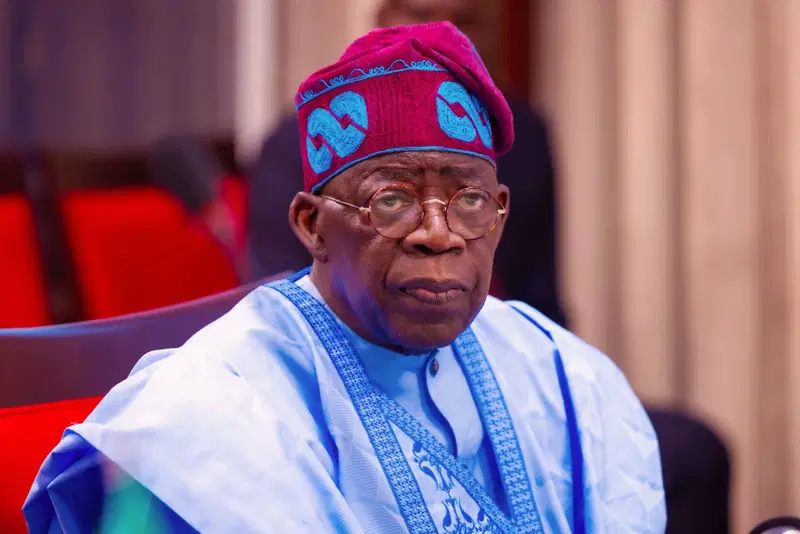
Nigerians paying close attention to the emerging 2027 presidential campaign would by now have the sense, as I have, that this election will be very different from previous ones. We are only a few weeks in, no doubt, but it seems clear enough that this election will be fought on policy and strategic voter engagement. These two things have always been at the margins of our elections, but thus far, they are clearly defining the presidential contest, at least.
The key difference is former Vice‐Presi- dent Atiku Abubakar, who is running perhaps the most sophisticated campaign of his long political career. So far, Atiku has successfully turned the election from an apparent coronation into an open contest by asking Nigerians a simple but resonant question: How has the Tinubu government worked out for you? Moreover, Atiku has achieved this strategic shift not with mere talking points, but with clear policy messaging. Where President Tinubu insists that his painful reforms are working, Atiku has offered a sharply different vision of those reforms, and voters are paying attention. More specific to today’s discussion, Atiku is personally leading the communication of his own campaign messaging by speaking forcefully and with conviction about his policies, and by en- gaging Nigerians directly via a series of strategic media interviews and town halls so far.
These early markings of this very different campaign have combined to put President Tinubu on the back foot. Remarkably, Atiku’s campaign has already forced Tinubu to announce reductions in nationwide transport fares and a $1 billion social protection programme for the poor.
In the current campaign climate, however, these policy tweaks could be read as policy reversals in disguise and, therefore, as re-inforcing Atiku’s policy message.
Yet two more things ought to change quickly. First, Tinubu had staked his re‐election on a convoluted strategy of building a different coalition than he came to office with, crippling opposition parties, relying on governors to deliver the votes, and using all instruments of the state at his disposal. I have described this strategy as akin to a person trying to enter their own house by jumping over the fence—a strat- egy now largely in ruins. Tinubu needs a new electoral strategy urgently. Moreover, eighteen months ago I described government communication under Tinubu as comprised of “dogs and doves,” and that the dogs have had the upper hand. On the evidence of the emerging campaign, how- ever, the dogs must now give way to the doves because, in this high‐stakes policy election, quiet persuasion would beat loud confrontation hands down.
The dominance of the “dog approach” in government communication goes back to our colonial era. Nigeria inherited the colonial Ministry of Information largely unchanged. It was created primarily to disseminate official information about government policy and activity in only one direction: from the top downward. Nigerians were conceived as colonial subjects to be informed, not as citizens to be engaged.
The Ministry of Information, therefore, was an instrument of imperial administration, not of democratic governance. The minister’s job, under this approach, is to tell Nigerians what the government is do- ing for them, not to listen to and engage with Nigerians in a two‐way fashion about what they think the government is doing or what they actually want. Any voices to the contrary, from the media or the people, are to be dismissed as either politically motivated, shouted to silence, or outright proscribed.
This colonial legacy has continued to influence the operating philosophy of in- formation ministers even under a more stable democratic system since 1999 and a completely changed media and communication landscape. Information ministers—Jerry Gana, Labaran Maku, Lai Mohammed, etc.—tend to see their jobs as defending the government, shouting the loudest, and dismissing critics as enemies of the government. This “dog approach” has been the dominant model of govern- ment communication across various ad- ministrations throughout our history.
But there was also always the dove approach, of which Chukwuemeka Chikelu is a good example. Quite unusually for what Nigerians were familiar with in the role, Chikelu’s style of government communication was defined by democratic norms: citizen engagement rather than confrontation; listening more rather than talking more; subtle persuasion rather than lecturing; and acknowledgment of disagreement rather than labelling critics political enemies to be attacked, discredited, or crushed. Many Nigerians thought his approach was a breath of fresh air in government communication and appreciated his work. Tony Momoh, Olusegun Adeniyi, and Femi Adesina had tried to toggle both ends of the dogs‐and‐doves stick, but it didn’t work because it is nearly impossible to combine both approaches in the same person.
The unique position of the Tinubu administration is that it has had both approaches under the same roof, albeit by different personnel. Where the communication advisers in the presidency have tended to be bombastic, combative, and confrontational in their approach, the doves at the information ministry have been more nuanced and engaging. This has helped balance the communication equation for the government in many ways. The dog approach from the presidency has its uses in Nigeria’s generally combustible political climate. The media, opposition parties, and critics sometimes misrepresent governments for their own ends, which should thus compel a government to offer more forceful political defence of its argument.
The problem is that the Tinubu administration’s particular circumstances required a strong dove component in government communication from day one. The im- mediate political‐economic shocks of fuel subsidy removal on the government’s first day in office triggered a long‐term communication crisis, instantly complicating the terrain for all government spokespersons. This made a combative communication strategy unwise from the start. In government communication management, far‐reaching reform policies naturally elicit louder and more frequent media and public objections, which in turn complicate policy communication and therefore call for deeper public engagement rather than lecturing.
The Minister of Information, Mohammed Idris, appears to have understood this situation from the start. Unlike many previous holders of the office, he is an all‐round specialist in the field who recognized early that what is needed for the Tinubu moment is subtle persuasion rather than empty political posturing, and engagement rather than merely telling Nigerians the government is right and they are wrong at all times. His ministerial briefings with journalists and regional town halls in the North and Southeast have been among the government’s most effective platforms for engaging meaningfully and democratically with Nigerians. But both could have been less formal, more targeted, and certainly more frequent.
Going forward, there is a need to rename the Ministry of Information as the Ministry of Communication and Public Engagement, to make the public‐engagement function more explicit to future ministers and Nigerians, and to bring the ministry’s operating philosophy closer to the norms of democratic communication that Chikelu and Idris have advanced.
For the immediate context of this campaign, though, the Idris model is needed more than ever. A combative minister of in- formation like Professor Jerry Gana, Labaran Maku, or even Lai Mohammed would probably have worsened the current situation in which the government finds itself.
Elections are a contest of money, ideas, and policies, but also of competing narratives, communication, and public‐engage- ment approaches. For the government, verbal fisticuffs with opponents, the media, and other stakeholders must be used sparingly now that former Vice‐President Atiku has successfully shifted the narrative of the entire campaign.
The stage is now set for an epic battle of narratives, communication, and public engagement. What the moment requires is more engagement, more direct conver- sation with citizens, and more subtlety, not hubris or bombast. The side that listens more carefully, explains more convincingly, and persuades more effectively will stand a better chance with voters. The doves on both sides now have their work cut out for them. May the best man for the country win.
Source: Vanguard











Today’s Opposition Gathering in Abuja: The Choice Before Presidential Candidates

Tinubu, Atiku, Obi, Others: Big Promises, Bigger Questions Ahead of 2027

Manufacturing Giants Grow Profit By 35% Despite Flat Revenue

Tinubu, Idris, And A Whole New 2027 Campaign, By Suleiman A. Suleiman

Dollar to Naira Exchange Rate Today, August 31, 2026

Steel Imports Bleed Nigeria’s Economy
-

 News5 days ago
₦605/Liter Is Our Starting Sustainable Price For Petrol — Gbenga Hashim
-

 News5 days ago
EAPEAN, GAaNF e.V. and 360° Labour Mobility Alliance Strengthen Partnership on Safe and Ethical International Recruitment
-

 News4 days ago
Owalare Congratulates Adeleke On Re-election, Commends Development Efforts
-

 News3 days ago
The Oyetola That I Know! By Hon. (Otunba) Olusegun Ayodele Fanibe