
News
Don’t Pull the Plug: Why Nigerians Are Pleading for the U.S. to Extend Its Police Training Program — and Why It Must Synergize With New Military Arrivals By Kingsley Okafor U.S. Troops Arrive in Bauchi, Marking a New Security Chapter
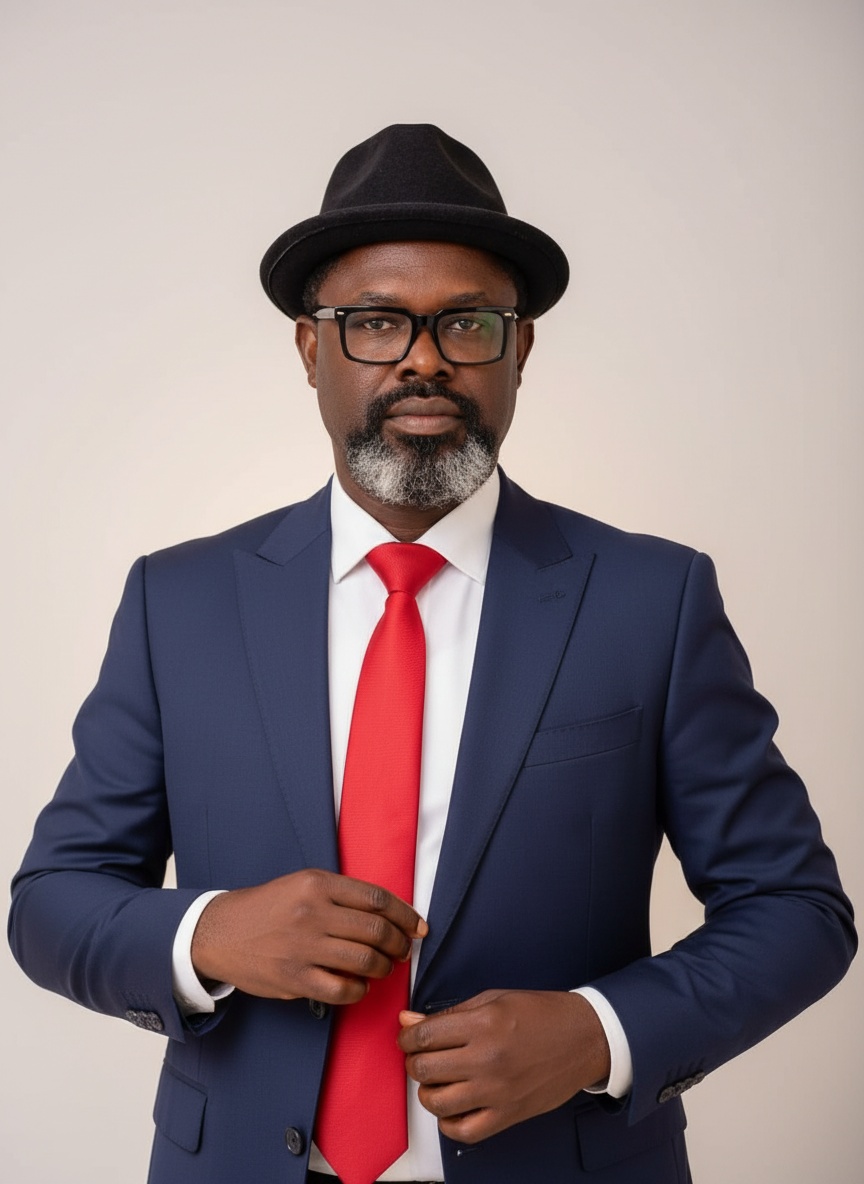
By Kingsley Okafor
U.S. Troops Arrive in Bauchi, Marking a New Security Chapter

When approximately 100 American troops touched down at Bauchi Airfield in northern Nigeria on February 16, 2026, the development quickly made international headlines. Major global outlets — including , , , and — moved swiftly to report on what many described as a significant escalation in U.S.–Nigeria security cooperation.
The deployment followed American airstrikes targeting Islamic State-linked militants in Sokoto State on Christmas Day 2025, signaling Washington’s renewed strategic focus on Nigeria’s evolving security crisis.
For many Nigerians — particularly Christian and peace-loving communities across the embattled Middle Belt — the presence of American military trainers felt like a long-awaited response to years of insurgency, banditry, and communal violence.
Yet while global attention fixed on this dramatic new military phase, a quieter but deeply consequential initiative was nearing its end.
The Quiet Program That Changed Policing from Within
Long before public remarks from U.S. political leaders about Nigeria’s security challenges, and before the Sokoto airstrikes, retired American law enforcement professionals were already working inside Nigeria.
Under the U.S. Department of State’s Bureau of International Narcotics and Law Enforcement Affairs (INL), police trainers have spent the past three years collaborating directly with the (NPF).
During that period, more than 400 Nigerian officers were trained across some of the force’s most critical units:
- Complaint Response Unit (CRU)
- Counter Terrorism Unit (CTU)
- Mobile Police Unit (MOPOL)
- Special Intervention Squad (SIS)
The curriculum was comprehensive and practical. It included:
- Public Order Management
- Advanced Police Tactics
- Firearms Training
- Use of Force protocols
- Human Rights compliance
- Medical First Responder Training
- Community Policing strategies
- Leadership Development
- Train-the-Trainer modules
- Verbal De-escalation techniques
The design was holistic — aimed not only at operational effectiveness, but also at strengthening professionalism, legality, and public trust.
In a country where public confidence in law enforcement has been severely tested in recent years, this institutional reform effort has been widely regarded by stakeholders as foundational.
According to multiple sources familiar with the program, the INL initiative is scheduled to conclude on March 31, 2026.
When contacted, trainers declined public comment, citing authorization restrictions — a reflection of the bureaucratic sensitivities surrounding the program’s fate.
A New Military Investment — But Will It Align?
The new deployment falls under the purview of (AFRICOM), which has been tasked with supporting Nigerian-led counter-terrorism operations.
Nigeria’s Defense Headquarters emphasized that the American personnel are advisers rather than combat forces.
This mission follows the signing of the U.S. National Defense Authorization Act for Fiscal Year 2026 by on December 18, 2025. The legislation allocated $413 million to AFRICOM for security operations across Nigeria and the broader African theater.
AFRICOM has already delivered military equipment to Nigerian security agencies, reinforcing Washington’s commitment to counterterrorism efforts in West Africa.
These developments are widely welcomed. However, analysts warn of a potential structural gap: military capacity-building may expand just as police capacity-building contracts.
Why Extension Matters
Communities across the Middle Belt — affected by herder-farmer conflicts, Boko Haram spillovers, and organized banditry — have expressed concern over the potential termination of the INL program.
“Nigerians understand that these programs are cost-intensive,” one community advocate stated. “But we are using every available channel to ensure they are renewed until a lasting solution is achieved.”
The argument goes beyond gratitude. It rests on strategic logic.
Three years of embedded training has built:
- Institutional memory
- Operational continuity
- Interpersonal trust within the NPF
- Cultural familiarity
- Credibility among officers
These assets are not easily transferable to a new team starting from scratch.
Observers note that the CTU and SIS operate in domains closely aligned with AFRICOM’s advisory mandate. In many conflict zones, distinctions between policing and military operations blur. Without coordination, duplication and operational gaps could emerge — vulnerabilities that extremist and criminal networks may exploit.
The Case for Synergy, Not Substitution
Nigeria does not face a binary choice between existing programs and new deployments. Security experts argue the country needs integration.
The INL trainers possess deep contextual knowledge after three years on the ground. AFRICOM advisers bring scale, funding, and a renewed political mandate.
Together, these assets could reinforce one another.
Possible avenues for collaboration include:
- Joint strategic planning sessions
- Shared operational standards
- Cross-training between police and military personnel
- Leveraging INL-trained officers as institutional bridges
- Integrating human rights and community policing standards into broader security doctrine
The Human Rights and Community Policing components of the INL curriculum are especially relevant for military operations conducted in civilian environments. Keeping these elements siloed risks weakening overall effectiveness.
The Broader Geopolitical Stakes
Nigeria is Africa’s most populous country and largest economy. Instability within its borders has ripple effects across West Africa.
Security vacuums similar to those that destabilized Mali and Burkina Faso have demonstrated how quickly extremist groups — including ISWAP and Boko Haram — can exploit governance gaps.
The $413 million AFRICOM allocation, the Bauchi deployment, and prior airstrikes in Sokoto represent substantial American investments. Allowing a proven police capacity-building initiative to lapse during this same period risks sending conflicting signals about long-term commitment.
Public perception matters. Civil society groups, Christian communities, and Middle Belt residents have closely followed Washington’s renewed engagement. If expanded military cooperation coincides with termination of police reform efforts, perceptions of inconsistency could take root.
March 31: A Decision Point
For many Nigerians, March 31, 2026, represents more than a budgetary deadline. It symbolizes continuity versus interruption.
The INL program has trained more than 400 officers across critical units and fostered intangible yet essential assets: trust, professionalism, and institutional memory.
Advocates acknowledge that U.S. program renewals require political will, funding approvals, and interagency coordination. Still, they argue the strategic case is compelling.
Their appeal is direct:
- Extend the INL SIS training program.
- Expand it if feasible.
- Integrate it with the new military advisory mission.
Rather than framing the issue as a choice between police reform and military support, stakeholders urge policymakers to pursue synergy.
As one observer summarized:
“You do not cut the roots while you are still trying to grow the tree.”
Correspondents who contacted trainers involved in the INL initiative were informed that they are not authorized to comment publicly on behalf of the U.S. government.
About the Author
Kingsley Okafor is a certified trainer, filmmaker, script writer, and talent developer focused on African youth development. He is the founder of Landslide News, Infinite Respite Foundation, and AfriSQuare Entertainment — organizations committed to Afro-centric storytelling and talent cultivation.
With professional development across filmmaking, creative writing, media, development systems, engineering, and African content preservation, he has dedicated his career to refining raw talent into extraordinary outcomes. His experience mobilizing diverse communities has led him to one guiding principle: the people are the common denominator in solving society’s challenges.
He is married and blessed with three children.

-

 Opinion3 days ago
The Clout-chasing Dipo Awojide By Comrade Da’Peace
-
 News4 days ago
2026: Let’s Work Hand In Hand To Ensure Party’s Victory, APC Igbimo-Agba Osun Urges Ex-guber Aspirants, Party Members
-
 News2 days ago
Ramadan, Lent: Shettima Calls For National Unity And Compassion
-
 News4 days ago
Osun Pensioners Urge President Tinubu To Intervene In LG Fund Crisis