
News
Don Urges FG To Extend Research Funds To Private Universities In Nigeria
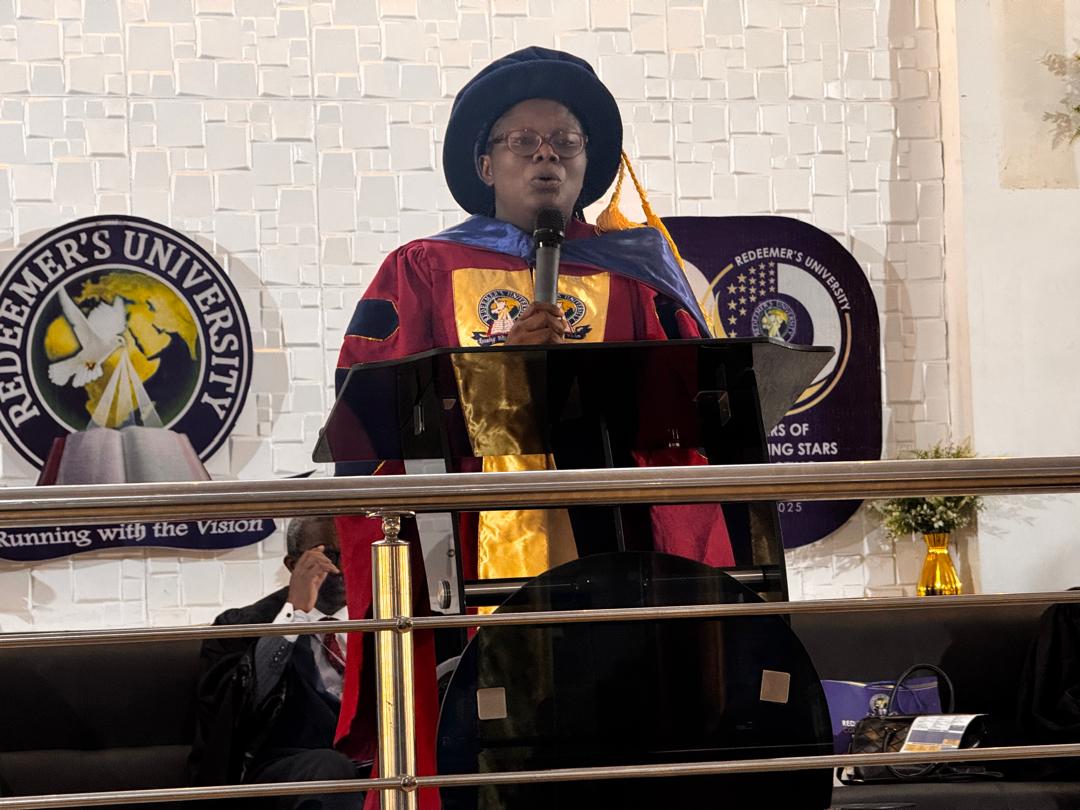
A Professor of Corpus Linguistics and Multimodal Discourse Analysis, Foluke Olayinka Unuabonah, has called on federal and state governments to extend research funding support to private universities in Nigeria, noting their contributions to national development.
Unuabonah made the call while delivering the 22nd inaugural lecture of Redeemer’s University, Ede, Osun State, titled “From Text to Context: Advancing Corpus Pragmatics in the Nigerian English Environment.”
She urged government to allow private universities to access intervention funds, particularly from the Tertiary Education Trust Fund (TETFund), by permitting their academics to serve as lead investigators in funded research projects.
“I would like to lend my voice to the call that the Nigerian government should support research funding in private universities. Granting their faculties the opportunity to serve as lead investigators in TETFund projects will improve research output in Nigeria,” she said.
The professor noted that private universities contribute through taxation, student training, and human capital development, stressing that supporting their research efforts would strengthen national growth.
While speaking, Unuabonah examined the development of Nigerian English, noting that while studies have explored differences in vocabulary, pronunciation, and grammar, the pragmatic aspect of language use in context remains less studied.
She explained that pragmatics focuses on how meaning is shaped in real-life situations such as classroom interactions, media discussions, and everyday conversations.
Drawing from her research using computer-based corpora, she said Nigerian English reflects distinct pragmatic patterns.
According to her, Nigerians often express gratitude through prayers for benefactors and by thanking God, practices not commonly documented in other English varieties.
Her findings also show that Nigerian speakers use speech acts such as thanking and requesting more frequently than British speakers, with implications for international communication.
Unuabonah further identified the influence of indigenous languages such as Hausa, Igbo, and Yoruba on English usage, particularly through interjections and pragmatic markers like “haba”, “biko”, and “abi”, which are common in informal communication.
She added that certain expressions, including the use of “now” for emphasis, differ from their conventional usage in British and American English.
The professor also noted similarities between Nigerian English and other African varieties, including Ghanaian English, particularly in the use of markers like “o”.
Explaining corpus linguistics, she described it as a method that uses large, digitally stored texts to analyse language patterns, frequency, and usage, adding that it relies on quantitative research methods.
She, however, noted that the approach requires infrastructure such as stable internet access, computer systems, specialised software, and trained personnel.
Unuabonah called for increased investment in developing language corpora for Nigerian languages, including Igbo and Hausa, to support preservation and improve understanding of their influence on Nigerian English.
She concluded that strengthening research capacity in both public and private universities would improve Nigeria’s academic output and global relevance in linguistic studies.













-

 News4 days ago
Easter: Osun Assembly Aspirant, Asiri Ede Congratulates Christians, Seeks Support For Oyebamiji
-

 News5 days ago
An Easter Of Unshakeable Hope And Renewal For Osun State – Lanre Farinloye
-

 News4 days ago
Osogbo Rainstorm: Oyebamiji Declares Academic Scholarship Up To University Level For Four Children Of Deceased’s Family
-
 News3 days ago
Gbenga Hashim Weighs PDP Exit as Reconciliation Efforts Collapse, Fears of Opposition Capture Grow