News
LAUTECH Resident Doctors Protest Over Unpaid Salaries, Staff Shortage
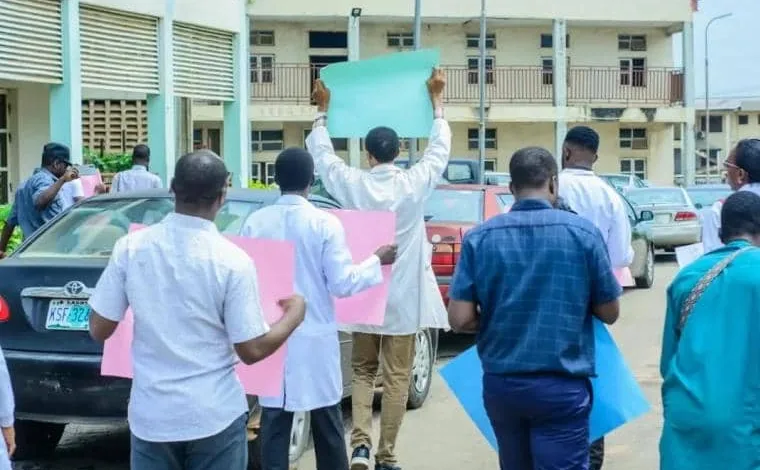
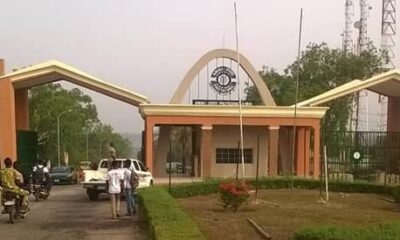
Resident doctors at the Ladoke Akintola University of Technology Teaching Hospital, Ogbomoso, Oyo State, have protested against what they described as worsening working conditions, severe manpower shortages and unpaid wage-related arrears.
The protest, staged on Wednesday under the auspices of the Association of Resident Doctors, LAUTECH Teaching Hospital, was aimed at drawing the attention of the Oyo State Government and hospital management to the challenges confronting medical personnel at the facility.
In a statement jointly signed by the association’s President, Dr Mustapha Adedapo, and Public Relations Officer, Dr Abdulrahman Fofie, the doctors said their working environment had become increasingly difficult, with the situation taking a toll on their welfare and professional responsibilities.

Among their major grievances were severe understaffing, outstanding minimum wage arrears, unpaid allowances and poor accommodation facilities for doctors on call.
The doctors also complained about the condition of their call rooms and on-call facilities, describing the situation as unacceptable for medical professionals expected to provide round-the-clock services to patients.
They stressed that their demands were not for luxury but for basic welfare, fair compensation and adequate support for medical residency training.
According to the doctors, the continued shortage of resident doctors could place additional pressure on the available workforce and potentially affect the quality and efficiency of healthcare services delivered to patients.
They appealed to Oyo State Governor, Seyi Makinde, government officials, the management of LAUTECH Teaching Hospital and other relevant stakeholders to urgently intervene and address the challenges.
The doctors said resolving the issues would enable them to concentrate fully on their primary responsibility of providing quality healthcare and saving lives.
They, however, maintained that while they had exercised patience, their patience had limits, insisting that members of the association would remain united in their demand for improved working conditions.
The protest came amid earlier concerns raised by the Nigerian Association of Resident Doctors (NARD) over the shortage of resident doctors at the teaching hospital.
NARD had raised concerns that several doctors who left the institution had not been replaced, while some who completed their residency training were also yet to be replaced.
The association identified anaesthesia, chemical pathology and haematology among specialties particularly affected by the manpower shortage.
NARD also called for the payment of outstanding minimum wage, promotion and accoutrement allowance arrears, implementation of the new professional allowance, release of the Medical Residency Training Fund and rehabilitation of doctors’ call rooms and other on-call facilities.
The resident doctors urged the authorities to treat the issues as urgent, warning that improving the welfare of medical personnel was essential to sustaining effective healthcare delivery at the institution.





Osun APC Kicks Against Park Management Law, Demands Withdrawal

Osun: Alowonle’s Associate Reportedly Arrested Over Murder Of Ajagungbade Emir

500 Youths To Attend Osun Scout’s Camporee 2026

NUC Board Chairman Demands Harmonisation Of University Regulatory System

2027: Hashim, Makinde Discuss Government Of National Unity