
News
North Will Be Eligible For Presidency In 2031, Not 2027, Says Akume, Urges Patience And National Unity
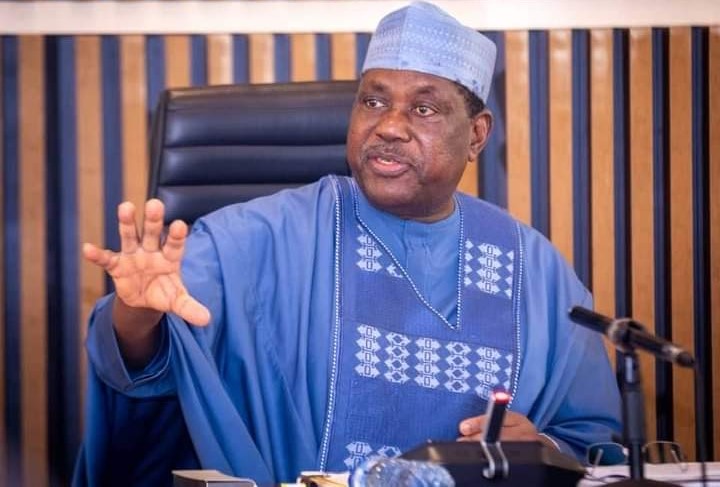
Secretary to the Government of the Federation, George Akume, has underscored a key political arrangement emanating from Nigeria’s 1999 democratic transition, emphasising that the northern region of the country will next be eligible to present the president in 2031 rather than 2027.
Akume’s remarks come against a backdrop of ongoing national dialogue about power rotation and inclusion, important to Nigeria’s democratic stability and development.
Speaking at the Government-Citizen Engagement event organized by the Ahmadu Bello Memorial Foundation at Arewa House, Kaduna, Akume stressed the importance of patience and unity for the country’s stability.
“Let me share with you what our leaders did in 1999, pre-Jos Convention of the Peoples Democratic Party (PDP). They recognised, and rightly too, that the only way to ensure our unity and territorial integrity of our dear country was to entrench in our minds and practice rotational presidency between the South and North,” Akume declared.
He paid tribute to the architects of the 1999 arrangement, including Chief Solomon Lar, Mallam Adamu Ciroma, Shehu Dan Musa, Abubakar Rimi, Prof Suleman Kumo, Isaac Shaahu, and Prof Jerry Gana, “Their wisdom has paid off. This arrangement guaranteed stability of the polity.”
Akume clarified the practical implication: “By this conception the North, the region that is so dear to me, will be eligible for the presidency in 2031, not 2027. Nigeria will not cease to exist. But we need patience to arrive at our turn.”
The rotational presidency arrangement, though not enshrined in the constitution, followed the 1999 founding political agreement by the PDP to alternate the presidency between Nigeria’s northern and southern regions, divided into six geo-political zones (North West, North Central, North East, South West, South South, South East). This system was devised to foster national unity and mitigate ethnic and religious tensions by ensuring balanced political power sharing.
Calling for collective national resolve, Akume urged, “Let us walk this path together, with faith in our country and renewed hope in our shared future. So we are all resolved in deepening our democracy.”
Akume praised President lTinubu’s administration for bold reforms and called on Nigerians to remain patient and united in pursuit of national renewal.
Honouring the legacy of Sir Ahmadu Bello, Akume described him as “a phenomenal being who promoted national cohesion and unity in Nigeria. He utilized his God-given talents, knowledge as well as position and power to drive development… He believed in a Nigeria that is United and Indivisible… He embodied the values of compassion, wisdom, selflessness and integrity.”
Addressing the theme—“Assessing Electoral Promises: Fostering Government-Citizen Engagement for National Development”—Akume said, “This morning, I am joined by a strong team of serving Ministers… to espouse the giant strides taken in restoring the socio-economic fortunes of our country in order to drive growth over the past two years of the Renewed Hope Agenda.”
Reflecting on the administration’s inception, Akume noted, “This administration assumed office on 29th May 2023 with a strong vision for our country under the Renewed Hope Agenda… President Bola Ahmed Tinubu GCFR had promised Nigerians impartiality in governance and a commitment to remodeling our economy, improving security, accelerating infrastructure, job creation and revitalizing agriculture.”
He outlined eight priority areas guiding government policy: reforming the economy, strengthening security, boosting agriculture, unlocking energy/resources, enhancing infrastructure, investing in health/education, accelerating diversification, and improving governance.
“From the onset of this administration, President Tinubu adopted bold and foundational reforms to stabilize and grow the Nigerian economy. Among the steps, he unified the exchange rate, which… enhanced transparency in Forex management and boosted investor confidence… Nigeria’s GDP is on a trajectory of recovery and has shown signs of recovery beyond imagination, inflation is moderating, and investor confidence are gradually improving,” Akume added.
On security, Akume acknowledged, “Nigeria’s security architecture is undergoing robust transformation and revamping… Government is also investing in human capital development and well being of citizens so as to minimise insecurity.”
He pointed to key achievements: judicial reforms, local government autonomy, regional development commissions, renewed anti-corruption efforts, and robust diplomacy and infrastructure drive. “The Lagos-Calabar Coastal Highway, the Sokoto-Badagry super highway, the ongoing rail projects… and housing initiatives… demonstrate the scale of ambition. The Power Sector Reform Roadmap is also revamping the national grid,” he said.
Akume lauded welfare, education, and youth policies: “Over four hundred thousand students have benefitted while an estimated Fifty Three Billion Naira has been disbursed through the Student Loan Act. Several young Nigerians now occupy strategic government roles.”
He acknowledged persistent challenges: “The removal of fuel subsidy, though painful, has been a necessary reform that saved trillions of Naira. The savings are now being redirected into critical infrastructure and human development while states are receiving increased allocations for development.”








-

 News5 days ago
‘You’re A Beacon Of Hope And A Mother To Many,’ Adelabu Lauds Mrs Oyetola At 66
-
 News4 days ago
Adeleke Summons IBEDC, Reassure Rainstorm Victims Of Emergency Support
-
 News5 days ago
Reconciliation Still Possible After PDP Factional Convention —Gbenga Hashim
-
 News4 days ago
ADC Crisis Rooted In Legal Process, Not External Influence — Lawyers Explain