
News
‘Three Years Later, Osun Has Become National Reference Point In Good Governance’ – Adeleke
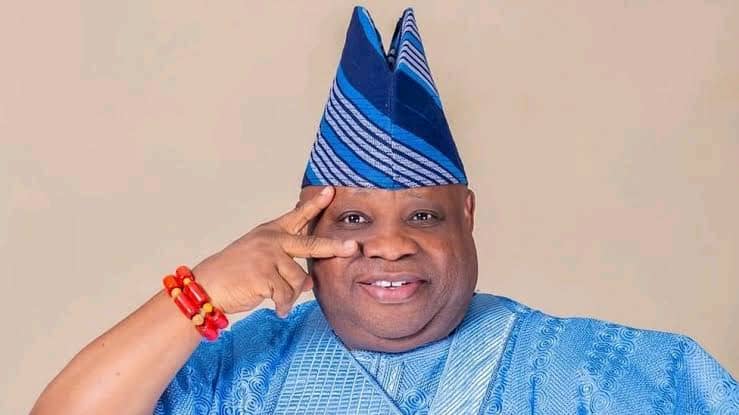
Three years into his administration, Osun State Governor, Ademola Adeleke, says the state has undergone what he describes as “a transformative turnaround,” insisting that sectors he met in crisis in 2022 have now been rebuilt.
In a statewide broadcast titled My Stewardship in Three Years, Adeleke said he inherited “a fractured system” marked by unpaid pensions, abandoned infrastructure, poor health access, declining school performance, a troubled mining sector and what he referred to as “a climate of insensitive leadership.”
“Three years later, the Osun story is positively different,” he said. “The state has become a national reference point in good governance.”
Adeleke said his administration revived stalled water projects and restored long-abandoned facilities. “The Ilesa Water Project was dead when we came in,” he said.
“We brought it back to life, rehabilitated several urban water schemes and drilled motorised boreholes across all 332 wards.” He added that the abandoned Ora-Igbomina Water Scheme “has been re-awarded and is now back under active construction.”
On sports development, the governor highlighted the remodelling of the Osogbo City Stadium and the creation of new structures to improve the sector.
“We established the Osun Sports Commission and introduced the Sports Development Fund to ensure sustainable financing,” he said.
Adeleke described ongoing land reform as one of the most significant changes under his administration. According to him, the newly introduced digital Certificate of Occupancy system, designed to be completed within 45 days, “has eliminated forgery, stopped double allocations and boosted investor confidence in Osun.”
The governor said his administration “restored dignity to the civil service” by addressing outstanding obligations. “We cleared a major portion of the pension and salary arrears we inherited, promoted workers with financial backing and strengthened our accounting systems in line with international standards,” he said.
He also pointed to progress in the state’s digital economy. “Osun had no ICT or innovation policy in 2022,” he said.
“Today, we have established both, domesticated the Start-Up Act, improved our Google mapping framework and set up a digital economy advisory board.”
On climate action and mining reforms, Adeleke said the state had gained national and international recognition. “For the first time in the history of Osun, we now have an equity stake in the Segilola gold project,” he said. “We also revalidated old mining licences to enforce environmental compliance and protect host communities.”
In the health sector, he said more than 200 primary health centres had been rehabilitated, with another phase of nearly 200 ongoing. He added that the free surgical outreach “has reached over 70,000 beneficiaries,” while the state’s insurance scheme was expanded to cover pensioners.
He noted that Osun recently received a $500,000 award as the South-West’s best-performing state on Universal Health Coverage.
On education, Adeleke said his government renovated or upgraded over 120 schools, strengthened institutions such as Osun State University and the University of Ilesa, restored bursaries and invested heavily in teacher training. “We moved Osun from 33rd to 7th position in national exam rankings,” he said.
“Our students are now representing Nigeria at global competitions.”
The governor said the agricultural sector had also received targeted support.
“We revived abandoned tractors, purchased 31 new ones and subsidised inputs, including cocoa and cashew seedlings,” he said.
He added that the price of cocoa pods was reduced from ₦1,100 to ₦300, while palm pods dropped from ₦1,500 to ₦500 under state support schemes.
Adeleke reported that nearly ₦2 billion had been disbursed to cooperative societies across the state. “More than 30,000 people have benefited under the ward-based cooperatives alone,” he said.
The governor also highlighted improvements in the cultural and tourism sectors, citing the revitalisation of the Osun Osogbo Festival, the Adire Osun Àgbáyé Fiesta and partnerships with institutions such as the British Museum.
“We are rebuilding our cultural identity and expanding our creative economy,” he said.
He maintained that his administration had significantly reduced Osun’s infrastructure deficit.
“We have completed 255 kilometres of roads, with another 160 kilometres ongoing,” he said. “Major projects such as the Ilesa dual carriageway, the Ife flyover and the Lameco bridge are far advanced.” He added that the “Light-Up Osun” solar initiative had illuminated major routes in the capital.

-
 News3 days ago
Guber Poll: ‘We Must Get It Right’ — Abosede Kasumu Ogo Oluwa Urges Osun Voters, Backs AMBO with Mass Outreach
-
 News4 days ago
Eid-el-Fitr: Action Alliance Guber Candidate, Farinloye Felicitates Muslims, Pledges Inclusive Governance
-
 News2 days ago
SERAP Gives Senate Ultimatum Over Missing ₦210 Trillion NNPCL Funds
-
 News3 days ago
Adeleke To Oyebamiji: Answer Questions About Your Records Of Service