
News
AGF, NBA,and others oppose death penalty for kidnapping
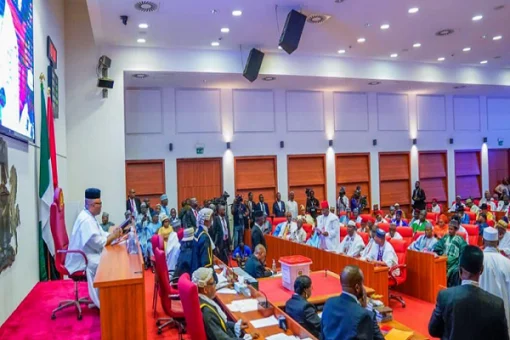

Key justice and human rights stakeholders on Thursday opposed a Senate proposal seeking to prescribe the death penalty for kidnapping under a proposed amendment to the Terrorism (Prevention and Prohibition) Act, warning that capital punishment would neither deter crime nor enhance national security.
The opposition was expressed at a one-day public hearing organised by the Senate Joint Committees on Judiciary, Human Rights and Legal Matters; National Security and Intelligence; and Interior.
The Bill seeks to classify kidnapping, hostage-taking and related offences as acts of terrorism and to impose the death penalty without an option of fine or alternative sentence.
The Attorney-General of the Federation and Minister of Justice, Lateef Fagbemi (SAN), alongside the Nigerian Bar Association (NBA), National Human Rights Commission (NHRC), Nigerian Financial Intelligence Unit (NFIU), Nigerian Law Reform Commission, Federation of Women Lawyers (FIDA), Department of State Services (DSS) and other stakeholders, raised legal, constitutional and policy concerns over the proposal.
Fagbemi urged lawmakers to remove the death penalty clause, noting that while the executive shares the legislature’s determination to combat terrorism and violent crime, the proposed punishment could prove counterproductive.
“While emotionally satisfying, the inclusion of the death penalty risks facilitating the ‘martyrdom’ trap,” the Attorney-General said. “In ideological conflicts, state-sanctioned execution may validate extremist causes, fuel recruitment and provoke retaliatory violence.”
He also warned that capital punishment could weaken international cooperation, as many countries may refuse to extradite suspects who face execution, potentially creating safe havens abroad for terror masterminds.
Fagbemi further pointed to Nigeria’s long-standing reluctance to carry out executions, which has resulted in a de facto moratorium, contributed to overcrowded correctional facilities and increased the risk of radicalisation within prisons.
“Our focus should be on the certainty of apprehension and conviction rather than the ultimate severity of punishment,” he said, recommending life imprisonment without parole as an alternative.
The NHRC proposed that all legislation undergo a mandatory human rights impact assessment before passage.
It maintained that the Bill, though well-intentioned, had “serious legal, constitutional and policy problems” and must align with international human rights norms and Nigeria’s constitutional safeguards.
“Any proposed legislation must improve the enjoyment of human rights and comply with best practices,” the Commission said, adding that expanding capital punishment in a system with investigative gaps heightens the risk of irreversible miscarriages of justice.
The NBA advised the Senate to adopt a graduated and discretionary sentencing framework.
It recommended limiting the classification of kidnapping as terrorism to cases involving organised criminal or terrorist networks or intent to intimidate the public or coerce government.
The association urged lawmakers to replace the mandatory death penalty with discretionary sentencing, including life imprisonment or death only in aggravated cases, and to clearly define intent, ancillary liability and defences such as duress, while harmonising the Bill with existing state kidnapping laws.
Senator Ekong Sampson, during deliberations, supported a graduated approach to offences and penalties, stressing the need to reflect degrees of harm, roles of offenders and outcomes of offences.
Former United Nations Human Rights Envoy and Professor of Human Rights Law at Bournemouth University, Prof. Uchenna Emelonye, welcomed what he described as a rare convergence of views among Nigeria’s top legal institutions against capital punishment for kidnapping.
“The submissions today reaffirm what empirical evidence and global experience show — expanding the death penalty will not stop kidnapping,” Emelonye said. “Nigeria needs institutional reforms, intelligence-led policing, effective prosecutions, border security, arms control and victim-centred justice.”
He warned that widening the scope of capital punishment within a fragile criminal justice system risks wrongful convictions without delivering measurable security gains, and urged the Senate to redirect legislative energy towards strengthening policing, intelligence coordination and prosecution of kidnapping cases.
The committees said submissions would inform their report as the Senate considers the proposed amendment.













-

 News4 days ago
Osun 2026: Action Alliance Elects Farinloye As Governorship Candidate, Pledges People-Centred Governance
-

 News4 days ago
FRSC To Prosecute Peller After Crash
-

 News3 days ago
Osinbajo, Adeleke, Aregbesola Inaugurate N34bn UNIOSUN Medical Research And Training Hospital
-

 News5 days ago
Nigeria’s Swift Benin Intervention, Detention of Air Force Personnel in Burkina Faso Spark Controversy