
Education
New School Year: High Cost Of Textbooks, Other Materials As Albatross
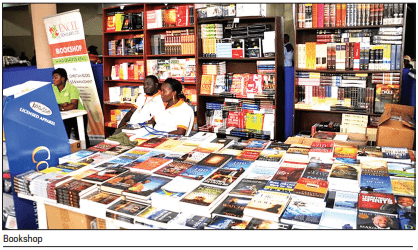
-As Parents, Guardians Agonise Under Yoke Of Expenses
-We’re in dilemma over govt’s new education policy –Edo school owners
-Textbooks prices not significantly changed from last year –Booksellers
Anxiety Parents are unhappy over the high cost of textbooks, which if not checked or addressed would jeopardize the education of several children from low income backgrounds
These are not the best of times for parents, guardians and students in public primary and secondary schools. This is as they are agonising over the challenges of high cost, non affordability and non-availability of textbooks and other school materials, which is also fueling anxiety that many students may have to resume schools without required textbooks and other instructional materials.
Parents and students children are not alone in this predicament, as school owners are also ensnared and in palpable confusion over the required recommended textbooks for use for schools in the 2025/2025 session, following the new curriculum introduced a few weeks ago by the Federal Government. The stakeholders’ anxiety is heightened as public and private primary and secondary schools across the country resumed for the new school year of 2025/2026 session two days ago without any direct bearing with textbooks to use.
But, when the parents the dust raised by the problem of overburden high school fees is yet to settle, they are again lamenting under the yoke of high cost of textbooks and other school materials such as school bags, sandals, uniform, food flasks, backpack, house wear for students in boarding house, among others, which has been priced out of the reach of parents of children of low income background.
Added to these problems, the Federal Government had only a few weeks to resumption for the new school year, announced a new curriculum for basic and senior secondary schools, with the caveat that the implementation of the new curriculum should commence immediately in September as school resumed.
Amid the Minister of Education, Dr Tunji Alausa’s directive for the immediate implementation of the new curriculum, anxieties are high among key stakeholders, especially school owners, school heads and teachers on how to go about its implementation since necessary infrastructure and facilities, such as recommended textbooks, internet facilities, power supply in most public schools that will aid and facilitate effective implementation of the policy are not in place.
Besides, there is the unresolved confusion brought about by adoption of the CBT model in all external examinations conducted by the West African Examinations Council (WAEC and National Examination Council (NECO), which the Minister also directed should commence in the 2026 Senior School Certificate Examination (SSCE) and other external examinations in the nation’s school system.
Presently, several schools, due to the policy, are unable to buy textbooks from publishers
This, again, has triggered concern among stakeholders, who raised questions about the readiness of the government and schools, as well as preparedness of the students to effectively transit to CBT exam mode in a country seriously struggling with epileptic power supply, internet inclusivity and insecurity.
Against this backdrop, the urgency in the implementation of these policies has continued to fuel more confusion in the system as stakeholders queried the rationale behind the rush in the policy implementation without first addressing the other school needs given the timeframe to when students return to school for the new session.
Cost of textbooks
However, findings by New Telegraph have revealed that apart from the problems of delay in the release of recommended textbooks on the part of the government, the cost of textbooks on some core subjects are high across the country in the face of the harsh economic situation confronting most Nigerian parents.
In a market survey conducted randomly across some states in the federation, when New Telegraph gathered in some bookshops at Ketu axis of Lagos State that Secondly School English textbook sells for N7,000; Civic Education N5,800; Literature-In-English N6,200; Essential Mathematics N8,000; Higher Education Notebook N900 per one; while Exercise book (40 leaves) goes for N200 and 60 leaves N300. Also, at Berger area of the state, Primary School Brighter Grammar is sold for N800; New Method Mathematics – N4,500 and Basic Science and Technology for N3,500; and Primary. Verbal Reasoning 4-in-1 sells for over N10,000 (Mathematics Non-Verbal Reasoning, English Verbal Reasoning).
For Junior Secondary School Intensive English Books cost N4,500; New General Mathematics – N3,500; Basic Science sells for N3,000; Business Studies N2,700; Civic Education N2,800 and Social Studies costs N2,800. In the Senior Secondary School textbooks category, a copy of Countdown to English costs N6,000; New General Mathematics N3,500; Modern Biology (Ramalingam) N6,500; New School Physics goes for N6,500; New School Chemistry sells for N6,500; Essential Economics (C.E. Ande) N4,300; and Essential Government (C.E. Ande) sells for N4,200, and WAEC Past Questions for over N2,000 for each paper.
For the price for other school materials, a water bottle sells for N2,000 upward; flask costs above N4,000; biro between N150 and N200; pencil goes for N100; school bag from N8,000 and above; and the price of a pair of school sandal ranges from N4,000 to N10,000 depending on size and quality. The market survey conducted in Yenagoa, Bayelsa State, also revealed that a Comprehensive English Textbook for Secondary School costs N,3500; New General Mathematics N3500; and for Biology, Physics and Chemistry textbooks each is sold for N6,000.
Similarly, in Ilorin, Kwara State, the situation is the same with the cost of textbooks. For Junior Secondary School, Oxford English Textbook for JSS sells for N4,900; English Workbook – N1,800; Basic Science – N4,500; Mathematics Workbook – N4,000; Home Economics textbook – N5,000; a pack of Higher Notebook – N3,750; Mathematical Set – N1,000; Revised Standard Version Bible – N4,500; a dozen of 60 leaves notebook – N3,000; a dozen of 40 leaves notebook – N2,200 and a dozen of 20 leaves notebook N1,500.
In a related development, a market survey at some bookshops by New Telegraph at the ever-busy Mission Road, Benin, Edo State indicated that patronage was low as against the usual high patronage being previously experienced at the beginning of every new school year by the booksellers. Some of the booksellers, who spoke to our Correspondent, wondered what the situation would have been if the government had released the list of approved textbooks to be used for school for the 2025/2026 academic year in view of the updated new curriculum.
Despite the low patronage, the price of books for primary school pupils, such as Basic English Language (Book 1-6) goes for N800 each; Evans English Language (Book 1-6) N3,000 each; Macmillan English Language (Books 1-6) goes for N2,500 each; Evans Mathematics Book 1-6 sells for N5,000 each; Macmillan Champion Mathematics (Book 1-6) costs N3,500 each; Lantern Quantitative and Verbal Reasoning (Book 1-6) goes for N1,500 each; and Basic Science & Technology sell for N2,500 for primary school. At the Secondary School level, Systematic English for SS 1-3 goes for N4,000 each; Countdown English Language for SSCE/ WASSCE/NECO/JME is sold for N5,000; New General Mathematics (JSS1-3) – N6,000 each; New General Mathematics for Senior Secondary (1-3 ) – N6,500 per copy.
Meanwhile, at Mayflower Private School, Ikenne, Ogun State, returning SS 1- SS 3 students in boarding house are to pay N10,000 for mandatory textbooks and N18,000 for Higher Education Notebooks with school inscription; Day wear N7,000; Sunday wear N7,000; school uniform N15,000 per pair; Lab coat N8,000.
For other textbooks, Further Mathematics Book 3 is sold for N7,000; New General Mathematics for Senior Sec. Book 3 – N5,000; Exam Focus LiteratureIn-English for WASSCE & NECO – N8,000; Essential Financial Account – N5,500; New Oxford Sec. English Course for SS Book 3 – N5,000; Essential Agric – N5,500; Essential Chemistry – N3,500; Essential Biology – N3,500; Le Francais Fondamental – N3,700. Students in JSS 1-3 are to pay N26,000 for Exercise/Mandatory Books; school uniform – N14,000 per pair; The New Oxford Sec. English Course for JSS Book I costs N5,000; Best Grade English JSS Book 1 – N3,000; New General Mathematics for JSS Book 1 – N5,000; Physical & Education – N4,500; Home Economics – N4,500; WABP Junior Secondary Business Studies Book 1 – N5,000; Poster Colour, Brushes,2B Pencil, Top Bond Adhesive – N9,150.
Reaction
Amid this state of confusion created by the new school curriculum review, stakeholders have criticized its hurried implementation, which they described as another ill-thought and ill-planned reform that has left school owners, educationists, head of schools and other critical players in utter confusion.
Raising concerns over the issue of textbooks, the Head of School, Selston Intl School, Abuja, Onokurefe Ovie Osiogbo, said book publishers are yet to know the textbooks schools are going to use, and that right now schools do not know the textbooks the students are going to use, even when they also do not have the curriculum at hand.
“Presently, several schools, due to the policy, are unable to buy textbooks from publishers. This is because they do not know the outlined topics or textbooks that would be used. We also need to know if the government has properly informed publishers to change some of the textbooks and workbooks,” a teacher told New Telegraph.
Reacting to the cost of textbooks and level of patronage, the owner of a popular bookshop in Ilorin, Mr Dele Bamidele, said though prices of textbooks had not significantly changed from that of the last year, the level of patronage has not also reduced since many parents are still determined despite the socioeconomic upheavals in the country to ensure that their children and wards are equipped adequately with essential textbooks, especially in the core subject areas.
On his part, a parent, Mr Adeyemi Seun, who spoke to our Correspondent in Ilorin, stressed that notwithstanding the harsh economic situation in the country, he ensured that his son in SS2 is provided with all essential textbooks to enable him to concentrate on his studies so as to cope well in the classroom. A bookshop owner in Yenagoa, who did not mention his name, told New Telegraph that this year textbooks are more affordable than last year as prices did not change significantly.
But, he lamented that despite the fact that prices of textbooks are more affordable this year, many parents and students are not buying textbooks for their children because of the economic hardship in the country. A parent, Mr Lucky Ighoumaye, who spoke to New Telegraph in Benin City, said he is yet to buy textbooks for his children, citing the changes in school curriculum by the Federal Government as responsible for his decision.
He further explained that the proprietor of his children’s school told him that they were still waiting for the government to come up with the required recommended textbooks for schools in view of the implementation of the new school curriculum He said: “I am yet to buy any textbooks for my children, and the reason is that the proprietor advised me to hold on a little bit till they are able to confirm the textbooks that would be recommended by the state government.”
Subsequently, a teacher in one of the state government public schools, Goodluck Thomas, said they were waiting for the state government to come up with the recommended textbooks for use in school before the management can recommend textbooks to the pupils. In fact, in Edo State currently, there is tension among public and private schools over the state government’s new education policy.
The state government had unveiled a new education policy in the state, including the one on new textbooks to be used by schools following the Federal Government curriculum change, a development that has heightened teachers and parents’ anxiety. Meanwhile, the new directive, according to the state Commissioner for Education, Dr Paddy Iyamu, stipulates that only textbooks approved by the Ministry of Education are permitted to be used in schools across the state.
“Schools are required to maintain textbook stability for a minimum of four years; and younger siblings must be allowed to reuse textbooks previously purchased by their older siblings,” the policy stipulates. It further warned authors and publishers that textbooks must not include workspaces, and that such textbooks would be derecognized, rather the policy state that workbooks are to be designed and used separately from textbooks.
However, the situation in private schools is a different ball game and harrowing, where parents and students are mandated by the school authorities to buy textbooks, uniforms and other school materials in the schools, given the high cost.
Speaking on the development, a parent, Mr Adesegun Olayemi, who has two of his children in JSS 2 and JSS 3 in a private school in Ota, Ogun State, confirmed to New Telegraph his harrowing experience as he had to pay N92,000 on textbooks for his child in JSS 3 class, and another N92,000 for the younger one in JSS 2 class; while he also spent N73,000 to purchase textbooks for the third child in primary school.
The parent, who frowned at what he described as the exorbitant cost of textbooks in the country today, heaped the blame at the door steps of the private schools, publishers and the government at the federal and state levels.
He insisted that the price of textbooks would continue to go up since virtually all materials for publishing books, from newsprint, paper, ink and printing machines, among others, are all imported with the high exchange rate and high tariff imposed on imported items by the government.
Parents
Piqued by the situation, a Lagosbased lawyer, Mr Oluwole Niyi Esq, said: “This high cost of textbooks will persist as long as Nigerians are ready to send their children to school. But, let me added here also that it is disheartening that the country due to its negligence neglected the Iwopin Paper Mill in Ogun State, and Oku-Iboku Paper Mill in Akwa Ibom, which was designed to produce 100,000 metric tons of newsprint annually and allowed them to go moribund.
Now, we depend wholly on foreign countries for everything even as most books are printed abroad and brought into the country under heavy import tariffs. “This is the genesis of the problem of the high cost of books and other writing and reading materials.
This is a situation where publishers are set out to make profit, and school owners also want to make profit, while parents and students are the ones bearing the brunt of the increased cost of textbooks, which has become a recurring decimal at every school resumption period for a new session.
Narrating her ordeals, a mother of three and cloth seller at then Modern Oshodi Market, Mrs E. Bimbo, said they paid N82,000 to buy textbooks for their child in SS 1 and over N50,000 for the other child in JSS at Treasure Star College, Gowon Estate, Lagos.
Also, a parent, who identified himself simply as Prince Sunday, stated that he spent over N65,000 to buy textbooks for one of his children in JSS 2 at Crescent International College, Ota, Ogun State; while the purchase of textbooks for the younger child has to be suspended till next week to allow him raise some money.
He said: “You can’t believe that despite the fact that I did not buy all the textbooks, since not all the books are compulsory for the students, I still ended up spending such a huge amount on textbooks alone for a child in JSS 2. What if we have to buy all the textbooks? That means it would have cost me more than N150,000 to buy books for the two children in secondary school and not university.
“This is a serious matter and something urgent should be done to address it, especially with the challenges of economic hardship facing the people. The JSS 2 class in the school is taking up to 17 subjects, even when we are made to believe that the number of subjects has been reduced in the new curriculum.
“The government needs to do something about the current hyper inflation rate and high exchange rate in the country, which have priced education out of the reach of the masses, because if not many children would go to school with no textbooks due to their parents’ inability to acquire textbooks and other materials for their children.” Also, a parent of two children at Adedokun International School, Ota, who did not want his name in print, lamented how he had in the last one week spent about N250,000 on his children’s textbooks.
© New Telegraph, Nigeria

-

 News4 days ago
Ede Muslim Council Bestows Honours on Muslims, Launches ₦500 Million Development Fund
-
 News4 days ago
ADC Crisis Deepens As State Chairmen Reject David Mark, Nafiu Bala Factions; Announce Interim Leadership
-
 News5 days ago
August 15: Osun APC Names Woke Oke Campaign DG, Issues ‘Quit Notice’ To Adeleke
-

 Health3 days ago
Seafood Virus Linked To Emerging Human Eye Disease –Study