

News
State Police: Tinubu May Receive Bill Friday
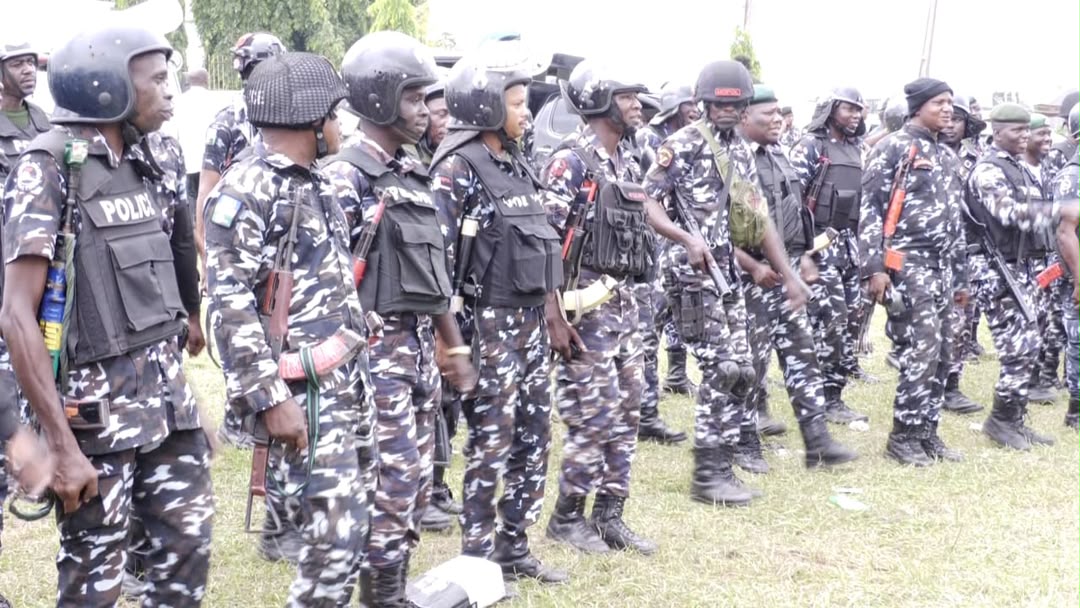
The National Assembly may transmit the proposed State Police Bill to President Bola Tinubu for presidential assent on or before Friday, November 20, 2026, following the reported attainment of the constitutional requirement for the proposed amendment.
The development comes after the November 15 deadline given to the 36 State Houses of Assembly to communicate their positions on the proposed constitutional amendment expired on Sunday.
Multiple parliamentary sources disclosed that the National Assembly had secured the required two-thirds approval from state legislatures, clearing the way for the next stage of the legislative process.
The National Assembly had earlier directed all 36 state assemblies to submit their positions on the bill by November 15. Senate President Godswill Akpabio had also warned that states that failed to respond within the stipulated period would be regarded as having withheld their approval.
Senate Leader, Opeyemi Bamidele, on Sunday indicated that the ongoing week would be decisive for the National Assembly as lawmakers prepared to resume from their recess.
Bamidele, however, disclosed that four state assemblies yet to submit their reports might be allowed until Tuesday, November 17, to communicate their positions.
Although the Senate Leader put the number of state assemblies that had approved the bill at 32, parliamentary sources indicated that the figure might have increased to 34, leaving Cross River and Niger states as the two outstanding states.
Sources within the National Assembly said the required constitutional threshold had already been met, adding that no further legislative action might be necessary before the bill is transmitted to the President.
One of the parliamentary sources explained that the leadership of the National Assembly would only need to direct the Clerk to the National Assembly to forward the bill to Tinubu for assent.
Some senators also expressed optimism that the President could receive the bill on Friday, with presidential assent potentially secured before the Christmas break.
Bamidele made the disclosure in a statement issued in Abuja after receiving The Sun Senator of the Year Award in recognition of his contributions to parliamentary leadership and lawmaking.
The Senate Leader maintained that the National Assembly had crossed the constitutional threshold stipulated under Section 9(2) of the 1999 Constitution, which requires approval from at least two-thirds of the 36 state Houses of Assembly, representing 24 states, for a constitutional amendment.
He said, “As shown in the records of the National Assembly, no fewer than 32 State Houses of Assembly have approved the State Police (Constitution Alteration) Bill, 2026.
With this, we have successfully crossed the constitutional threshold under Section 9(2) of the Constitution of the Federal Republic of Nigeria, 1999 (as amended).”
Bamidele added that the National Assembly expected the remaining four state assemblies to submit their reports before lawmakers reconvened on November 17.
He stressed that the legislature was determined to proceed with the process, irrespective of whether the outstanding states submitted their reports within the extended period.
The proposed constitutional amendment seeks to establish a Federal Police Service and State Police Services, effectively introducing a decentralised policing structure to complement the country’s existing security architecture.
The initiative is expected to strengthen community-based policing and improve security responses at the state and grassroots levels amid persistent challenges, including banditry, kidnapping, terrorism and communal violence.
However, the proposal has continued to generate concerns over possible political interference, abuse of power and the potential misuse of state-controlled security agencies against political opponents.
Addressing such concerns, Bamidele maintained that the proposed arrangement was not designed to create ethnic or state armies but to establish community-based policing structures operating within constitutional safeguards.
The proposed reform represents a significant step in Nigeria’s longstanding efforts to restructure its policing system and address security challenges across the country.









State Police: Tinubu May Receive Bill Friday

16-Year-Old Girl Sells Newborn For N2m In Lagos

Peculiar Delivers Warri City Stadium, To Be Commissioned By FIFA President, Infantino, November 21st

Ijesa North: Islamic Leaders Rally Support for Olajengbesi’s Reps Ambition

Oyo 2027: APM Candidate Boasts of Inevitable Victory, Dismisses APC Criticism

Emir Sanusi Visits Olubadan, Reaffirms Yoruba-Hausa Cultural Ties
-
 News5 days ago
Senate Passes Executive Bill To Reform Senior Secondary Education
-

 News5 days ago
Hashim Tells US Congress: I’ll Criminalise Religious Persecution If Elected
-

 News5 days ago
Osun NURTW Drags Adeleke Govt to Court Over Park Management Law, Alerts Security Agencies
-

 News5 days ago
Health: DMercy-P Humanitarian Foundation Screens 59 Indigent Residents in Osun, Warns Against Self-Medication