

News
Professor Advocates Technology-Driven Dispute Resolution, Warns Against AI Limitations
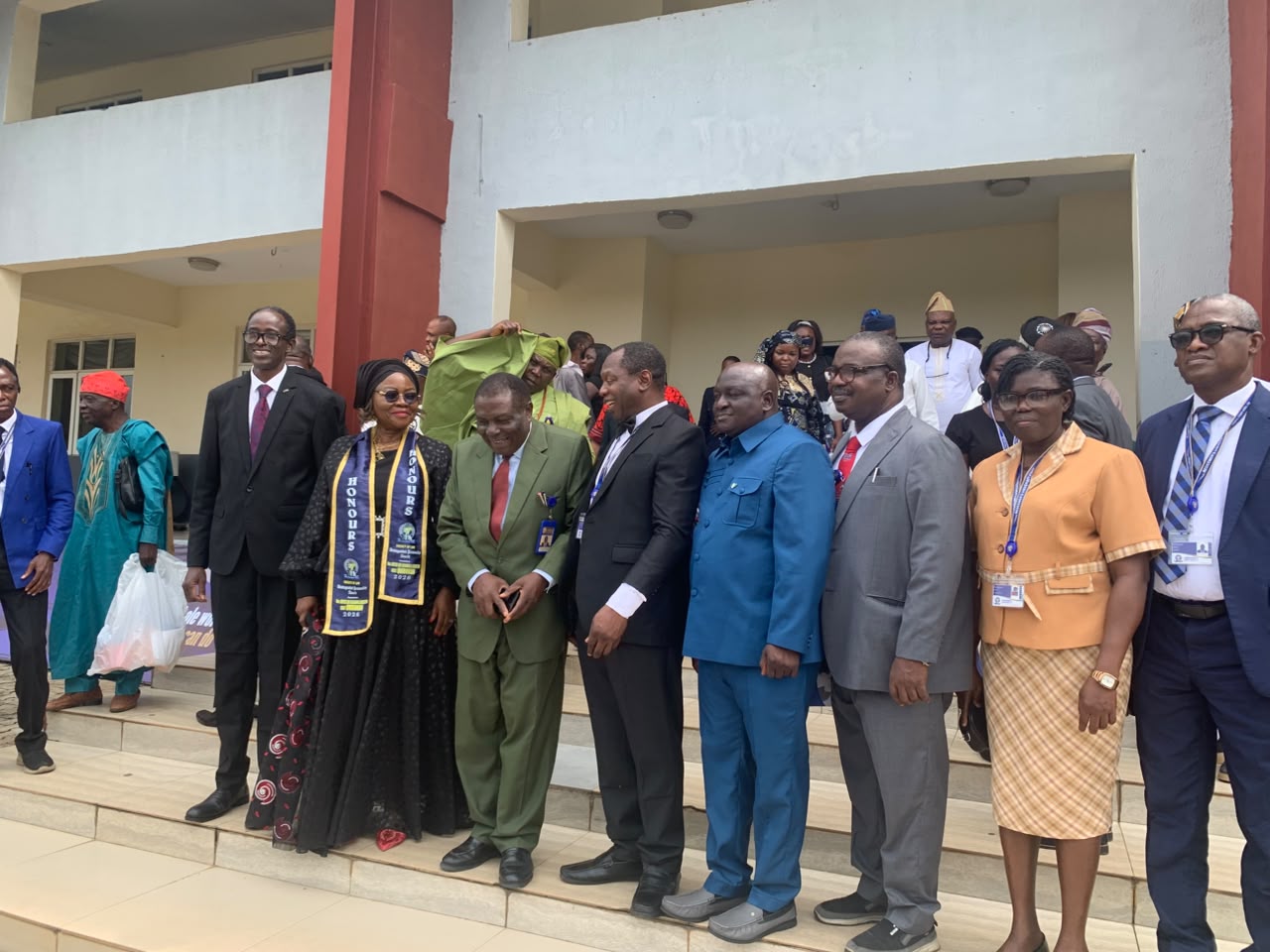
A legal scholar, Professor Tayo Bello, has called for the integration of information technology into Alternative Dispute Resolution (ADR) to reduce the cost of justice, accelerate dispute settlement and improve access to justice across geographical boundaries.
Bello made the call on Wednesday while delivering the 2026 Distinguished Personality Lecture organised by the Faculty of Law, Redeemer’s University, Ede, Osun State, in honour of Hon. Justice Adedotun Adedamola Grace Onibokun.
The lecture, held at the university auditorium, was titled, “The Paths of Alternative Dispute Resolution and Information Technology: What is More and What is Less?”
Bello, an Adjunct Professor of Arbitration and Law at the Centre for Petroleum, Energy Economics and Law, University of Ibadan, described ADR as an established mechanism for resolving disputes outside conventional court proceedings, noting that the practice had existed in African societies for thousands of years.
He identified negotiation, mediation, conciliation and arbitration as major forms of ADR, explaining that technological innovations had expanded opportunities for resolving disputes without requiring parties to be physically present at the same location.
According to him, Artificial Intelligence (AI) and Online Dispute Resolution (ODR) platforms could facilitate the settlement of disputes involving individuals and organisations across different countries through digital communication tools and video conferencing.
However, the professor cautioned against overdependence on technology, stressing that digital tools could support but not replace human judgment in resolving disputes.
“Technology can never replace human judgment. No matter how good you want to use it, technology itself will only serve as a means of resolving disputes,” he said.
He identified algorithmic bias, data privacy concerns, breaches of confidentiality and cybersecurity threats as major challenges that must be addressed in deploying technology for dispute resolution.
Bello also noted that although technology could lower costs, improve communication and speed up settlements, it might reduce physical interaction between disputing parties.
He added that the absence of face-to-face engagement could make it difficult for practitioners to adequately interpret the emotions, reactions and other non-verbal expressions of parties, particularly in sensitive disputes.
In his remarks, the Vice-Chancellor of Redeemer’s University, Professor Shadrach Olufemi Akindele, described the lecture as an important platform for intellectual engagement, professional reflection and the exchange of ideas on contemporary issues affecting the legal profession and society.
He said the continued transformation of human interactions and institutional processes by technology required the legal profession to examine how ADR and information technology could complement conventional judicial processes.
“As technology continues to transform human interactions and institutional processes, the legal profession must critically examine how alternative dispute resolution mechanisms and information technology can complement traditional judiciary processes, improve access to justice, reduce delays, and enhance the efficient administration of justice,” Akindele said.
The vice-chancellor commended the Acting Dean and members of the Faculty of Law for organising the lecture, while appreciating Bello for accepting the invitation to share his expertise with the university community.
He also congratulated Justice Onibokun on the recognition, highlighting her commitment to teaching and transferring knowledge to younger generations.
Also speaking, the Orangun of Oke-Ila-Orangun, Oba Adedokun Omoniyi Abolarin, commended Justice Onibokun for her contributions to the Faculty of Law, describing her as a humble and incorruptible personality.
The monarch expressed delight at the opportunity to interact with students and scholars, whom he described as future jurists and judges.
“It is nice to always be in the midst of our future jurists, our future judges. I say it all the time; it is like my daily routine now,” he said.
Oba Abolarin also referenced Isaiah 58:12 as a guiding principle in his life, emphasising his commitment to rebuilding foundations and creating opportunities for future generations.







2027: Appeal Court Declines to Recognise Wabara-Led PDP BoT

Tinubu Returns To Nigeria After Umrah In Saudi Arabia

2026 Budget: Tinubu Seeks Senate’s Nod For N10.79trn Foreign Loan

2027: APC Clarifies Oyebamiji’s Role In Osun Campaign Council

Professor Advocates Technology-Driven Dispute Resolution, Warns Against AI Limitations

Osun Health College: Provost Faults Allegations, Defends Management Structure
-

 South West News5 days ago
2027: Oyetola, Oyebamiji Mobilise 10,000 Canvassers For Tinubu’s Re-Election In Osun
-

 News1 day ago
Golden Jubilee: Osun Deputy Governor Launches ₦50m School Project At ACGS Ikirun
-

 News5 days ago
Alli Celebrates Folarin at 63, Describes Him As Pillar Of Oyo APC
-

 News3 days ago
‘NLC Must Not Become Political Tool’: WIP Faults Osun Labour Over LG Funds