
News
From Hardship to Hope: Fadojoe Unveils Bold Agenda on Jobs, Power, Economic Reform at Ilorin Stakeholders Forum
By Our Reporter
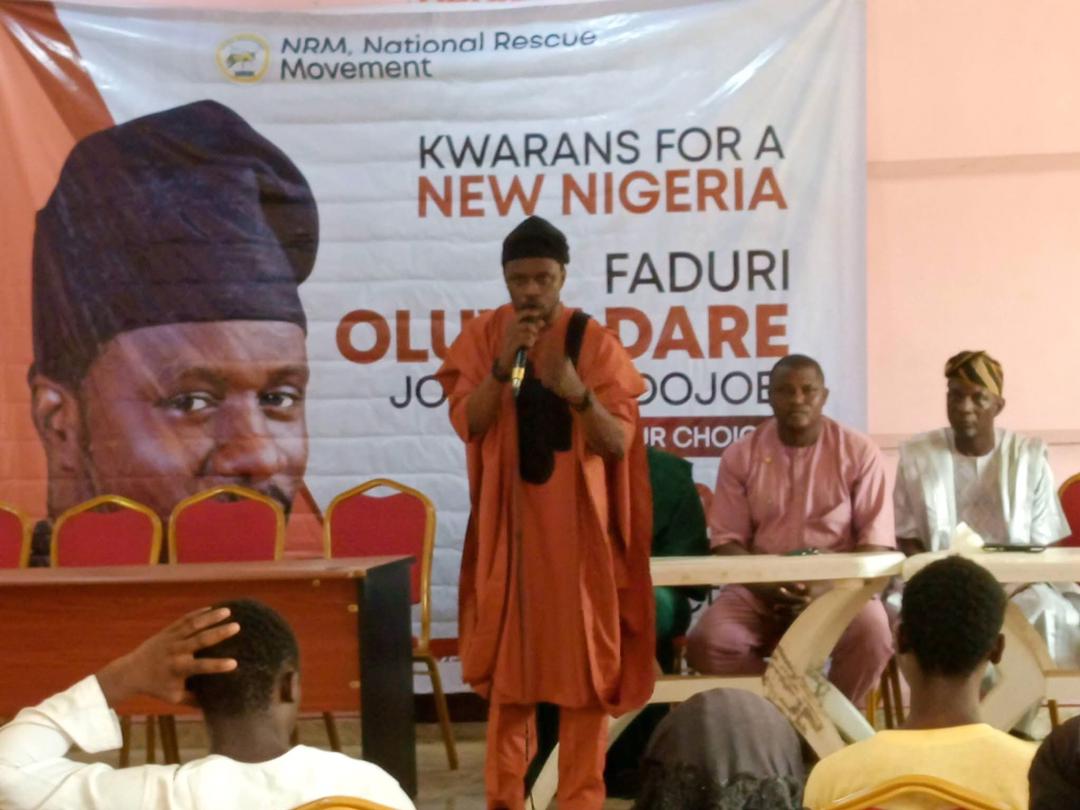
Faduri Oluwadamilare Joseph, popularly known as Fadojoe and a presidential aspirant on the platform of the National Rescue Movement (NRM), has articulated a sweeping and deeply personal vision for Nigeria, anchored on economic justice, functional infrastructure, and equal opportunity for all.
He shared this vision during an interactive stakeholders’ forum held on Wednesday, March 25, 2026, at the NURTW Secretariat along Airport Road, Ilorin, Kwara State. The session attracted a broad cross-section of society, including industry leaders, professionals, civil society actors, NGO representatives, youth groups, and women advocates, creating a vibrant platform for dialogue on Nigeria’s current challenges and future direction.
Fuel Subsidy and Rising Cost of Living
At the heart of his address was the contentious issue of fuel subsidy removal. Fadojoe criticized the manner in which the policy was implemented, arguing that it lacked adequate planning and failed to cushion its impact on ordinary Nigerians.
According to him, the removal has significantly worsened the cost of living, driving up transportation fares, food prices, and general household expenses, while benefiting only a privileged minority.
In a bold pledge, he declared:
“I will restore fuel subsidy and bring the pump price of petrol back to ₦200 per litre.”
He emphasized that subsidy, when properly managed, is a legitimate tool for supporting citizens, especially the vulnerable, and not an outdated concept. Drawing parallels with developed nations, he noted that subsidies still exist globally in different forms.
For him, the real challenge lies in corruption and inefficiency. He assured that his administration would prioritize transparency, plug leakages, and ensure that subsidy benefits reach the Nigerian people directly.
Tackling Unemployment Through Merit
Fadojoe identified unemployment as a critical national crisis, lamenting a system that prioritizes connections over competence.
He promised to entrench a merit-based system where skills and qualifications, not personal networks, determine access to jobs.
“You should not have to know someone before you can get a job. It will be about what you know, not who you know,” he stated.
Sharing his personal journey, he recounted spending five years job-hunting in Nigeria without success after graduation. In contrast, he secured employment within a week of relocating to the United States, despite having no prior connections. The experience, he said, highlights systemic inefficiencies in Nigeria’s labour market.
Education as a Tool for Equality
The US-based licensed nurse also emphasized education reform as a cornerstone of national development. He pledged free and compulsory education from primary through secondary levels.
Fadojoe argued that the current system entrenches inequality, limiting opportunities for children from disadvantaged backgrounds.
“We must dismantle a system that conditions the poor to remain poor while the rich continue to advance,” he said.
He promised a comprehensive overhaul of the education sector to ensure quality, accessibility, and fairness for all Nigerian children.
A Life Shaped by Adversity
In an emotional moment, Fadojoe shared his personal story of loss and resilience. He lost his father at age four and his mother ten years later, becoming an orphan at fourteen.
These experiences, he noted, shaped his empathy and commitment to public service.
“I know what it means to struggle. When Nigerians suffer, I feel it deeply,” he said, stressing that his ambition is driven by a genuine desire to improve lives, not personal gain.
Power Supply: A Basic Right, Not a Privilege
Addressing Nigeria’s electricity challenges, Fadojoe described stable power supply as a fundamental right.
Drawing from his experience in the United States, he recounted a rare power outage caused by a hurricane, which lasted just three days and came with consistent communication and compensation for affected residents.
He contrasted this with Nigeria’s erratic power supply, where outages are frequent and often unexplained.
“We celebrate a few hours of electricity as an achievement. That must change,” he said, insisting that Nigeria has the capacity to deliver reliable power with the right leadership.
Governance Reforms and Accountability
Fadojoe also outlined strict measures to promote accountability among public officials. He proposed banning government officials from seeking medical treatment abroad, insisting that leaders must invest in and use Nigeria’s healthcare system.
He further pledged that public office holders would be required to use locally manufactured vehicles to boost domestic industries and demonstrate confidence in Nigerian products.
Three Immediate Priorities
Looking ahead, he identified three key priorities for his administration:
– Reliable power supply
– Improved national security
– Economic stability and job creation
He emphasized that these pillars are interconnected and essential for meaningful development.
“We will confront these challenges head-on. They are fundamental to Nigeria’s survival and progress,” he declared.
A Closing Message of Hope
Fadojoe concluded with a call for renewed hope, collective responsibility, and transparent leadership. He urged Nigerians to believe in the possibility of change and work together toward a better future.
His blend of personal experience, bold policy proposals, and reform-driven agenda left a strong impression on attendees, positioning him as a candidate focused on building a system that truly works for all.
As Nigeria continues to grapple with economic and structural challenges, voices like Fadojoe’s are helping to redefine the national conversation, centering it on fairness, opportunity, and inclusive growth.




Adeleke Unveils Fresh Development Plans as Osun Marks 35th Anniversary

Osun Renewed Hope Ambassadors Hail Enitan’s Appointment As Head Of Service

Osun NUJ To Mark 35th Anniversary, 2026 Press Week With Week-Long Activities

Oyebamiji Kept Promise Despite Election Loss, Osogbo Plank Dealers Say

EAPEAN, GAaNF e.V. and 360° Labour Mobility Alliance Strengthen Partnership on Safe and Ethical International Recruitment

Osun ALGON Welcomes New Police Commissioner, Pledges Stronger Security Collaboration
-
 Crime4 days ago
NDLEA Arrests 101-Year-Old Woman Over Sale Of Illicit Drugs
-
 Opinion5 days ago
Osun: Long Live _Edenisation!_ By abiodun KOMOLAFE
-
 News4 days ago
US-based Paediatrician, Ogunrinde Seeks Govt Partnership To Sustain Free Healthcare In Ile-Ogbo
-
 Entertainment4 days ago
Nollywood Actor Taiwo Hassan Dies After Cancer Battle