
Opinion
Gbenga Hashim’s Blueprint And Omoyele Sowore’s Outrage By Abdulrazaq Hamzat
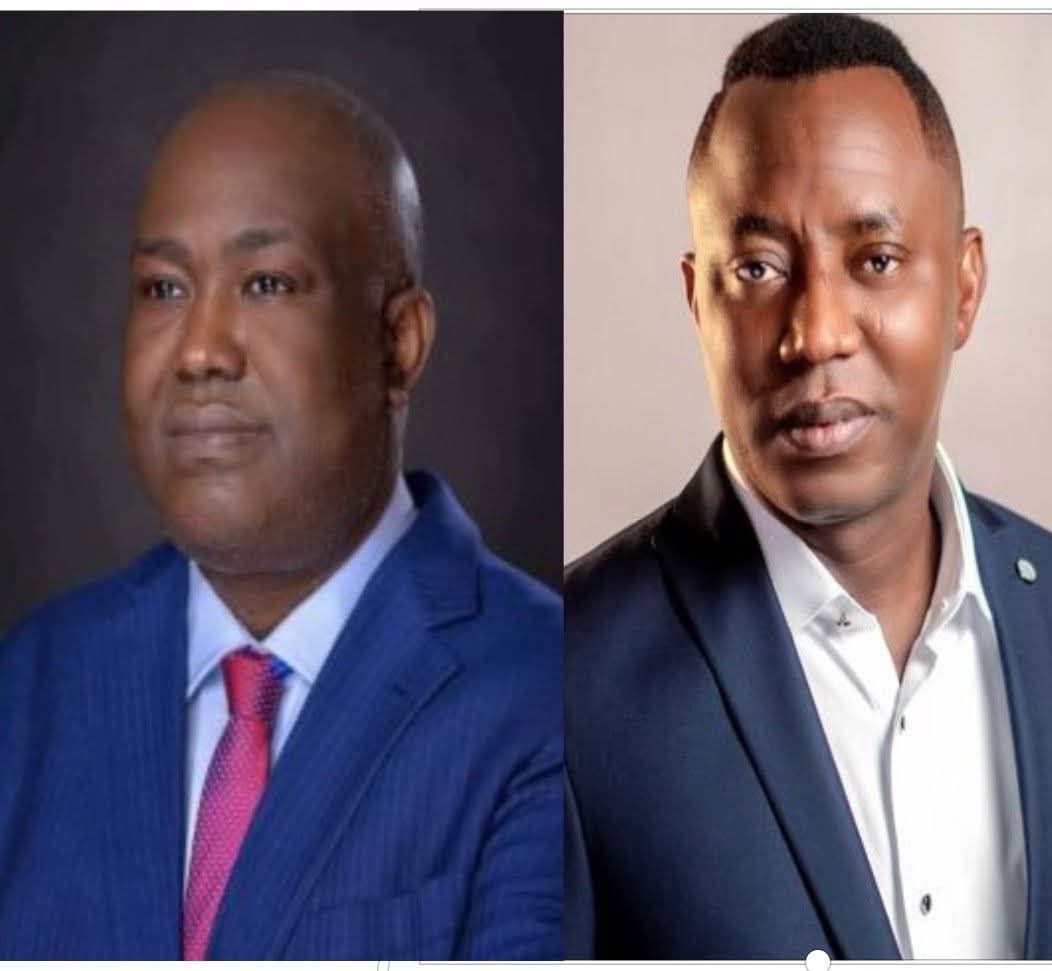
Nigeria’s political moment is often framed as a stark choice between disruption and reform, revolution and gradualism. This binary, however, is misleading. The country’s deeper crisis is not an excess of protest or a deficit of reform, but the absence of a serious construction project—one capable of absorbing revolutionary energy without neutralising it.
In this context, Gbenga Hashim’s politics of construction stands out, not as a rejection of Omoyele Sowore’s revolutionary posture, but as its necessary advancement.
Hashim begins from a clear-eyed diagnosis that many avoid. Nigeria is not merely unjust; it is poorly designed. Its institutions are weak, incentives perverse, and governance reduced to perpetual emergency management. From this understanding flows his central conviction: moral outrage, however justified, must ultimately be translated into systems that work.
Protest may delegitimise a broken order, but only construction can replace it.
This is where Hashim’s politics differs from Sowore’s, not in values, but in emphasis. Sowore embodies the revolutionary conscience of the polity. His confrontations with power are indispensable in a society where injustice survives on silence, fear, and fatigue. He forces uncomfortable truths into the open, breaks the illusion of inevitability, and reminds citizens that consent can be withdrawn. Without such pressure, reform easily collapses into accommodation.
Yet Hashim confronts a harder, more enduring truth: a state cannot be run on indignation alone. Roads, refineries, power grids, courts, and markets do not emerge from protest. They emerge from planning, coordination, institutional discipline, and policy coherence. His politics therefore prioritises architecture over agitation, systems over slogans, and governance design over episodic outrage.
Hashim’s construction is neither naïve nor passive. It is strategic. Entrenched systems do not collapse simply because they are unjust; they fall when credible alternatives exist. In this sense, construction itself becomes a form of pressure. When citizens can see a viable path, jobs through industrialisation, energy sufficiency through coherent policy, and accountability through functional institutions, the old order loses its moral and practical justification to persist.
Crucially, Hashim does not seek to domesticate revolutionary energy; he seeks to discipline it. History is replete with revolutions that failed to institutionalise their gains, only to reproduce the very dysfunctions they sought to overthrow. Hashim’s long-game politics is designed to ensure that when disruption creates an opening, something durable is ready to occupy the space.
His emphasis on coalition-building reflects this logic. Rather than politics anchored in rage or personality, he invests in movements, coordinators, and policy communities. Construction requires many hands and shared ownership. It is slower than protest, less dramatic, but infinitely more resilient.
Seen in this light, Sowore and Hashim are not opposites but sequential forces. Sowore weakens the moral legitimacy of a failing system; Hashim works to replace it with a functional one. One clears the ground; the other lays the foundations. One insists that Nigeria must change; the other insists that Nigeria can be rebuilt.
Nigeria’s recurring failure has been to stop at outrage, or to pursue reform without sufficient pressure. The status quo survives in that gap. The path forward lies in allowing revolutionary courage and constructive governance to reinforce rather than cancel each other.
If Nigeria is to escape its cycle of protest, disappointment, and relapse, it will not be by choosing between Sowore’s revolution and Hashim’s construction, but by recognising that construction is what gives revolution a future,and that both men stand as vital vanguards of their respective schools of thought.
Abdulrazaq Hamzat is a peacebuilding professional, multidimensional energy expert, and National Coordinator of the Gbenga Hashim Solidarity Movement.
Disclaimer: This piece represents the opinion of the writer not that of CityMirrorNews












Guber Poll: Osun Central Senatorial Candidate, K-Rad Receives Over 155 Defectors To APC

Group Urges INEC, Security Agencies to Ensure Safe PVC Collection Ahead of Osun Governorship Election

Osun Imams Seek Asiwaju Badmus’ Support To Strengthen Islamic Forum

Osun SWAN Condoles Ooni Over Elder Brother’s Death

Osun 2026: Adeleke Campaign Council Raises Concerns Over Election Preparations, Urges INEC To Address Alleged Lapses

GHSM Faults Osun Accord Chairman’s Comments, Warns Adeleke Against Actions That Could Threaten Re-election
-
 Opinion4 days ago
Keyamo’s Handling of Airport Parking Controversy: A Lesson in Transparency and Accountability By Adeboye Adebayo
-
 News4 days ago
Guber Poll: APC Elders’ Reconciliation Drive Boosts Osun Campaign, LCDA Chairmen Express Confidence
-
 News4 days ago
TAF Africa Takes Disability-Inclusive Voter Education Campaign to Osun Communities Ahead of Governorship Election
-

 News4 days ago
Queen Rashidat Ladoja Bags Women Of Impact Award For Humanitarian, Women Empowerment Efforts