
News
Lawyers Should Be Part Of TV, Radio Meditation Show For Dispute Resolution – Barr. Adenitan
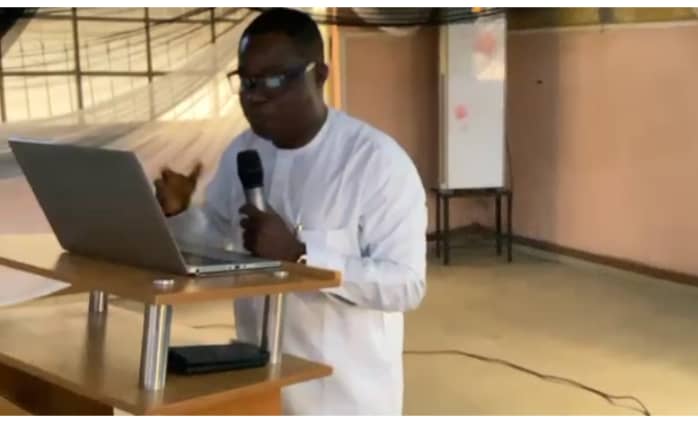
A Legal practitioner and journalist, Adenitan Akinola, Esq., has called on the Nigerian Bar Association (NBA) to spearhead the formal inclusion of lawyers in radio and television-based mediation and arbitration programmes across the country as a recognized form of Alternative Dispute Resolution (ADR), aimed at expanding access to justice for the poor and underserved.
Akinola made the call while delivering his paper titled “Balancing Justice and Journalism: The Role of Lawyers in a Media-Driven Age” at the 2025 Law Week of the NBA Ota Branch, held at Maridon Hotel, Tollgate, Sango Ota, Ogun State, on October 29, 2025.
The event brought together judges, lawyers, media professionals, and academics to discuss the interface between justice, ethics, and the press in Nigeria’s democracy.
He noted that several radio stations across Nigeria now host mediation-style programmes such as “Talk Your Own”, “Ebawa dasii”, and “Courtroom on Radio”, where individuals bring tenancy, business, or family disputes for on-air resolution.
Mr Akinola said these programmes have become “the courts of the common man,” providing swift, affordable, and community-based justice for citizens who cannot afford litigation.
“Radio arbitration and media mediation have emerged as the new frontiers of public justice, and as lawyers, we cannot pretend that justice only lives within the four walls of a courtroom. It now speaks through microphones and resonates through the airwaves.” Akinola said.
He urged the NBA to collaborate with the National Broadcasting Commission (NBC) and the Federal Ministry of Justice to develop policies that integrate legal oversight and ethical standards into such programmes.
According to him, this move would give legitimacy and structure to the popular mediation programmes while ensuring that lawyers who participate are guided by the Rules of Professional Conduct (RPC, 2023). He referenced Rule 1, which mandates lawyers to uphold and foster the cause of justice, Rule 32, which forbids prejudicial public comments on pending cases, and Rule 36, which encourages lawyers to promote public legal education.
“These programmes provide an opportunity for lawyers to fulfill their civic and professional obligations,” he said. “By helping ordinary Nigerians resolve disputes through reason, not rancour, we make justice more accessible, affordable, and humane.”
He added that the initiative aligns with the constitutional guarantee of fair hearing under Section 36 of the 1999 Constitution (as amended) and the social responsibilities of the press under Sections 22 and 39.
Akinola described the relationship between the media and the justice system as a “symbiotic partnership” rather than a rivalry. He said: “The press informs the people; the courts interpret the law; and lawyers must now interpret justice for both worlds, the gavel and the (pen) microphone.”
He urged the NBA to work towards establishing a “Media Arbitration Framework” that would allow certified lawyers to serve as mediators on radio or online platforms, with clear ethical and procedural guidelines. Such collaboration, he said, would not only reduce the burden on the courts but also promote peacebuilding and civic education.
Concluding his address, Akinola emphasized that justice and journalism are “co-architects of truth.” He said: “Justice without journalism is mute, and journalism without justice is madness. Our duty as lawyers is to stand in the middle, balancing freedom with fairness, truth with tact, and conviction with conscience. That is how we make justice not only done but understood.”



2027: APC Governors Reject Alliances That Could Undermine Tinubu’s Re-election

2027: Atiku Is Far Better Than Tinubu In Governance, Integrity-jackson Ojo

Oyo 2027: APM Candidate Denies Being Makinde’s Surrogate

NDLEA Arrests Mexican Suspect, Dismantles Meth Lab In Ebonyi

Oyo 2027: Court Adjourns Suit Challenging Accord Governorship Ticket

Father, Son, One Other Arrested Over Alleged Theft Of Electrical Cables In Iwo
-
 News3 days ago
Kiriji Treaty Foundation Marks 140th Anniversary In Ibadan, Seeks UNESCO Recognition
-
 News3 days ago
LPDC Clears Lagos Lawyer, Olaide Adedapo, Of Misconduct, Awards ₦200,000 Against Petitioner
-
 News5 days ago
Osun Election: Adegoke Explains Why Petitions Were Withdrawn
-
 Education3 days ago
Osun Poly Rolls Out Second Batch Of HND Admission Application Form