
Entertainment
My Pastor Almost Made Me Lose My Job – Yemi Solade
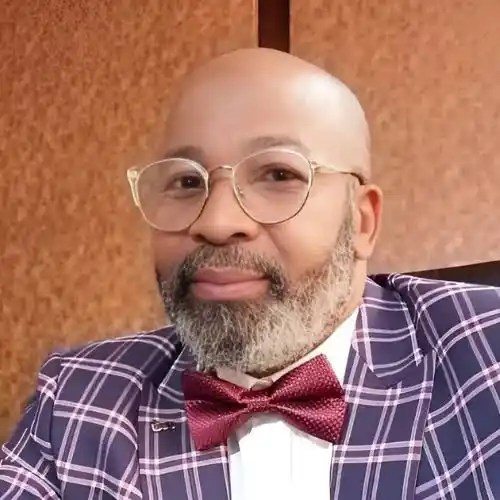
Veteran Nollywood actor, Yemi Solade, has recounted how one of his former church pastors almost made him lose his Job, saying a pastor once asked him to decline film jobs that came on Sundays.
He made this revelation in a recent episode of the “Honest Bunch podcast”, where he recalled a 2013 incident that pushed him away from church attendance.
According to him, church leaders at the time insisted that his Sundays must be strictly for worship and not work, a directive he said was unrealistic for someone in the entertainment industry.
“Something happened in my church. I got into the service with my wife that year, 2013. I’d been told in the church that I should tell producers not to call me for work on Sundays. And I cursed the pastor,” Solade said.
He opined that the demand was an attempt to interfere with his source of livelihood, as he described the church service as the pastor’s business.
Solade said,” It is from that thing that you said I shouldn’t do on Sunday that I put my hand in my pocket and I dropped here.
“So when will I have time to work? …There’s no way in the Bible that Sunday in the Greco-Roman calendar, that I set aside for people to go and assemble and shout God and Jesus.
“And you’re telling me not to leave my house and go to where my chop is. You want to ruin my career?”
The actor explained that his exit from church activities has brought him greater peace, contrary to the popular belief that regular attendance determines one’s spiritual well-being.
“The notion that if you don’t attend church, once life we must die, probably I’ve not seen anything change.
“Rather, I have peace. I do well. Because every day of my life, when I was going to church, I got messages or sort of disturbances,” the actor said.
Solade further criticised the culture of sacrificing work hours and resources in the name of religion, recalling a personal encounter with a technician who diverted his money to the church.
“I had this Baba who fixed my AC, and I gave him money to buy some things one day, and I was calling him, and he didn’t pick the call.
“Later, he told me he was in church. I said, Baba, you’re in your seventies.
“Do you know that you took my money to that church? You gave part of it. That blessing is mine now. It’s my money you went to drop there.
“If the prayer there is efficacious, it will come to me,” the actor said.
Solade stressed that such attitudes show misplaced priorities, where people abandon their businesses to sustain religious institutions.
Beyond religion, the actor also weighed in on Nollywood’s historical roots, challenging the widespread belief that the industry began with the 1992 Igbo blockbuster, Living in Bondage.
He insisted that home video production and television dramas predated the film, citing earlier works from the 1980s.
“One very popular account was that Nollywood started with Living in Bondage.
“The first movie that you call home video was actually produced by a man who is still alive, Ade Ajiboye, we call him Big Abbas.
“Shosho Meji, as produced by Ade Ajiboye, Big Abbas, was around 1988. Things fell apart on television now. It was in the 80s, mid-80s,” he said.
Solade, who studied Theatre Arts at Obafemi Awolowo University, also argued that the South-East, despite its contributions, was late in formally embracing theatre as an academic pursuit.
“You cannot find to date any actor my age, or slightly younger, who will tell you he studied theatres in the East, because theatres never existed in the East.
“When I was a student in Ife, we had something we called NUTAF, Nigerian University Theatres Festival. Only six universities at that time, none existed in the East,” Solade claimed.
For him, the industry’s foundation has been oversimplified over the years, with little attention paid to contributions from other parts of the country.
Solade, known for his fierce personality, has featured in several Yoruba and English-language films over four decades.














![[Breaking] Osogbo Food Investment Scandal: Alleged Global Food Initiative Owner Reportedly Arrested In Enugu](https://citymirrornews.com/wp-content/uploads/2026/10/IMG-20261016-WA0017-400x240.jpg)
![[Breaking] Osogbo Food Investment Scandal: Alleged Global Food Initiative Owner Reportedly Arrested In Enugu](https://citymirrornews.com/wp-content/uploads/2026/10/IMG-20261016-WA0017-80x80.jpg)


Finnish Court Reduces Simon Ekpa’s Jail Term To Four Years

Pakistan School Roof Collapse Claims 22 Lives, Injures Over 30

Oluga Hails Tinubu Over Call For Support For APC Female Candidates

NGO Enrols Five Sickle Cell Warriors In Health Insurance, Reaches Over 400 People

Police Arrest Three Suspects Over Murder Of Man In Ikire

Gov Adeleke’s Headship Of President Tinubu’s Campaign Council in Osun: Matters Arising And The Way Forward- Shuaib Oyedokun
-

 Economy4 days ago
Hashim’s Aide Insists ₦605 Petrol Price Is Achievable, Challenges Finance Minister
-

 News4 days ago
OHIS, Rotary Clubs, Foundation Begin Free Surgeries, Dental Treatment For Over 500 Osun Residents
-

 News4 days ago
Why Ogunwuyi Resigned As Makinde’s Chief Of Staff
-

 News5 days ago
Ayodele Warns Tinubu Against Forcing Second-Term Bid