
Opinion
Buhari: The General Who Chose The Ballot – A Legacy Of Iron And Shadows” By Muftau Adediran
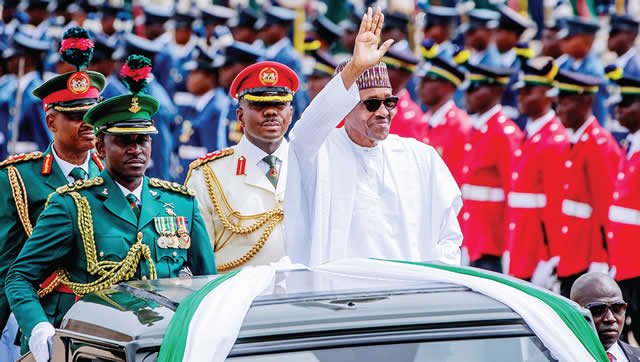
When the news broke on July 13, 2025, that Nigeria’s former president, Muhammadu Buhari, had died in London at the age of 82, the nation paused—reflective, divided, and contemplative. For some, it was the passing of a principled patriot. For others, it was a reminder of missed opportunities. But for all, it was the end of an era shaped by stoicism, steel, and silence.
Buhari’s life was a rare arc in Nigeria’s complex political story: a military strongman who seized power with a clenched fist in 1983, only to return three decades later as a civilian president, this time with a ballot in hand and a promise of change on his lips.
—
A Leader of Firsts
In 2015, Muhammadu Buhari became the first opposition candidate in Nigeria’s history to defeat a sitting president. It was a watershed moment—proof that the ballot could defy the bullet, and that a former dictator could embrace democracy. His victory over Goodluck Jonathan was met with optimism, particularly among young Nigerians hungry for reform and disillusioned by corruption.
His ascension was not merely political—it was symbolic. The man once known for his rigid military decrees was now the face of civilian hope. His campaign mantra, “If Nigeria doesn’t kill corruption, corruption will kill Nigeria,” captured national frustration—and gave him an edge.
—
The Strongman’s Strengths
Buhari was revered for his frugality, personal discipline, and incorruptible reputation. Under his watch, Nigeria centralized government funds with the Treasury Single Account, plugged leakages, and recovered looted wealth—most famously over $300 million linked to former dictator Sani Abacha.
He was unbending in his pursuit of Boko Haram terrorists. By 2016, he declared them “technically defeated,” having pushed the insurgents from swathes of northeastern territory. He oversaw the partial release of Chibok girls, a moment that stirred global empathy and domestic pride.
For many in the north, he was a father figure. A calm, devout Muslim leader who represented integrity in a system often tarred by excess and duplicity.
—
The Storms He Couldn’t Tame
Yet Buhari’s presidency was not without storm clouds. Though Boko Haram retreated, Nigeria’s security landscape worsened. Banditry, farmer-herder clashes, and kidnapping crises plagued vast regions. Under his watch, the #EndSARS protests erupted—an emotional explosion of youth anger against police brutality. The tragic Lekki Toll Gate shootings etched a permanent scar on his legacy.
His economic stewardship also faltered. Nigeria entered two recessions under his rule, oil prices plummeted, inflation soared, and youth unemployment climbed. Policies like border closures and currency restrictions, though intended to protect local industries, suffocated small businesses and discouraged foreign investors.
Critics accused him of moving too slowly. His cabinet was famously delayed for months. The nickname “Baba Go Slow” stuck—not just for his measured decision-making but for a perceived lack of urgency in crises.
—
The Silent President
Perhaps more striking than his policies was Buhari’s stoic silence. He rarely spoke in moments that demanded emotional resonance. His long absences for medical treatment in London—often without clear communication—eroded public trust. His aides defended his privacy; citizens questioned his presence.
In 2021, his government suspended Twitter after a post of his was removed, triggering accusations of authoritarianism. His critics feared that beneath the cloak of democracy lurked the same man who once ruled by decree.
—
What He Leaves Behind
Buhari’s legacy is a portrait of paradox. He was a patriot, yet distant. A reformer, yet slow. A democrat, yet accused of authoritarian drift. To some, he was the moral compass Nigeria needed—to others, a missed chance to inspire the next generation.
But one truth stands out: Buhari embodied Nigeria’s struggle between order and freedom, discipline and empathy, structure and soul.
—
A Legacy Etched in Iron and Memory
In death, Buhari returns to history—not just as a two-time ruler, but as a man who straddled two worlds: khaki and agbada, boot camp and ballot box. His was not a perfect tenure, but it was defining. He shaped the national consciousness, stirred debates on leadership, and reminded a restless country what integrity can look like—however flawed.
As the flag flies at half-mast and tributes pour in, Nigerians will ask: Did Buhari change Nigeria, or did Nigeria merely absorb him?
Whatever the answer, one thing is certain—history will not forget Muhammadu Buhari, the general who once ruled by decree, but who ultimately bowed to the will of the people.
Muftau Adediran
Deputy Editor-in-chief,
News Agency of Nigeria (NAN)




Oriire Abduction: Oyo Govt To Inaugurate Judicial Commission Of Inquiry Friday

Osun Police Release SSG, Igbalaiye

Lagos Flood Control: Govt Deploys Swamp Buggy To Ogombo, Awoyaya, Iponri As Rain Persists

Osun Guber Poll: SDP Denies Alliance With APC, Dismisses Viral Letter As Fake

Osun Masterminds Raise Alarm Over Insecurity, Political Arrests, NURTW Crisis Ahead Of Governorship Election

NBA Osogbo Condemns Restriction Of Lawyers’ Access To Police Command
-

 News5 days ago
Barau’s Legislative Aide Announces Empowerment Scheme For Ayedire Traders To Support AMBO Gov’ship Ambition
-
 News2 days ago
LAMECO Flyover: Osun Works Ministry Defends Project, Rejects Structural Failure Claims, Explains Procurement Process
-
 News4 days ago
Osun 2026: Barau’s Aide Empowers 100 Akara Sellers In Rallies Support For APC Candidate AMBO
-
 News2 days ago
Osun Govt Accuses Police Of Invading SSG, Commissioners’ Homes