
News
Court Dismisses Emefiele’s Bid To Reclaim Forfeited Properties
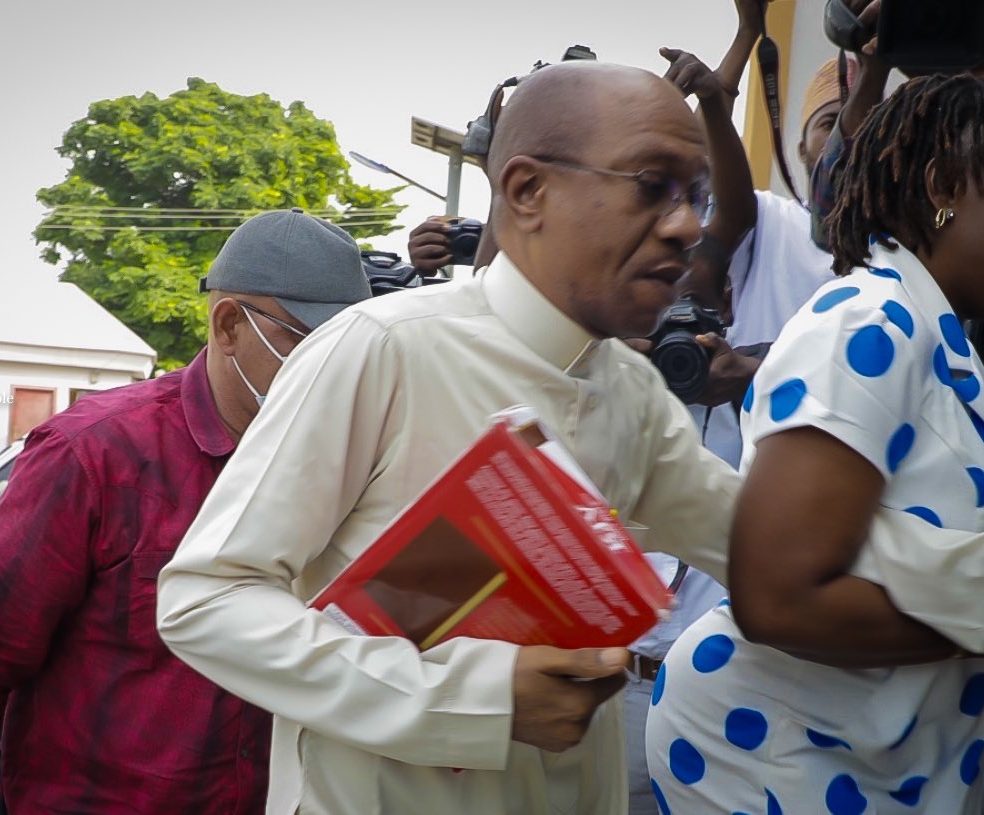
The Federal Capital Territory (FCT) High Court on Monday dismissed an application filed by the former Governor of the Central Bank of Nigeria (CBN), Godwin Emefiele, seeking to reclaim a vast estate in the city comprising 753 duplexes and apartments that have already been forfeited to the government.
CityMirrorNews recalls that Justice Jude Onwuegbuzie ordered the final forfeiture of the estate located at Plot 109, Cadastral Zone CO9, Lokogoma District, Abuja, measuring 150,462.84 square meters.
The Economic and Financial Crimes Commission (EFCC) had previously secured an interim and subsequently a final forfeiture order of the property in favor of the Federal Government.
Through his lawyer, Senior Advocate of Nigeria (SAN) Adeyinka Kotoye, the former CBN governor subsequently filed a motion as an interested party in the estate.
He sought an extension of time to apply to set aside the interim and final forfeiture orders made by the court on December 2 and December 24, 2024, respectively.
Emefiele contended that the entire forfeiture process was conducted without his knowledge and alleged that the EFCC published the interim forfeiture notice in an obscure section of The Punch Newspaper, making it difficult for him to respond timely.Newspaper subscription
He argued that he had been standing trial in three separate criminal cases across different courts in Abuja and Lagos during the relevant period, making it practically impossible for him to discover the publication.
Emefiele also accused the EFCC of deliberately concealing the forfeiture proceedings despite their frequent interactions with him over other pending charges.
In his ruling, Justice Onwuegbuzie emphasized that while the principle of functus officio (a court becoming powerless after delivering judgment) was argued, the court retained the authority to review its decisions under appropriate circumstances.
The judge noted that Section 17(2) of the Advance Fee Fraud and Other Fraud Related Offences Act, 2006, governs notice requirements in forfeiture proceedings.
He rejected Emefiele’s argument that the publication was obscure, stating that the half-page notice in a national newspaper like Punch could not reasonably be described as hidden.
In conclusion, Justice Onwuegbuzie held that Emefiele was given ample opportunity, over 14 days to contest the forfeiture but failed to act. He therefore dismissed the motion, resolving the sole issue in favour of the EFCC.







Ibadan Visitation: Nobody Can Stop Me From Going Anywhere In Nigeria –Sheikh Gumi

Bandits Attack: Panic As Parents Rush To Pick Children From Schools In Niger

Insecurity: DSS Uncovers Plans To Abduct School Children In Edo, Arrest 1 Suspect

ADC Condemns Reported Violence In Ede, Osogbo, Demands Investigation

Journalism Should Not Chase Attention, It Must Redirect It — Harbinger Publisher

Osun 2027: Ex-minister, Lai Mohammed, Adeleke’s SA, Durojaye Call For Credible Polls, Charge INEC In Germany
-

 Opinion4 days ago
Rising Allocations, Failing Infrastructure: Why Nigerians Are Asking Hard Questions By Adeboye Adebayo
-

 News3 days ago
Despite Resignations Of Some Members, We Remain Undaunted, Unshakeable, Osun APC Assures Members, Public
-

 News4 days ago
Osun 2026: AMBO’ll Prioritise Agriculture, Economic Growth — K-RAD
-

 Opinion3 days ago
Modulated Salary: Why Osun APC Past Administration Cannot Be Crucified For Necessity, By Adeboye Adebayo